 EN
EN


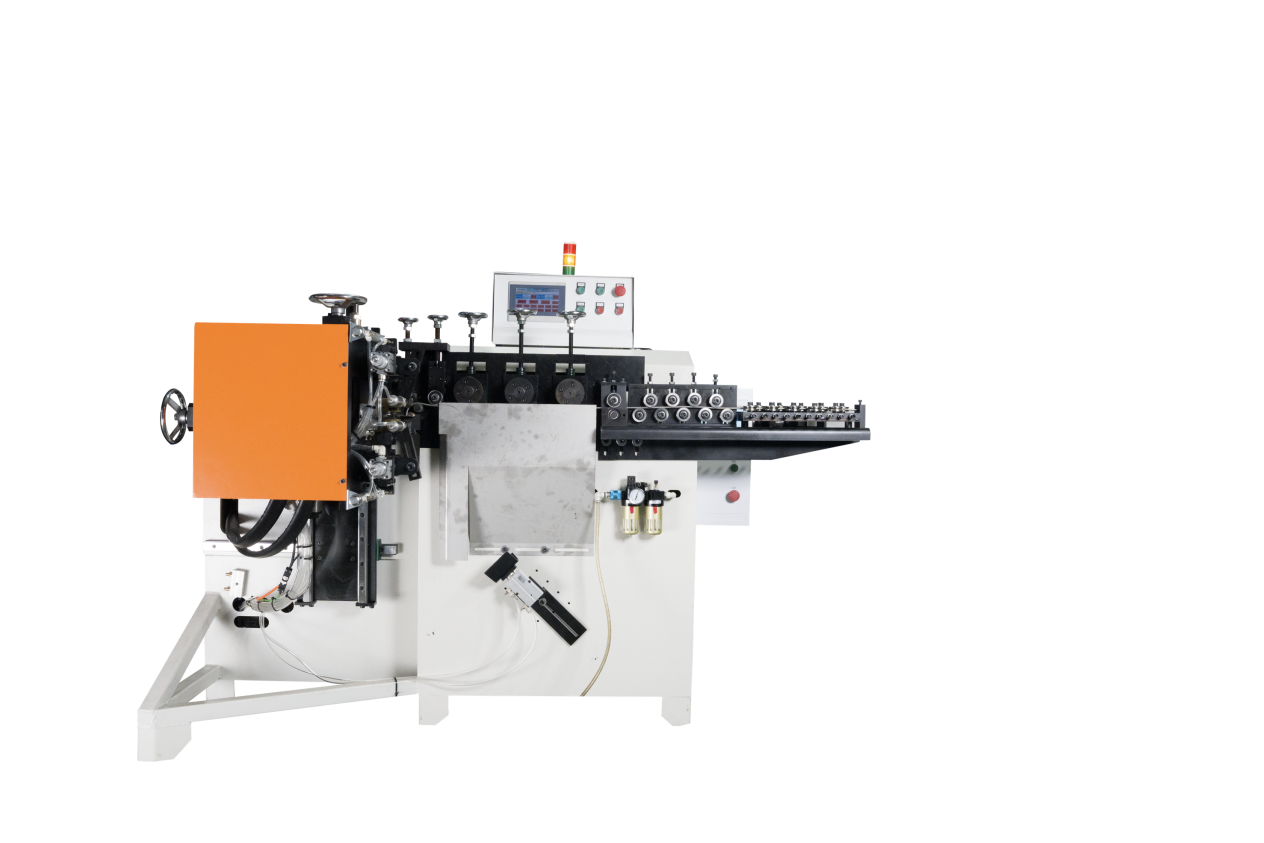
In modern metal fabrication, efficiency is not just about speed—it's about streamlining processes. Every extra handling step, every transfer between machines, adds time, cost, and potential for error. For industries that rely on high-quality metal rings, circles, and round frames—from furniture and automotive to hardware and kitchenware—a traditional two-step process of first forming the circle and then welding it closed has long been a necessary bottleneck. Today, Circle Forming & Welding Machines are revolutionizing this workflow by integrating both critical steps into one seamless, automated operation. This article explores how this all-in-one solution dramatically saves time while enhancing product quality.
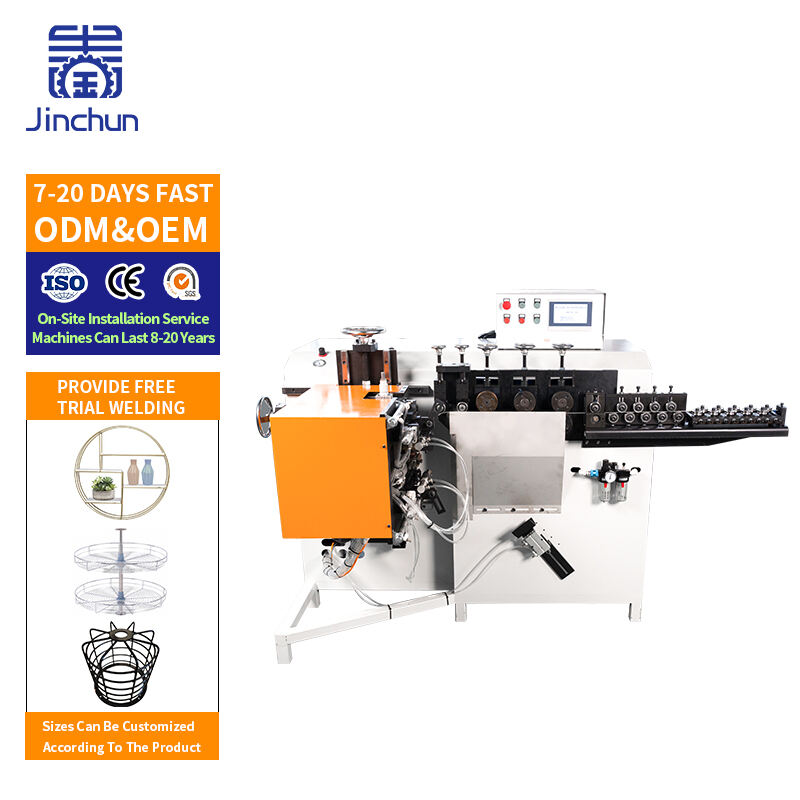
The Traditional Time Drain: A Two-Step Process
Traditionally, creating a closed metal ring involves a sequential, multi-stage process:
Forming: A straight metal rod or bar is fed into a bending or rolling machine to be curved into a circular shape. However, the ends do not meet perfectly or are intentionally left with a gap.
Transfer & Handling: The open ring is then manually or mechanically moved to a separate welding station. This involves handling, potential misalignment, and queueing time.
Welding & Finishing: At the welding station, the ends are aligned, tack-welded, fully welded, and then the weld bead must often be ground down to create a smooth, seamless appearance.
This disjointed process consumes valuable floor space, requires multiple operators or machines, and introduces consistency challenges. Each transfer risks deformation, and the welding step becomes a separate quality control checkpoint.
The Integrated Solution: Forming and Welding in a Single Cycle
A Circle Forming & Welding Machine consolidates this entire sequence into a single, compact unit. Here’s how it works and saves time at every stage:
Elimination of Transfer and Handling: This is the most significant time-saver. The machine takes in straight material—round or flat bars made of iron, stainless steel, or copper, with diameters from 1mm to 16mm—and in one continuous cycle, it forms the circle and welds the ends together. There is no intermediate picking, placing, or realigning. What used to take minutes across two stations now happens in seconds within one.
Dramatically Increased Throughput: By combining operations, these machines achieve impressive production speeds of 20 to 40 finished rings per minute. This output is consistently high because the machine eliminates the pacing inconsistency between separate forming and welding units.
Reduced Setup and Changeover Time: Utilizing universal tooling, these machines minimize downtime when switching between different ring sizes. The ability to produce rings with diameters ranging from 30mm to 2000mm (with customization options) by simply changing molds means production lines can shift from making a small cabinet handle ring to a large furniture frame hoop quickly and with minimal adjustment.
Beyond Speed: Enhancing Quality and Consistency
Time savings are compounded by significant improvements in final product quality, which reduces time spent on inspection and rework.
Perfect, Consistent Welds Every Time: Because the welding occurs immediately after forming within the same fixture, the alignment of the two ends is perfectly controlled by the machine. This results in a uniform, high-strength weld. Advanced models produce results that are smooth, without weld marks, and free of scratches, achieving a remarkable first-pass yield rate of up to 99.9%. The ring is flat and smooth-surfaced, often eliminating the need for post-weld grinding.
Precision Engineering: With forming and welding precision reaching 0.02mm, every ring is dimensionally identical. This level of accuracy is crucial for applications where rings must fit into assemblies or align with other components without manual adjustment, saving time in downstream assembly processes.
Operational Simplicity and Reliability
The time-saving benefits extend to machine operation and maintenance.
Fast Learning Curve: Equipped with a multi-language intelligent control system (featuring both keypad and touchscreen), these machines are designed for intuitive use. A beginner can typically learn basic operations within 30 minutes, reducing training time and allowing for flexible staffing.
Built for Uptime: Engineered for industrial endurance, these machines boast an average service life of over 10 years with an annual failure rate below 3%. High reliability means less unscheduled downtime. Coupled with responsive support—average after-sales response time under 2 hours—production delays are minimized.
Flexibility for Future Needs: The machines can be configured with custom add-ons like punching or stamping functions, allowing manufacturers to integrate even more steps (e.g., adding mounting holes to a ring) into the single cycle, further consolidating the production process and saving more time in the future.
Ideal Applications for Maximum Time Efficiency
This technology is perfectly suited for industries that use large volumes of rings or circular components:
Furniture: For frames of chairs, tables, bases, and decorative hoops.
Automotive & Motorcycle Parts: For exhaust hangers, support rings, structural hoops, and custom fittings.
Hardware & Kitchenware: For handles, pot racks, sink baskets, lids, and various cookware components.
General Hardware: For welded rings of all sizes used in construction, agriculture, and retail displays.
Conclusion: A Direct Investment in Productivity
For manufacturers, time is a direct measure of cost and capacity. The Circle Forming & Welding Machine addresses this fundamental metric by eliminating the bottleneck of a two-stage process. It transforms a segmented, handling-intensive operation into a fluid, automated one-stop production cell. The savings are multifaceted: reduced labor handling, faster cycle times, fewer quality defects, and quicker changeovers.
By investing in this integrated technology, companies serving the furniture, automotive, hardware, and kitchenware industries do more than just buy a machine—they streamline their entire value chain. They gain the ability to produce superior, seamless rings at a pace that keeps up with demand, turning what was once a time-consuming chore into a competitive advantage. In the race to market, saving steps is saving time, and saving time is everything.