 EN
EN


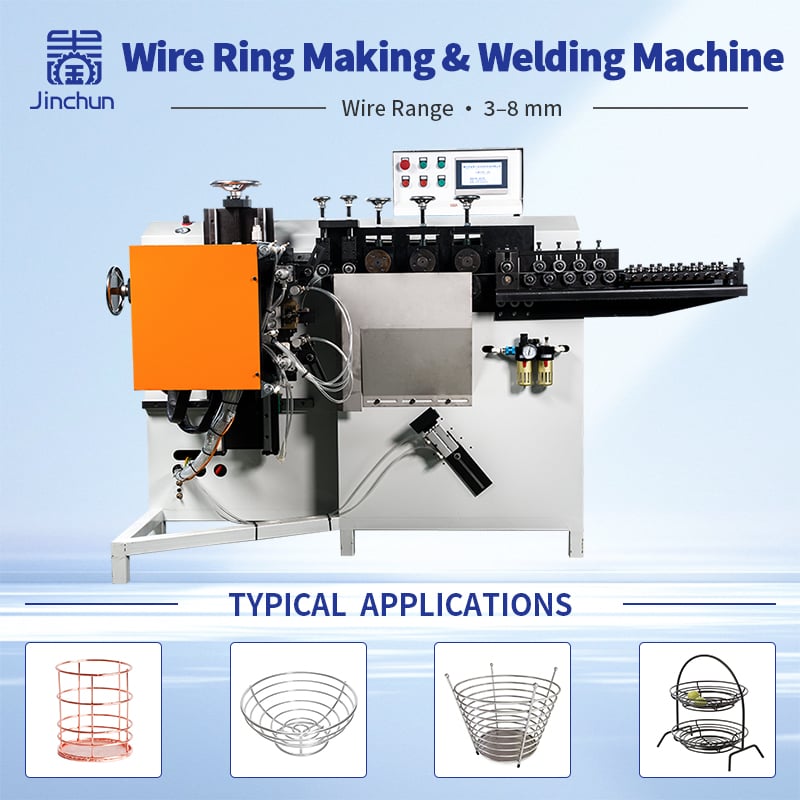
Producing consistent wire rings at high volume requires much more than simply bending a piece of wire into a circle. For industrial production, each ring needs to maintain a stable diameter, good roundness and reliable welding quality from the first piece to the last.
A Ring Forming Equipment integrates wire feeding, circular forming, cutting, end positioning and butt welding into one continuous production process. By coordinating these operations, manufacturers can reduce manual handling and achieve more repeatable results.
For companies producing furniture components, kitchenware, hardware, fan guards and automotive parts, choosing the right forming and welding equipment is important for maintaining product quality while meeting production targets.
This article explains how the process works, how tooling affects ring diameter and roundness, what determines welding quality, and what information buyers should prepare before requesting a machine solution.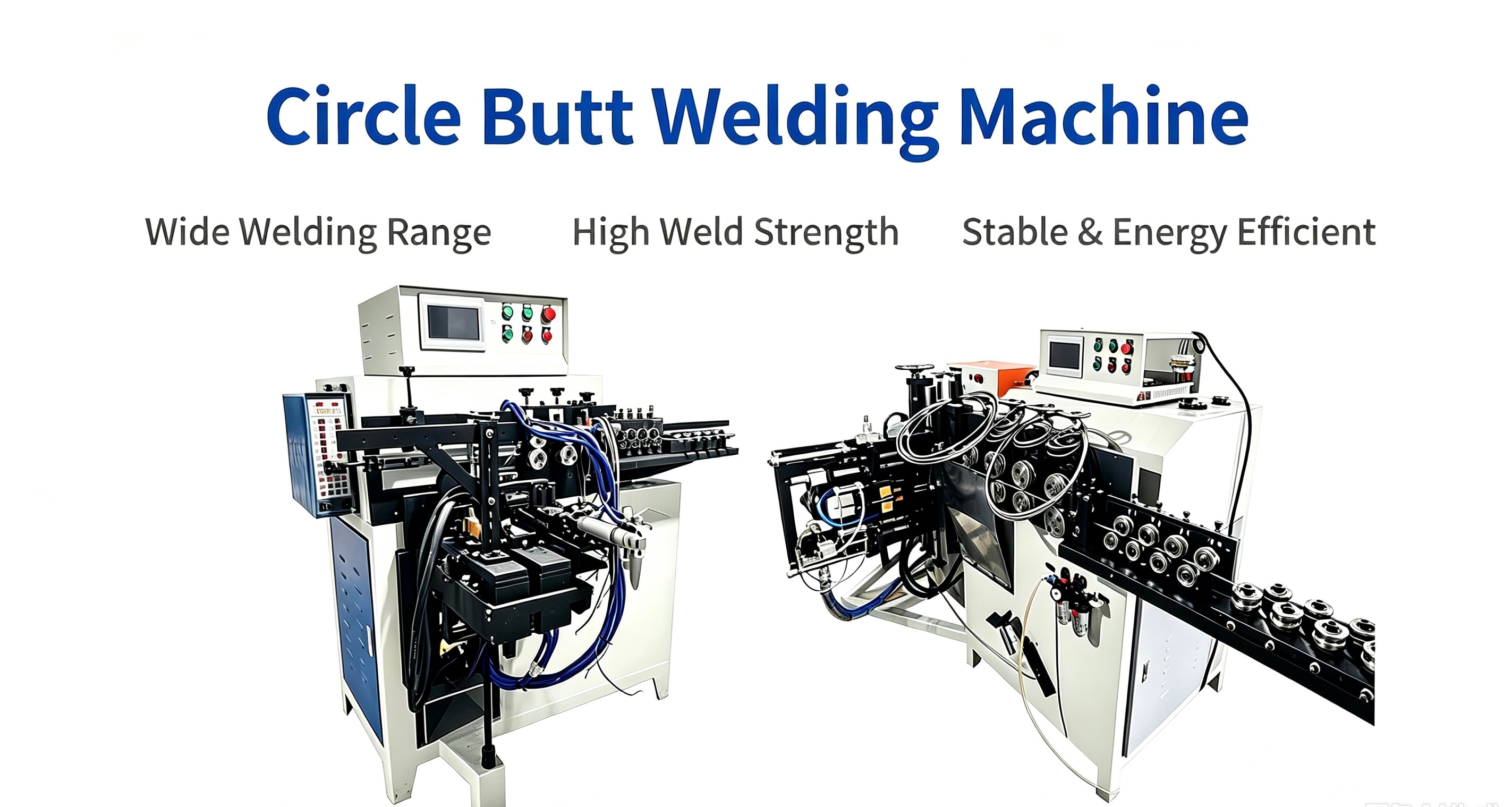
What a Ring Forming and Welding Machine Does
A Ring Forming and Welding Machine is designed to transform continuous wire or suitable metal profiles into finished welded rings.
The production process generally includes five key stages:
- Wire feeding
- Ring forming
- Cutting
- End positioning
- Butt welding
Instead of forming the ring on one machine and manually transferring it to another welding station, an integrated system coordinates forming and welding within the same production process.
This can reduce handling time and improve production consistency.
The actual machine configuration depends on the product requirements. Wire diameter, material, ring diameter, profile shape, welding requirements and target production all need to be considered before selecting the appropriate equipment.
For example, round steel wire and flat steel bar may require different forming tooling and machine configurations. Stainless steel can also require different forming and welding parameters from carbon steel.
For this reason, buyers should provide their actual product information rather than selecting a machine based only on the general name or advertised diameter range.
Step-by-Step Process From Wire Feeding to a Welded Ring
A typical automatic ring production process begins with continuous wire or suitable steel material and ends with a finished welded ring.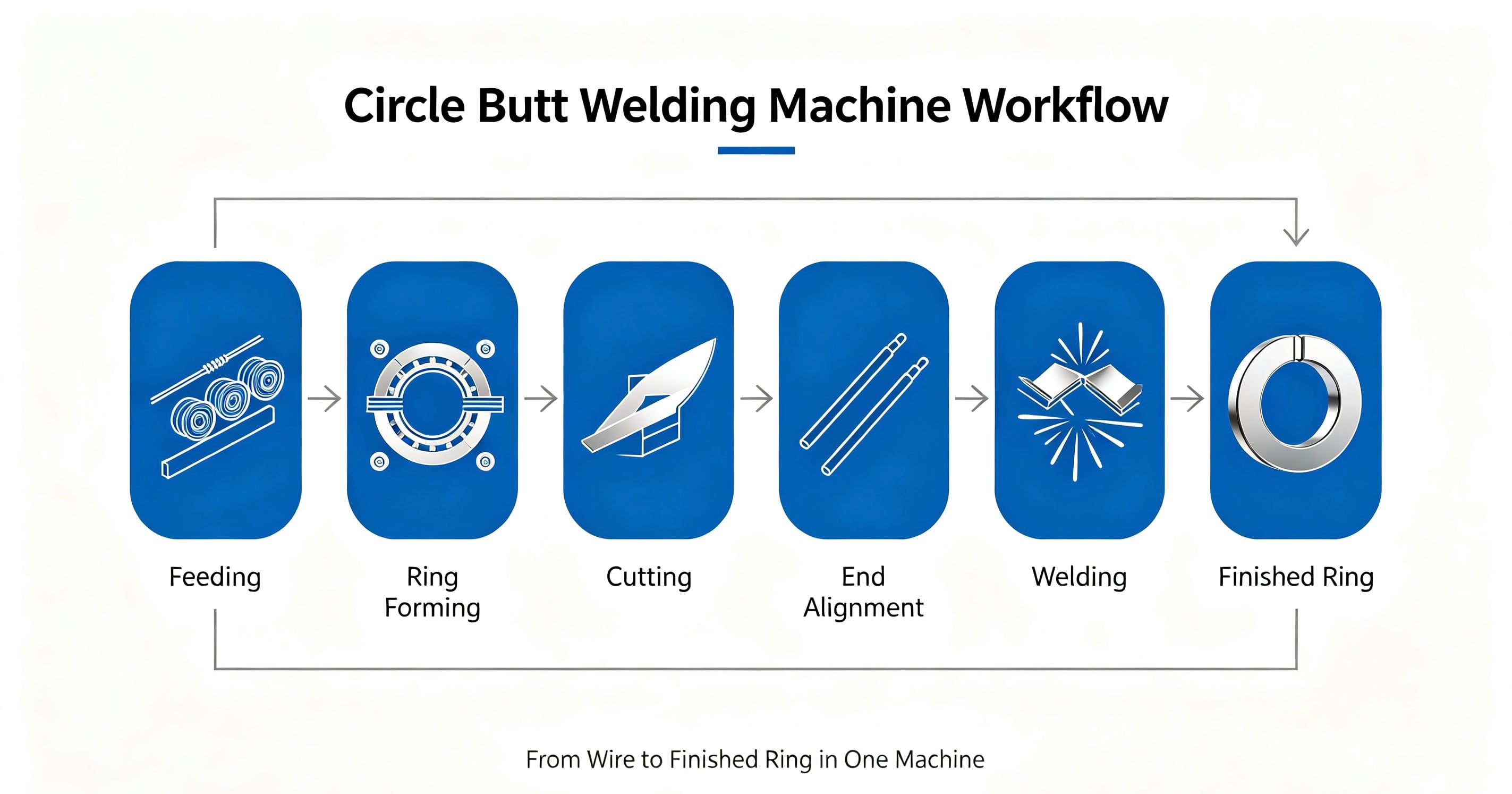
1. Controlled Wire Feeding
The first step is feeding the raw material into the forming system.
Stable feeding is essential because inconsistent material movement can affect the final ring dimensions. A controlled feeding system helps maintain repeatable material positioning throughout production.
Before choosing a machine, manufacturers should confirm the exact wire diameter or profile dimensions, material type and material condition.
For high-volume production, stable feeding also helps the machine maintain consistent cycle times.
2. Circular Forming
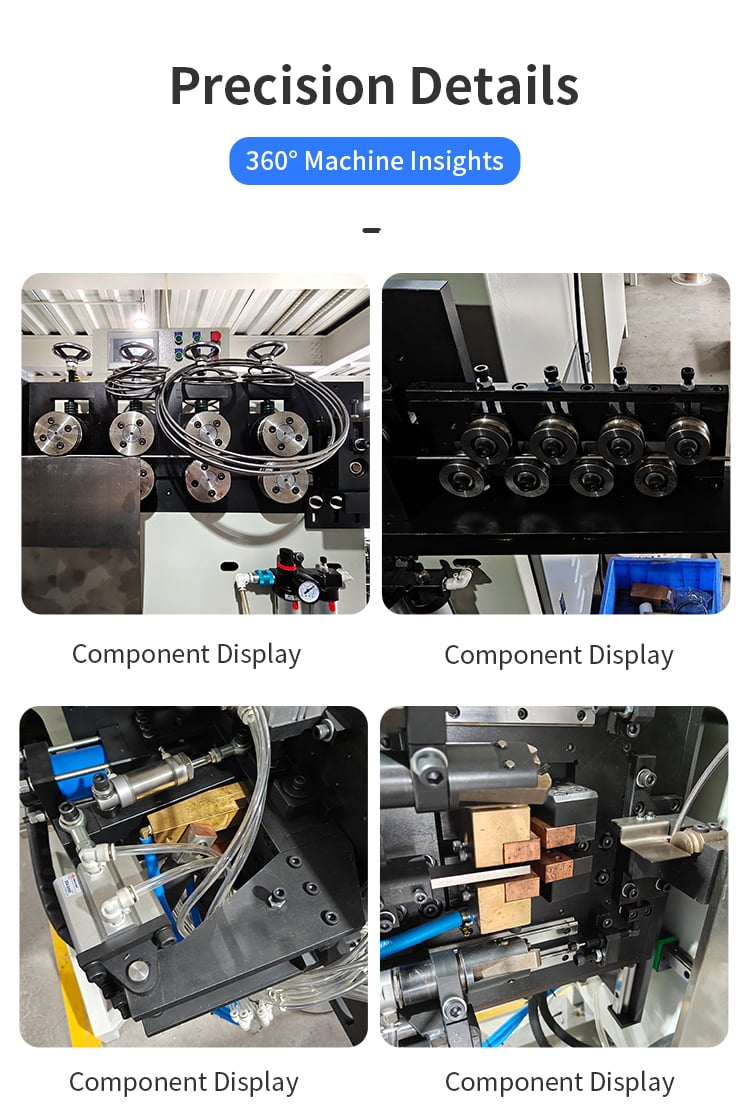
After feeding, the wire passes through the forming section and is progressively bent into the required ring shape.
The forming tooling determines the basic geometry of the ring. The machine must control the material path accurately while taking material springback into consideration.
This is particularly important when producing rings with relatively small diameters or when the finished product has strict dimensional requirements.
A properly matched forming system can help maintain consistent ring geometry throughout continuous production.
3. Cutting to the Required Length
Once the wire reaches the required forming length, the machine cuts the material.
The cutting operation creates the two ends that will later be joined by butt welding.
Cutting accuracy is important because the final ring must close correctly before welding. If the formed length is inconsistent, the two ends may not meet properly, which can affect both the ring shape and the welded joint.
Therefore, forming accuracy and cutting accuracy need to work together.
4. End Positioning and Alignment
After cutting, the two ends of the ring are positioned for welding.
Accurate positioning helps ensure that the two ends meet correctly before the welding cycle begins.
Poor alignment can result in an uneven joint, deformation or inconsistent welding quality.
For automated production, repeatable end positioning is especially important because the same operation needs to be performed hundreds or thousands of times during a production run.
5. Butt Welding
The final step is joining the two ends of the ring through butt welding.
A ring butt welding machine must provide suitable welding conditions according to the material, wire diameter or profile and product requirements.
The welding process should not be considered separately from ring forming. Even if the ring has a correct diameter, an inconsistent welded joint can still affect the finished product.
An integrated forming and welding system allows the forming and joining processes to be coordinated more efficiently.
How Tooling Controls Ring Diameter and Roundness
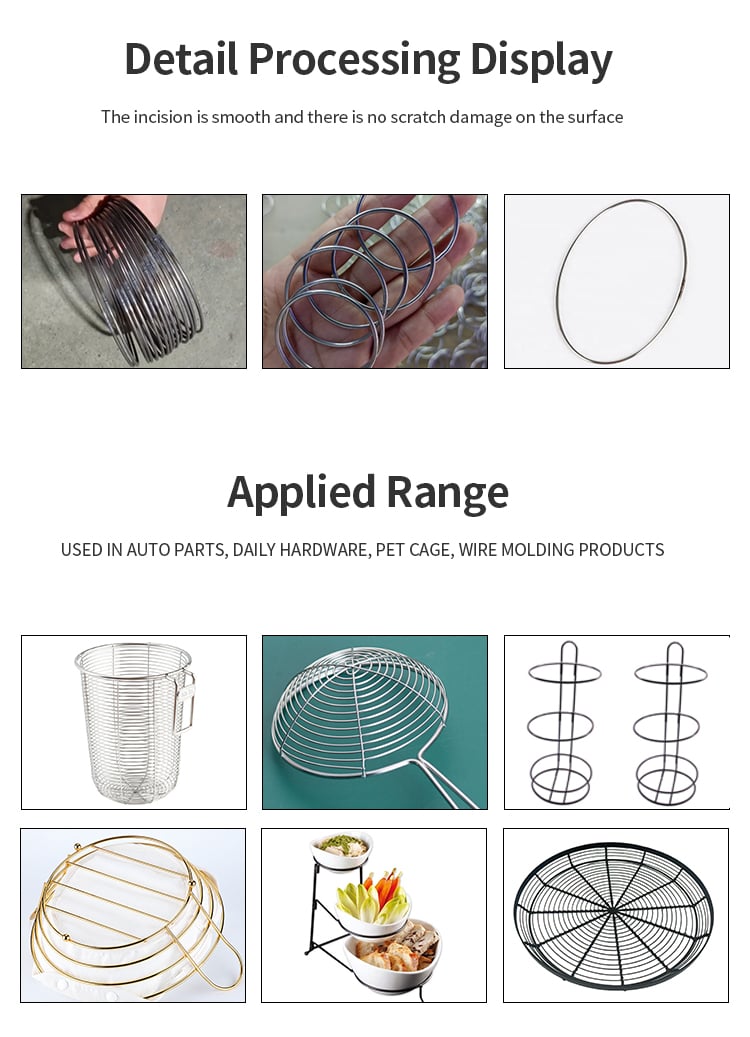
One of the most important questions for buyers is how a machine can produce rings with consistent dimensions.
The answer starts with the forming tooling.
Tooling determines the path followed by the material during bending. Its geometry, combined with machine settings and material characteristics, has a direct influence on the final ring diameter and roundness.
Ring Diameter
The required ring diameter should be clearly defined before machine selection.
Depending on the machine configuration, different tooling systems can be used to produce different ring diameters.
However, the advertised diameter range should not be treated as the only selection criterion. The actual achievable size depends on factors such as wire diameter, material, profile shape and forming characteristics.
For example, a machine designed for a specific range of round wire may require a different setup when processing flat steel bar.
This is why sending a product drawing or sample to the machine manufacturer is recommended before purchasing.
Roundness
A ring can have the correct nominal diameter while still being slightly oval or distorted.
For industrial applications, roundness can therefore be just as important as diameter.
Several factors can influence ring roundness:
- Forming tooling geometry
- Wire diameter
- Material properties
- Material springback
- Feeding stability
- Forming speed
- Machine settings
- Tooling condition
Proper tooling selection and stable machine operation help reduce variation between individual rings.
If the application has strict dimensional requirements, buyers should provide the acceptable tolerance for ring diameter and roundness instead of simply specifying that the ring needs to be “perfectly round.”
Welding Parameters and Joint-Quality Checks
The welded joint is a critical part of a finished ring.
A good welding process needs to provide consistent joining quality while minimizing unnecessary deformation of the ring.
Welding results can be affected by several factors, including:
- Material type
- Wire diameter or profile size
- Welding current
- Welding time
- Welding pressure
- End alignment
- Contact condition
- Production speed
The correct parameters should be determined according to the actual product and material.
What Should Buyers Check?
After welding, manufacturers can evaluate the finished rings according to their own quality requirements.
Important checks may include:
Joint alignment:
Are the two ends correctly positioned after welding?
Weld appearance:
Is the welded area visually consistent from ring to ring?
Joint strength:
Can the welded section withstand the mechanical requirements of the application?
Ring geometry:
Does the welding process cause unacceptable deformation?
Repeatability:
Can the machine maintain stable forming and welding quality during continuous production?
For this reason, sample testing is often more useful than choosing a machine based only on catalogue specifications.
Round Wire, Flat Bar and Material Considerations
Wire rings can be produced from different steel materials and profiles. The material and cross-section directly affect the forming and welding process.
The most important information to confirm includes material type, wire diameter or profile dimensions, ring size and welding requirements.
Round Wire
Round steel wire is commonly used for:
- Furniture components
- Kitchen baskets
- Kitchen racks
- Fan guards
- Hardware products
- Wire frames
- Household products
Different wire diameters can require different forming settings and tooling.
For this reason, buyers should provide the exact wire diameter instead of only giving an approximate range.
Flat Steel Bar
Some ring-shaped products are manufactured from flat steel bar rather than round wire.
In this case, the width and thickness of the material need to be considered.
The bending direction, profile dimensions, material characteristics and finished ring size can all affect tooling selection.
A machine configuration suitable for round wire should not automatically be assumed to be suitable for every flat bar application.
Carbon Steel, Stainless Steel and Galvanized Steel Wire
Different steel materials can have different forming and welding characteristics.
Carbon steel, stainless steel and galvanized steel wire may require different machine settings according to their material properties and surface condition.
Stainless steel applications may place additional emphasis on appearance and welding quality, while galvanized wire requires appropriate consideration of its surface coating during the welding process.
The final machine configuration should therefore be determined from the actual material grade, profile dimensions and product requirements.
Applications in Furniture, Kitchenware, Hardware and Automotive Parts
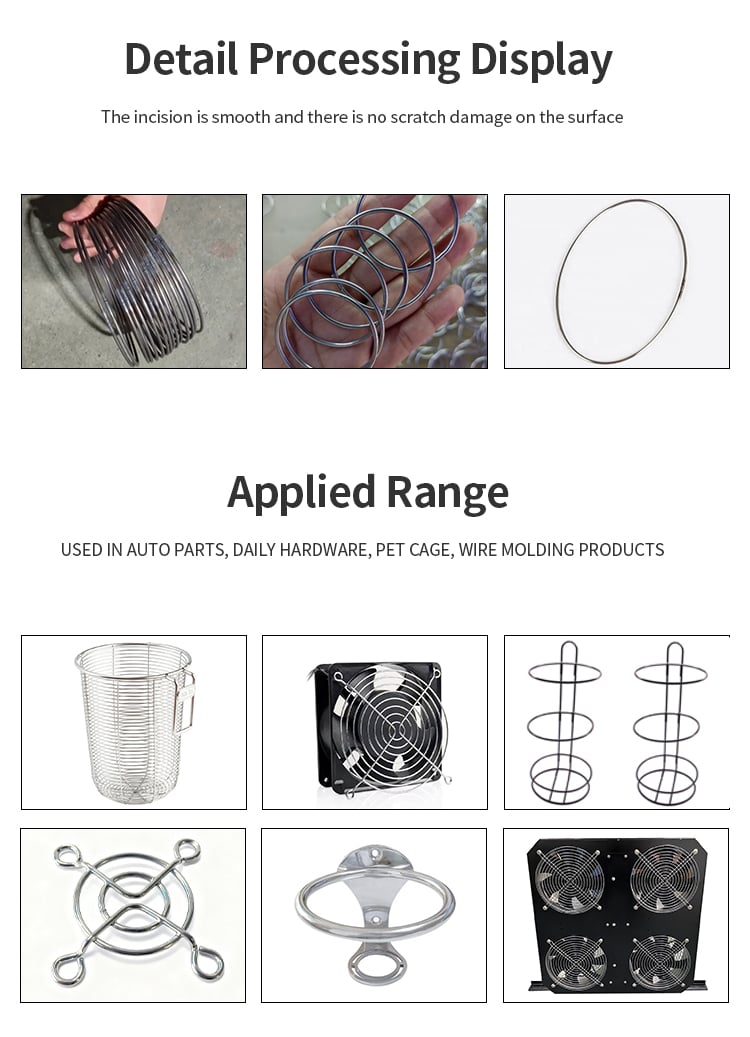
Wire rings and circular frames are used in a wide range of industrial and consumer products.
Furniture
Furniture manufacturers can use welded wire rings as structural or supporting components in chairs, stools, tables and other metal furniture.
Consistent ring dimensions can help improve assembly accuracy and product appearance.
Kitchenware
Wire rings are commonly found in kitchen baskets, racks, stove accessories, colanders and other household products.
For these applications, manufacturers may need to balance dimensional consistency, welding strength and the appearance of the finished joint.
Hardware
Hardware manufacturers can produce various circular frames, rings and formed wire components.
When production quantities increase, automation can help reduce repetitive manual forming and welding operations.
Automotive and Motorcycle Parts
Circular wire and steel bar components can also be used in automotive and motorcycle applications.
These products may have stricter requirements for dimensional accuracy, repeatability and welding strength.
The machine should therefore be selected according to the specific drawing and quality requirements rather than simply by production speed.
What Information Should Buyers Prepare for a Sample Trial?
If you are looking for a wire ring making machine, providing detailed product information will help the manufacturer recommend a more suitable configuration.
A product name such as “wire ring” is usually not enough for accurate machine selection.
1. Product Drawing or Sample
A technical drawing is the best starting point.
The drawing should show the ring diameter, material profile and other important dimensions.
If a drawing is not available, clear photos and physical samples can also help with the initial evaluation.
2. Material
Specify the exact material whenever possible.
For example:
- Carbon steel
- Stainless steel
- Galvanized steel wire
- Other suitable steel materials
If you know the material grade, include it with your inquiry.
3. Wire Diameter or Profile Size
For round wire, provide the exact diameter.
For flat bar, provide both width and thickness.
For example, “3 mm carbon steel wire” provides much more useful information than simply saying “steel wire.”
4. Finished Ring Diameter
Specify the required finished ring diameter.
Depending on your product drawing, this may be the outside diameter, inside diameter or another defined dimension.
If dimensional accuracy is important, also provide the acceptable tolerance.
5. Welding Requirements
Tell the machine supplier what you expect from the welded joint.
For example:
- Required joint strength
- Weld appearance
- Maximum acceptable weld deformation
- Whether additional finishing is required
These requirements can influence the welding configuration and machine settings.
6. Target Production
Production volume is another key factor.
Provide your expected output, such as:
- Rings per minute
- Rings per hour
- Rings per shift
- Rings per day
With this information, the supplier can evaluate the required machine configuration and production capacity more accurately.
Final Thoughts: Consistency Starts With the Right Machine Configuration
Producing a consistent ring is not simply about bending wire into a circular shape.
The feeding system, forming tooling, cutting accuracy, end alignment and welding parameters all contribute to the final result.
A properly configured ring forming and welding machine can integrate these processes into a repeatable production workflow, helping manufacturers maintain consistent ring diameter, roundness and welding quality while reducing manual handling.
If you are planning to automate wire ring production, send Jinchun your product drawing or sample, material, exact wire diameter or profile size, finished ring dimensions, dimensional tolerances, welding requirements and target production volume.
With these details, the machine configuration can be evaluated according to your actual product and production requirements.
Table of Contents
- What a Ring Forming and Welding Machine Does
- Step-by-Step Process From Wire Feeding to a Welded Ring
- How Tooling Controls Ring Diameter and Roundness
- Welding Parameters and Joint-Quality Checks
- Round Wire, Flat Bar and Material Considerations
- Applications in Furniture, Kitchenware, Hardware and Automotive Parts
- What Information Should Buyers Prepare for a Sample Trial?
- Final Thoughts: Consistency Starts With the Right Machine Configuration