101, Building 9, Jicheng Science And Technology Innovation Park, No. 25, Sanle East Road, Shunjiang Community, Beijiao Town, Foshan, Guangdong, China +86-18038626853 [email protected]
101, Building 9, Jicheng Science And Technology Innovation Park, No. 25, Sanle East Road, Shunjiang Community, Beijiao Town, Foshan, Guangdong, China +86-18038626853 [email protected]

Two coils with the same nominal diameter may behave differently on a CNC wire bender. One may form with a stable program while the other needs different tooling, force capacity or springback compensation. Reliable CNC wire bending machine selection starts with the finished drawing and the wire specification together. Here is what to review before comparing machines.
A diameter range describes only part of a machine's working envelope. The supplier also needs to know the material grade and condition behind that range. A capacity quoted for one steel grade cannot automatically be applied to harder wire or a different alloy.
Part geometry matters as well. Short distances between bends can restrict tool access, while a large frame may collide with the machine during later moves. Ask whether the quoted configuration can complete the entire bending sequence and unload the part, not simply make one bend in the nominated wire.
Round wire has the same nominal cross-section in every rotational orientation. Flat, square and shaped wire require additional control of orientation. A flat strip bent across its thickness behaves differently from the same strip bent across its width. Twisting during feeding can move the final bends out of position.
Provide a dimensioned cross-section with width, thickness, corner radii and orientation. Confirm feed grooves, guides and bending tools for that profile. A general round-wire bender is not automatically suitable for flat or shaped stock, even if the cross-sectional area appears similar.
Mild steel is often considered for general hardware, but its grade, temper and coating still need to be specified. Stainless steel varies by alloy and condition; some grades work-harden significantly during forming. Aluminum also varies by alloy and temper, and soft surfaces may require particular care at feed and tooling contact points.
High-carbon and hardened wire need assessment for forming load, bendability and tooling wear. Galvanized wire is a coated material rather than a single strength grade. Send the underlying steel specification and coating requirements, including the acceptable appearance after forming. Avoid treating any of these broad material names as a complete procurement specification.
Higher-strength wire generally requires greater forming effort for comparable geometry, but tensile strength alone does not predict the result. Yield strength, elastic modulus, work hardening and bend geometry influence deformation and springback. Springback occurs when the wire partly recovers after the bending load is removed.
Provide a material certificate when available. Ask the supplier to test the expected strength range and document compensation settings. If a later coil changes condition, a stored program may require adjustment. Machine selection should leave a verified operating margin for the agreed material variation; it should not rely on an unsupported universal strength multiplier.
A tight inside radius may increase local strain and make cracking or surface damage more likely for a particular material condition. Define the minimum radius on the drawing and agree whether dimensions refer to the inside, outside or wire centreline. Do not substitute one radius convention for another.
Inspect feed-wheel impressions, scratches, coating damage and flattening at bends. Tool material, groove shape, cleanliness and pressure settings all deserve attention. Request samples with the intended surface condition and agree which faces are visible in the finished product. A dimensionally correct sample can still be unacceptable if its surface needs excessive rework.
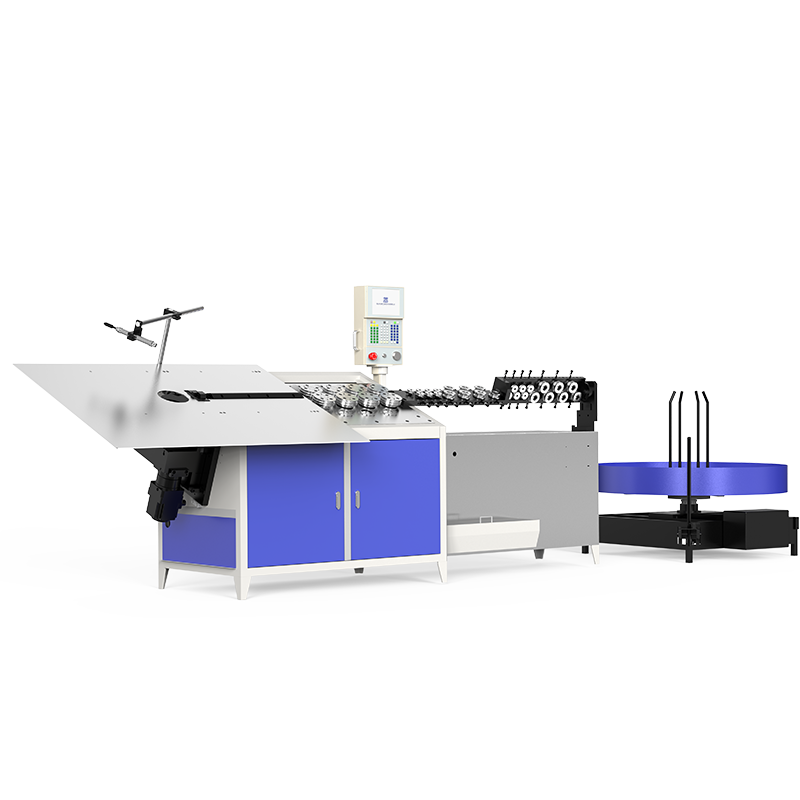
A CNC 2D wire bending machine is a candidate when the intended bends remain in one plane and the machine can access the complete shape. Frames and flat brackets can be suitable evaluation parts. Confirm minimum straight lengths, bend direction changes and unloading clearance.
A CNC 3D rotary head bending machine is a candidate for parts with bends in multiple planes. The additional motion must still be checked against interference, reach and tooling requirements. Choose 3D capability because the geometry needs it or because a verified production benefit justifies it. More axes alone do not establish better accuracy or lower cost.
Send the drawing revision, material grade and temper, diameter or full profile dimensions, strength data, surface specification, bend radii, critical tolerances and target accepted output. Include a 3D model for spatial forms and mark measurement datums. Representative production wire is especially useful when surface quality or springback is critical.
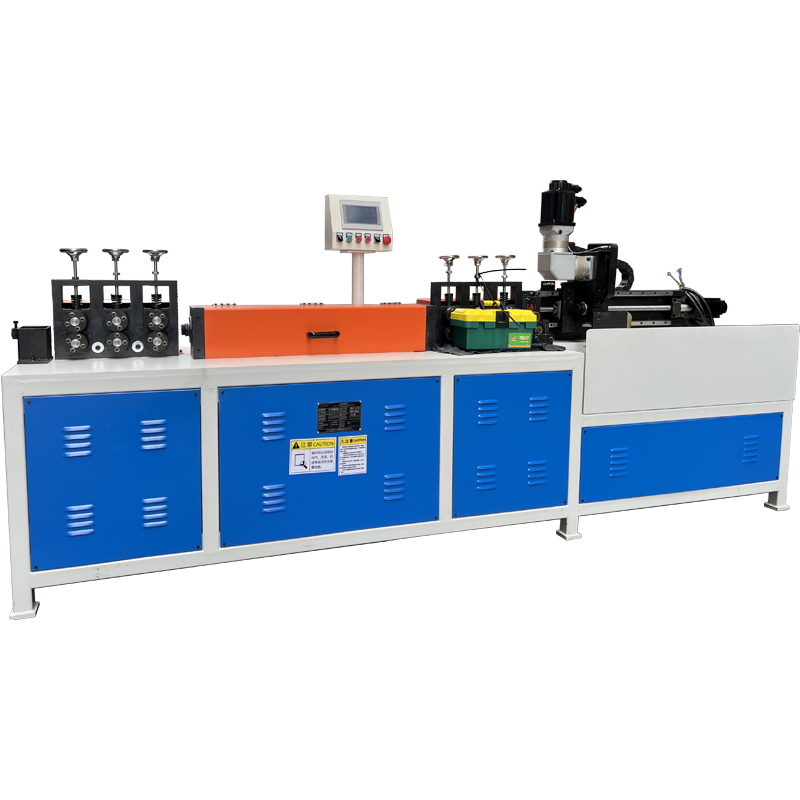
Ask for a configuration identifying feed and straightening equipment, bending tooling, program functions and any secondary operations. Evaluate the proposed wire bending machine against a consecutive sample run rather than an isolated finished piece.
FAQ
1.Can a stainless steel wire use the mild steel diameter limit?
Only if the supplier confirms that grade and condition within the machine's capacity. The same diameter does not establish equivalent forming load.
2.Can a 2D machine make a spatial part?
A separate forming operation may be possible, but its tooling, handling and accumulated variation must be evaluated. Do not assume single-cycle 3D production.
3.Will a saved program remove every material adjustment?
No. Changes in wire condition or traction can require setup corrections and a new first-piece inspection.
 Hot News
2026-09-19
2026-09-18
2026-09-17
2026-09-16
2026-09-15
2026-09-14
 EN
EN