101, Building 9, Jicheng Science And Technology Innovation Park, No. 25, Sanle East Road, Shunjiang Community, Beijiao Town, Foshan, Guangdong, China +86-18038626853 [email protected]
101, Building 9, Jicheng Science And Technology Innovation Park, No. 25, Sanle East Road, Shunjiang Community, Beijiao Town, Foshan, Guangdong, China +86-18038626853 [email protected]

The best wire straightening and cutting machine is the one that delivers acceptable rods at the rate your next process needs. A high feeding speed alone cannot tell you that. Cut length, wire condition, stopping time and discharge handling all affect usable output. This guide explains how to compare fixed-cut, tracking-shear and flying-shear systems before requesting a configuration.
Straightening removes coil curvature; cutting establishes the blank length for welding, bending or assembly. These operations must work together. If feeding pauses for every cut, frequent short cuts can limit production. If cutting occurs while wire moves, the cutter must synchronize with that movement. Neither arrangement guarantees a particular tolerance. Feed-wheel slip, measurement calibration, blade condition and material variation also matter.
Start with accepted pieces per minute at your actual cut length. For illustration, a continuous feed of 30 metres per minute gives a theoretical 60 pieces per minute at 0.5 metre per piece, before cycle limits, rejects and handling losses. This is a calculation example, not a Jinchun machine specification.
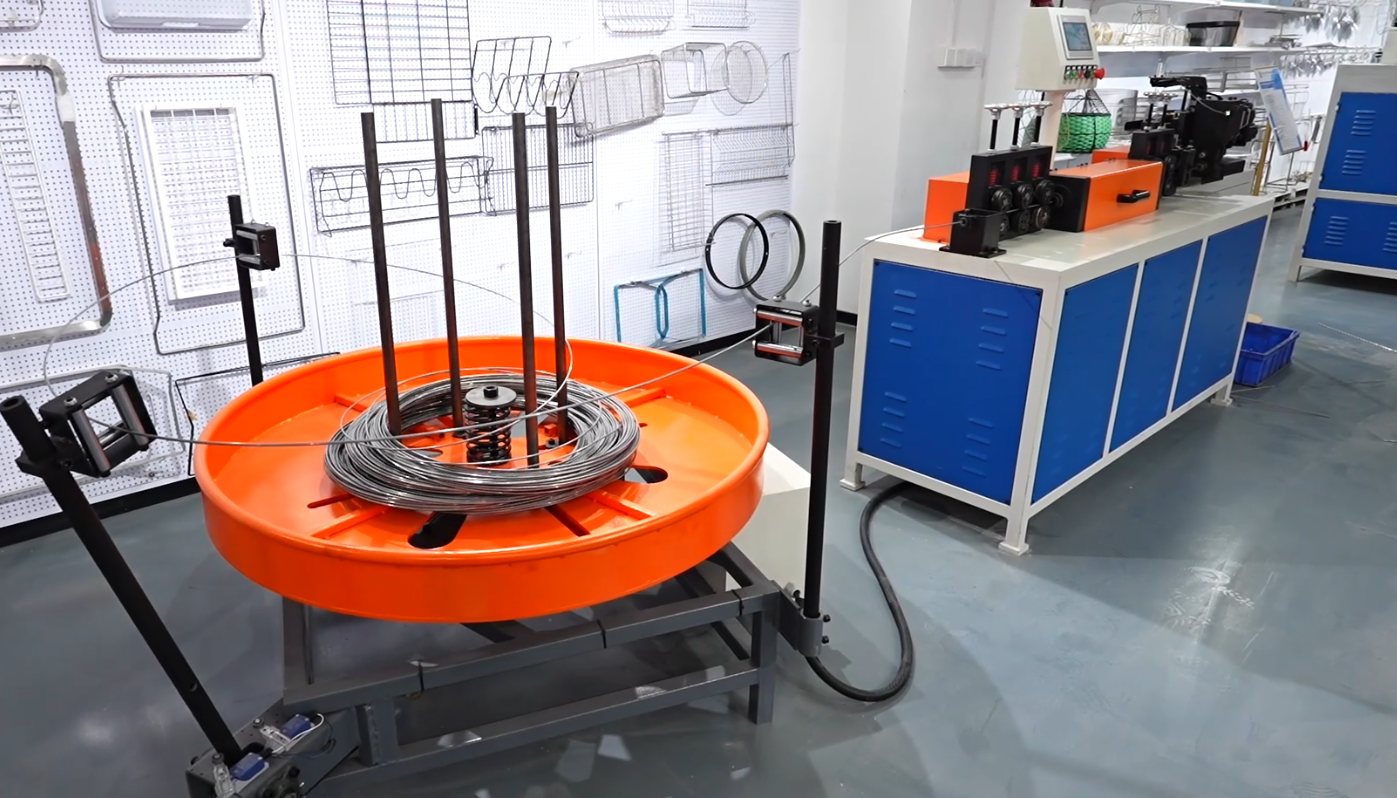
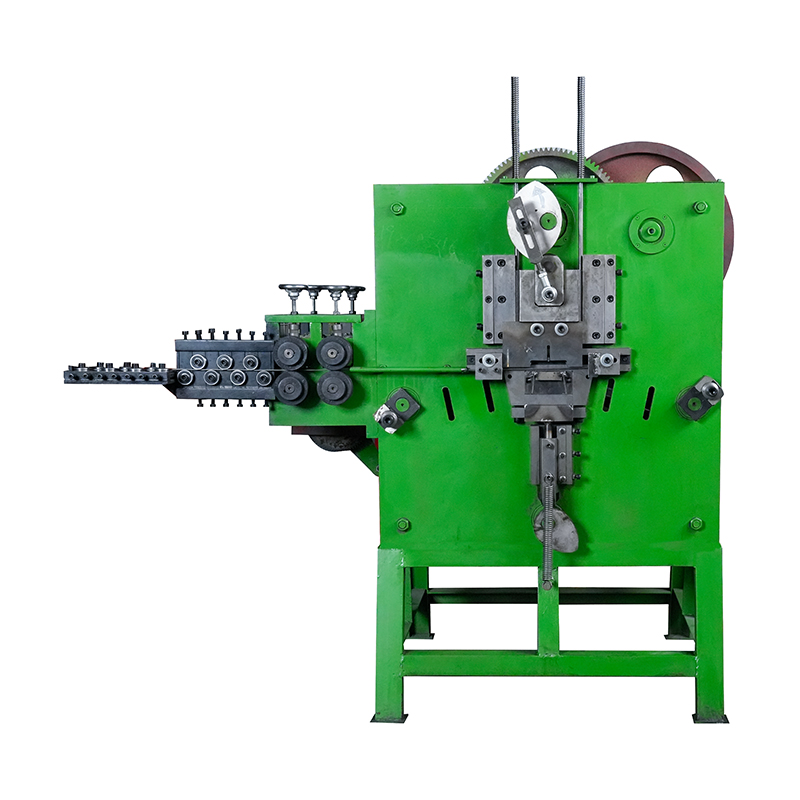
In a typical stop-to-cut arrangement, rollers advance and straighten the wire to the programmed length. Feeding then pauses while a cutter at a fixed longitudinal position makes the cut. The feed resumes for the next piece. Ask the supplier to confirm the actual sequence, since a category name does not describe every mechanical detail.
This arrangement is worth evaluating when output is moderate and its cutting cycle meets demand. It avoids a traveling cutter carriage, but repeated acceleration and stopping can reduce average output. Check the shortest required blanks as well as long rods; the same feed-speed rating can produce very different piece rates.
A tracking-shear arrangement typically moves the cutting unit along the wire path. The unit matches wire movement during the cut, then returns for the next cycle. A tracking shear straightening machine can therefore reduce interruptions in feeding, provided its travel and return cycle support the requested length and speed.
Ask to see the moving cutter in operation. Confirm carriage stroke, maximum cut frequency and the speed available for your shortest blank. Also inspect how the cut rod enters the receiving rack. A successful cut is only useful if the discharge system clears it reliably.
A flying-shear system coordinates cutting with moving material so the wire can continue advancing during the cutting event. Depending on the design, the tool motion may be rotary or another synchronized mechanism. A flying shear straightening machine should be assessed by its actual tool motion and control sequence, not by assuming that all flying shears share one design.
Terminology overlaps: a traveling cutoff may also be called a flying shear. Jinchun lists tracking-shear and flying-shear equipment separately, but buyers should request a mechanism drawing or operating video to establish the difference between the offered models. Do not assume that the flying-shear label always means faster or more accurate.
Use the comparison below to prepare a trial. These are general evaluation points, not performance guarantees or a price ranking.
Criterion |
Fixed cut |
Tracking shear |
Flying shear |
Feed and cycle |
Typical feed pause at each cut |
Carriage tracks wire then returns |
Cut synchronized with moving wire |
Main speed check |
Feed stop and restart time |
Travel and return cycle |
Cut frequency and synchronization |
Accuracy check |
Length after repeated restarts |
Length over repeated tracking cycles |
Length at actual production speed |
Surface and ends |
Check rollers blades and handling |
Check rollers blades and handling |
Check rollers blades and handling |
Cost assessment |
Quote complete installed scope |
Include carriage servicing and controls |
Confirm mechanism tooling and controls |
For occasional batches, begin by checking whether a fixed-cut cycle can meet the downstream requirement. For sustained production where feed interruptions constrain output, evaluate synchronized cutting. For short blanks, verify maximum cuts per minute; for long rods, verify straightness and receiving support.
Material grade and strength affect straightening and cutting load. Surface-sensitive wire needs attention to roller pressure, tooling contact and discharge impact. Compare wire straightening machines using the same coil specification, shortest and longest lengths, tolerances and receiving arrangement. Request measured results rather than selecting by diameter range alone.
Provide material grade, coating, wire diameter and tolerance, available strength data, coil dimensions and weight, minimum and maximum cut lengths, straightness limits, end-quality criteria and target accepted pieces per minute. Describe the next operation and the available floor space. Ask the quotation to state the test material, trial length, achievable cycle and included discharge equipment.
FAQ
1.Is flying shear always more accurate?
No. Accuracy depends on the measuring system, synchronization, wire traction and setup. Compare trial results under the same conditions.
2.Can one machine cover every wire material?
Do not assume so. Ask for capacity confirmation for each grade and strength range, including the required tooling.
3.Why can short blanks reduce output?
They require more cutting cycles for the same feed length. Cutter reset and product discharge can become limiting factors.
Choose the cutting method around verified output and quality for your actual wire. Confirm the mechanism, run representative lengths and compare the complete process through discharge. Send us your wire material, diameter, cut length, tolerance and target output. Jinchun will recommend the appropriate straightening and cutting system.
 Hot News
2026-09-19
2026-09-18
2026-09-17
2026-09-16
2026-09-15
2026-09-14
 EN
EN