 EN
EN


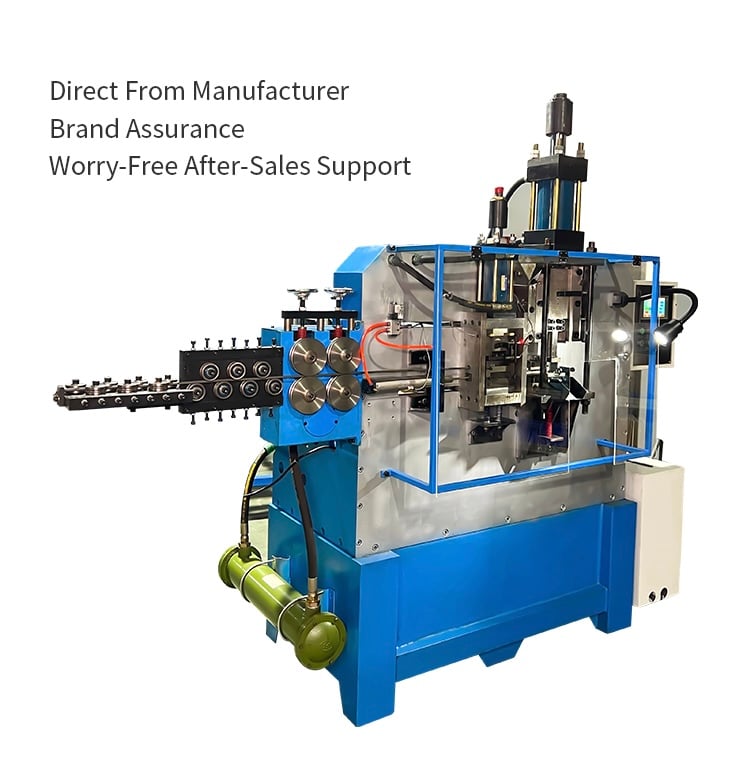
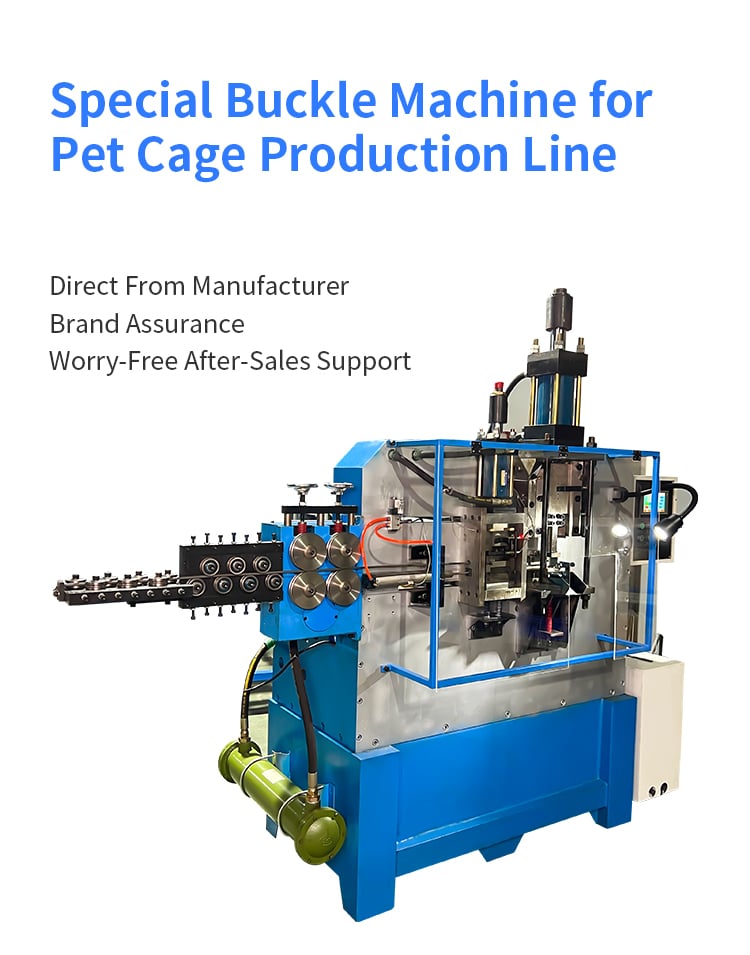
Choosing the right wire buckle making machine is not simply a matter of selecting the fastest machine or the largest model. For D-rings, S-hooks, keychains, bag buckles and other wire fasteners, the right equipment depends on the product shape, wire material, wire diameter, forming method, tooling requirements and expected production volume. For standard buckle and fastener applications, a dedicated Metal Wire Buckle Machine can integrate the main forming processes into one production workflow. For products with more complex planar wire shapes or frame-like structures, a CNC 2D Wire Bending Machine may be a more flexible option.
A suitable machine should not only form the buckle correctly, but also provide stable feeding, accurate cutting, consistent bending and convenient production changeover. Jinchun offers dedicated buckle forming equipment as well as CNC 2D wire bending solutions for different wire products. When a product requires multiple bends, different forming positions or greater flexibility between product designs, a can be considered according to the actual product design and production requirements. The final machine configuration should be evaluated based on the product drawing or sample, material, wire diameter, dimensions, tolerances and target output.
1. What Products Can a Wire Buckle Making Machine Manufacture?
Wire buckles are used in many industries, and their shapes can vary significantly even when they look similar at first glance.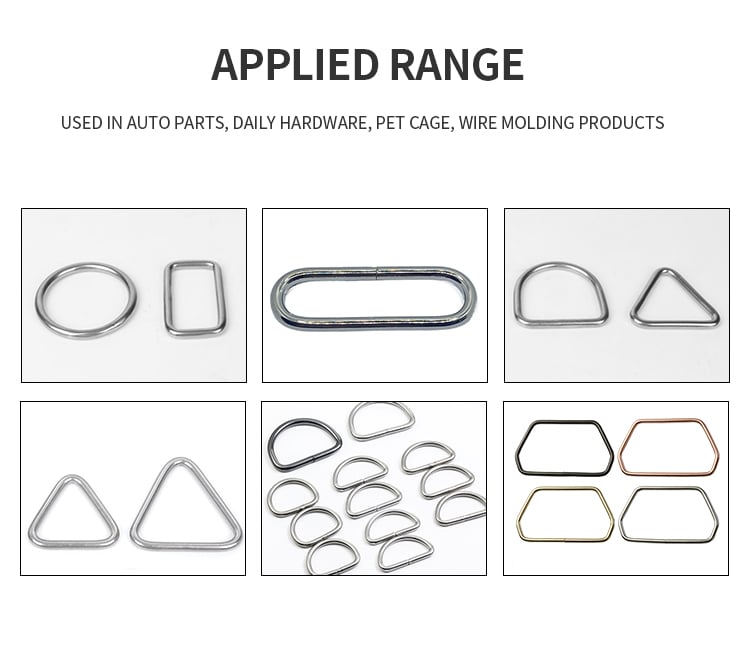
A properly configured wire buckle making machine can be used for products such as:
- D-rings
- S-hooks
- Keychain rings and hooks
- Bag buckles
- Clothing and garment fasteners
- Cabinet and furniture buckles
- Hardware hooks
- Pet cage and animal cage fasteners
- Lighting hardware
- Various customized wire fasteners
The actual forming process depends on the geometry of the product.
For example, a D-ring requires controlled bending to create a symmetrical shape, while an S-hook requires multiple bending directions and consistent spacing between the two ends. Small keychain components may require compact forming movements and stable feeding, while larger industrial fasteners may require greater forming force.
This is why choosing a machine based only on the product name is not enough.
Before selecting equipment, it is better to provide the manufacturer with a product drawing or sample. The manufacturer can then evaluate the required forming sequence, tooling structure and machine configuration.
D-Rings, S-Hooks and Other Fasteners
For relatively simple two-dimensional shapes, a dedicated buckle machine can often combine several production steps into one continuous process.
For more complicated three-dimensional wire products, a CNC 2D or 3D wire bending machine may be more suitable.
Jinchun's product range includes dedicated metal wire buckle equipment as well as CNC wire bending solutions, allowing the machine configuration to be selected according to the product geometry rather than forcing every product into the same machine type.
2. Integrated Straightening, Cutting and Bending Workflow
One of the most important advantages of an automatic buckle forming system is the integration of multiple production steps.
A traditional production process may require separate equipment for:
- Wire straightening
- Wire feeding
- Cutting
- Bending or forming
- Manual handling between processes
Every additional transfer creates another opportunity for positioning errors, inconsistent dimensions and production delays.
An integrated machine can coordinate feeding, cutting and forming within one production workflow. This reduces manual handling and makes the production process easier to standardize.
For buckle production, the feeding system must deliver the wire consistently before the forming tools perform each bending operation. The cutting position must also match the forming sequence so that the finished product maintains a stable overall dimension.
This becomes particularly important when producing thousands of identical fasteners.
Why the Complete Workflow Matters
A machine may appear fast when viewed only from its bending movement. However, the real production cycle also includes feeding, positioning, cutting, forming and product discharge.
Therefore, when comparing different machines, do not ask only:
"How fast can it bend?"
Instead, ask:
"How long does it take to produce one complete, qualified buckle?"
This gives you a much more realistic basis for comparing production efficiency.
3. How to Compare Machine Size and Forming Capacity
Machine selection should begin with the product rather than the machine model.
The most important questions include:
- What is the maximum wire diameter?
- What is the finished buckle size?
- How many bends are required?
- Is the product flat or spatial?
- How tight are the required bends?
- Does the product require additional operations?
- What production volume is expected?
A machine that is oversized for a small buckle may increase unnecessary investment, while a machine that is too small may struggle with the required forming force or tooling space.
Jinchun's buckle machine range includes different configurations for different product requirements. For example, the company's current product range includes buckle machine configurations designed around different feeding and forming requirements, while customized functions can be considered when the product requires additional operations.
The best model therefore depends on the actual product rather than simply choosing the largest available specification.
Production Capacity Is More Than Machine Speed
Production capacity should be evaluated together with:
- Product shape
- Number of forming operations
- Wire feeding distance
- Cutting method
- Tooling movement
- Product discharge
- Operator intervention
- Required quality inspection
A simple buckle may have a very short cycle, while a more complicated fastener can require additional forming movements.
For this reason, manufacturers should confirm production capacity through an actual sample test whenever possible.
4. Wire Diameter, Material and Buckle Shape
The wire itself is one of the most important factors in machine selection.
The same buckle design can behave differently when produced from different materials or wire sizes.
Common considerations include:
- Carbon steel wire
- Stainless steel wire
- Galvanized wire
- Other suitable metal wires
- Round wire
- Flat wire
- Square or specially shaped wire
Material affects forming resistance, springback, surface condition and tooling wear.
Wire diameter also affects the required forming force and tooling configuration. A thin wire used for a small keychain component is very different from a heavier wire used for an industrial hook.
Wire Diameter Is Not the Only Parameter
Two wires with the same nominal diameter can still behave differently during forming because of differences in material grade, hardness, surface treatment and mechanical properties.
Therefore, when requesting a quotation, it is better to provide:
Material + exact wire diameter + product drawing or sample
rather than simply saying "I need a buckle machine."
This information gives the technical team a much clearer basis for selecting the machine and tooling.
Product Geometry Also Matters
The forming shape should be reviewed together with the wire specifications.
For example:
- A simple D-ring may require a relatively straightforward bending sequence.
- An S-hook may require multiple directional bends.
- A keychain component may require precise end positioning.
- A customized fastener may require several forming stages.
If the product has multiple planes or complicated spatial geometry, a CNC 3D wire forming solution may be more appropriate than a dedicated buckle machine.
5. Tooling Changeover and Multi-Product Production
Many manufacturers do not produce only one type of buckle.
They may need to manufacture several sizes of D-rings, different S-hooks, keychain components or customized fasteners on the same production line.
In this situation, tooling changeover becomes an important purchasing consideration.
Ask the machine supplier:
- How is the tooling changed?
- How long does a typical changeover take?
- Can multiple product specifications share common tooling?
- Which parts need to be replaced?
- Can the machine store different forming programs?
- Can the forming sequence be adjusted for different products?
A machine with convenient changeover can be more valuable than a machine that is slightly faster on a single product but difficult to adjust.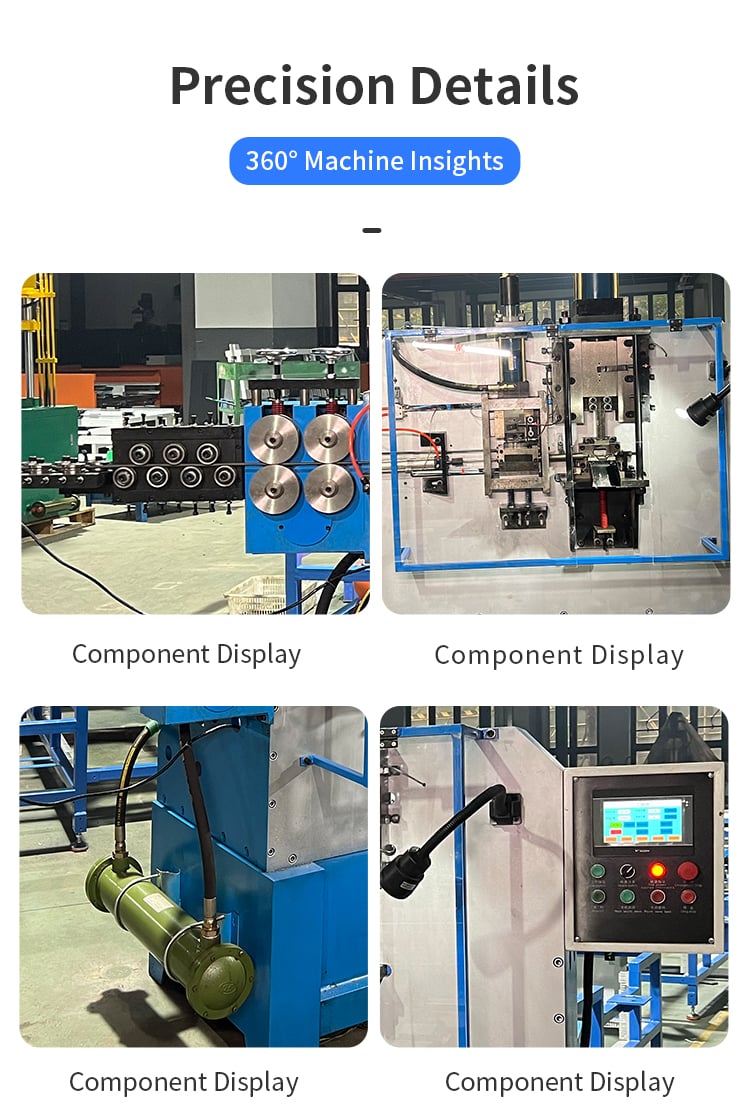
Universal or Dedicated Tooling?
For frequently produced standard buckle shapes, a universal tooling concept can simplify production.
For customized products, dedicated tooling may be required to achieve the correct geometry.
Jinchun's current buckle machine information highlights the use of forming solutions intended for multiple common buckle specifications, while customized functions and configurations can also be considered according to product requirements.
The important point is to confirm tooling compatibility with your actual product before placing an order.
6. How to Evaluate Sample Quality and Real Cycle Time
A machine specification sheet can tell you a lot, but it cannot replace an actual forming test.
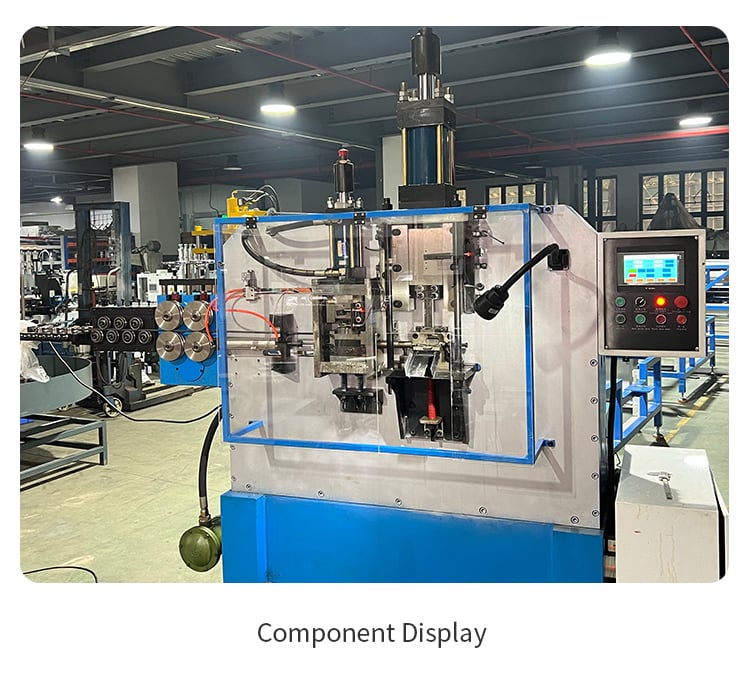
The test should evaluate more than whether the machine can make the shape.
Check:
1. Dimensional consistency
Measure the finished buckle and compare it with your drawing.
Pay attention to:
- Overall length
- Overall width
- Bend position
- Opening size
- End position
- Symmetry
2. Forming quality
Check whether the bends are smooth and consistent.
There should be no obvious deformation, excessive marks or unstable forming between different pieces.
3. Wire feeding stability
The wire should feed consistently throughout continuous production.
Unstable feeding can affect the final dimensions even when the bending program itself is correct.
4. Complete production cycle
Record the time required to produce a complete qualified product.
Do not calculate production capacity from bending movement alone.
A realistic cycle-time test should include feeding, cutting, forming and product discharge.
5. Continuous production
A machine that produces one perfect sample is not necessarily ready for mass production.
If possible, ask for a continuous test to observe:
- Product consistency
- Tooling stability
- Feeding reliability
- Production rhythm
- Operator involvement
- Scrap rate
This gives you a much clearer picture of how the machine will perform in your factory.
What Information Should You Send Before Asking for a Quote?
If you are looking for a Metal Wire Buckle Machine , you do not need to know the exact machine model before contacting the manufacturer.
Instead, provide the information you already have.
The most useful information includes:
1. Product photo or drawing
A clear product image helps the technical team understand the forming shape.
2. Wire material
For example, steel, stainless steel, galvanized wire or another material.
3. Exact wire diameter
The wire diameter directly affects machine and tooling selection.
4. Product dimensions
Provide the overall dimensions and important bending positions if available.
5. Tolerance requirements
If your customer has dimensional tolerance requirements, include them.
6. Target production volume
Tell the manufacturer approximately how many pieces you need to produce per day, shift or month.
7. Additional operations
Mention whether the product needs welding, punching, stamping or other processes.
With these details, the supplier can evaluate whether a dedicated buckle machine, CNC wire bending machine or a customized production solution is more appropriate.
Conclusion: Choose the Machine Around Your Product
The best wire buckle making machine is not necessarily the machine with the highest advertised speed or the largest forming capacity.
The right choice should match your:
- Product shape
- Wire material
- Wire diameter
- Finished dimensions
- Tolerance requirements
- Tooling requirements
- Product variety
- Target production volume
For standard D-rings, S-hooks, keychains and similar fasteners, an integrated straightening, cutting and bending solution can simplify the production process. For more complicated wire products, a CNC 2D or 3D forming machine may provide greater flexibility.
If you are comparing buckle making machines, send us your product drawing or sample, wire material, exact wire diameter, product dimensions, required tolerances and target production volume.
Our technical team can evaluate your product and recommend the most suitable machine configuration and tooling solution based on your actual production requirements.
Table of Contents
- 1. What Products Can a Wire Buckle Making Machine Manufacture?
- 2. Integrated Straightening, Cutting and Bending Workflow
- 3. How to Compare Machine Size and Forming Capacity
- 4. Wire Diameter, Material and Buckle Shape
- 5. Tooling Changeover and Multi-Product Production
- 6. How to Evaluate Sample Quality and Real Cycle Time
- What Information Should You Send Before Asking for a Quote?
- Conclusion: Choose the Machine Around Your Product