 EN
EN


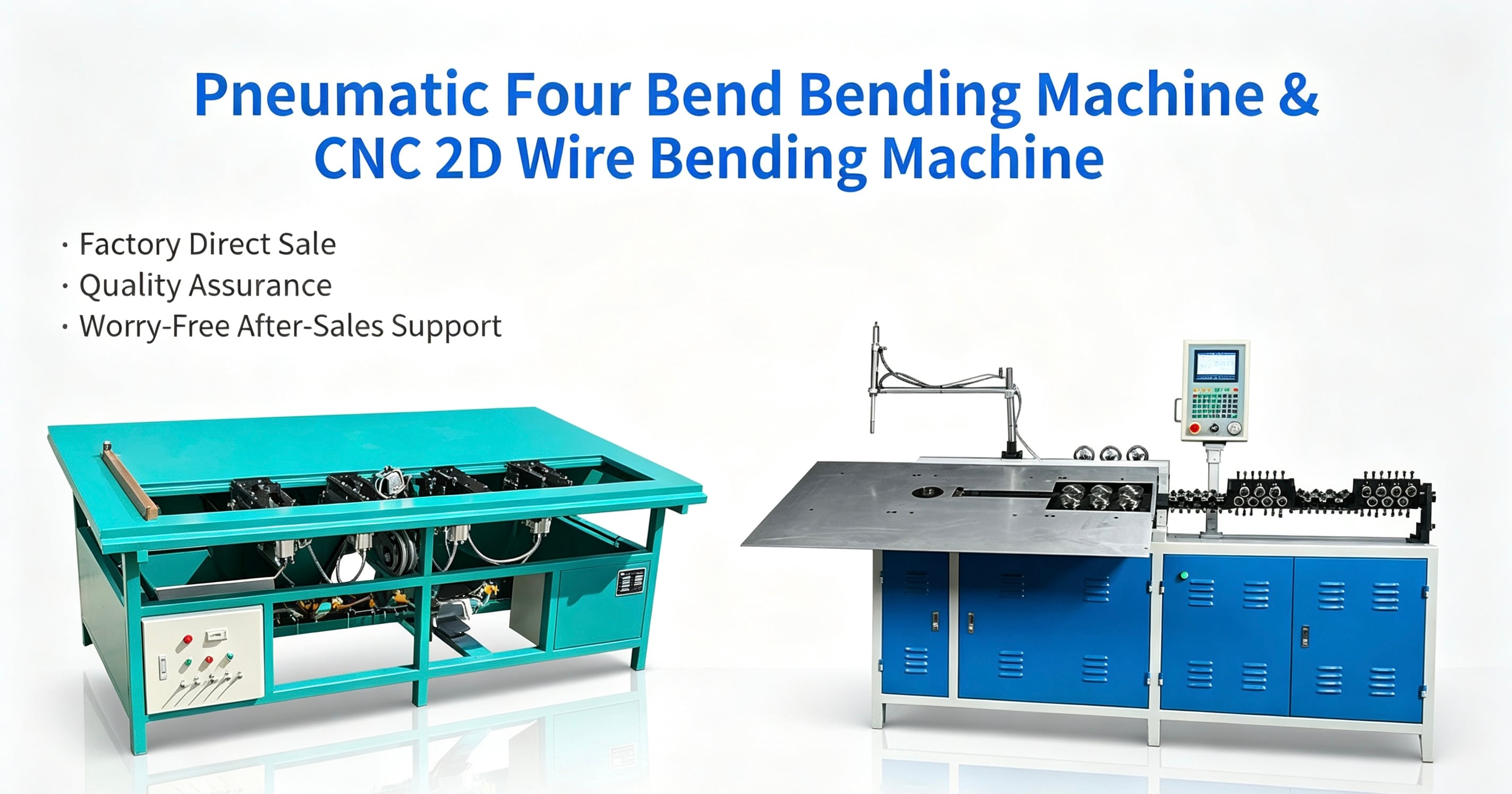
Choosing a wire bending machine is not simply a matter of comparing machine prices or maximum wire diameter. The better question is: What kind of parts do you produce, how many variations do you need, and how often does your production change?
A pneumatic four-bend bending machine can be highly effective when one fixed product requires repeated bending operations and stable high-volume production. A CNC 2D Wire Bending Machine , on the other hand, is generally more suitable when manufacturers need programmable forming, multiple product models, frequent changeovers, or more complex 2D geometries.
Both machines can automate wire forming, but they are designed around different production strategies. Understanding the differences in forming method, tooling, setup, speed, flexibility and operator requirements can help you choose the right machine before making an investment.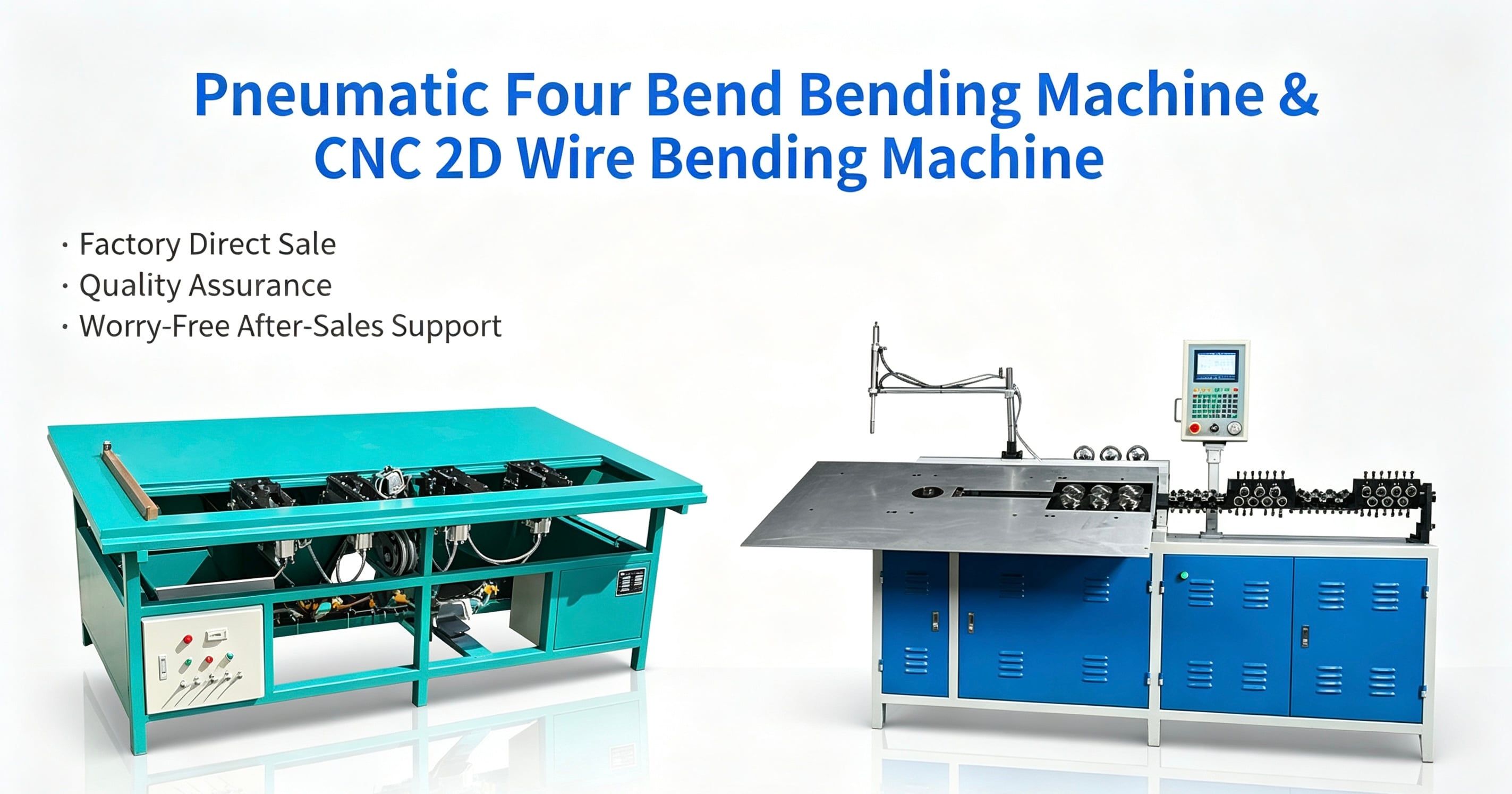
1. How Pneumatic Four-Bend Forming Works
A pneumatic four-bend bending machine uses a dedicated forming structure to bend wire into a predetermined shape through a sequence of controlled bending operations.
The basic concept is straightforward: wire is positioned and fed into the forming area, while pneumatic mechanisms drive the bending tools to create the required angles or sections. Because the machine is built around a specific product geometry, the tooling and forming sequence can be optimized for that part.
This approach is particularly attractive when the same product is manufactured continuously.
For example, if a factory produces a wire frame with four main bending points and the dimensions remain unchanged, a dedicated four-bend system can provide a simple and efficient production solution.
The key advantage is product-focused automation. Instead of programming a completely new bending sequence for every part, the machine is configured around the target geometry.
This is why the machine can also be described in some applications as a four slide wire bending machine. The exact machine configuration and tooling should be selected according to the wire material, diameter, shape and production requirements.
When is pneumatic four-bend forming a good choice?
It is worth considering when:
- The product shape is fixed or changes very rarely.
- The part has a relatively simple and repeatable bending pattern.
- Production volume is high.
- Dedicated tooling can be justified by the expected output.
- Fast and repeatable forming is more important than product flexibility.
- Operators do not need to frequently create new programs.
In short, if you are making one product thousands or millions of times, a dedicated forming concept can make a lot of sense.
2. How CNC 2D Wire Bending Works
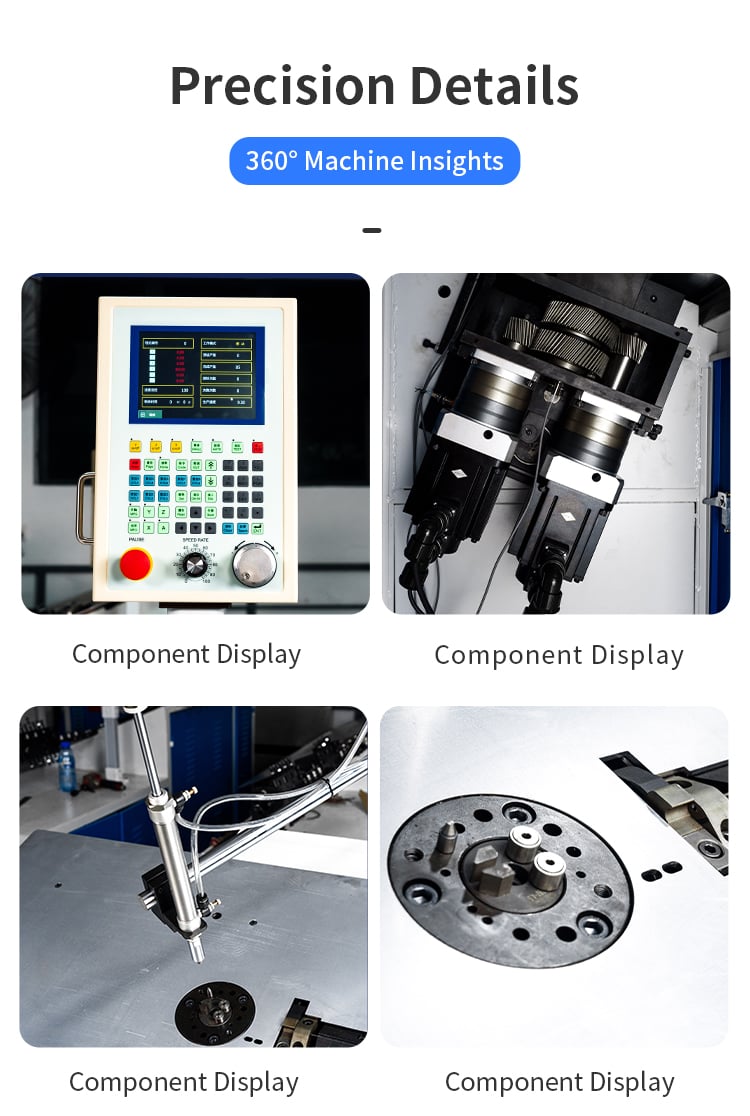
A CNC 2D wire bending machine takes a different approach.
Instead of designing the entire forming process around one fixed product, the machine uses programmable control to coordinate wire feeding and bending operations according to the required shape.
The operator can enter or adjust forming parameters for different Products . This makes CNC technology particularly useful for manufacturers that produce multiple wire components or regularly receive customized orders.
Jinchun's current product range includes CNC 2D wire bending machines in different wire-size configurations, including models listed for applications such as automotive wire components, hooks, baskets, racks and other wire frames.
A CNC 2D wire bending machine can therefore be a better fit when the production environment requires flexibility rather than a single dedicated product.
Typical applications may include:
- Wire hooks
- Brackets
- Wire frames
- Storage rack components
- Kitchen and bathroom wire products
- Automotive wire components
- Furniture components
- Custom wire forms
- Small-batch and multi-model production
The important point is that CNC does not mean every product is automatically better or faster. Its major advantage is the ability to adapt to different 2D wire shapes without completely redesigning the production concept for every new part.
3. Part Geometry and Product-Variety Comparison
The geometry of your product should be one of the first things you evaluate.
A pneumatic four-bend bending machine is most attractive when the part has a stable and predictable geometry.
Imagine a manufacturer producing a rectangular wire frame with four consistent bending positions. The product dimensions are fixed, the wire specification rarely changes, and the monthly order volume is high.
In this situation, a dedicated four-bend setup can be very practical.
The situation changes when the factory produces several different wire frames.
For example, one customer may require a 300 mm × 200 mm frame, another may need a 450 mm × 300 mm frame, while a third customer requires additional bends or different dimensions.
With this type of mixed production, frequent tooling changes can become a major consideration.
A CNC 2D wire bending machine is generally more suitable when the factory needs to move between different programmed shapes.
Fixed product vs. variable product
| Production requirement | Pneumatic Four-Bend | CNC 2D Wire Bending |
|---|---|---|
| One fixed product | Excellent fit | Suitable |
| High-volume repeat production | Excellent fit | Excellent fit |
| Multiple product models | Limited | Excellent fit |
| Frequent dimension changes | Less convenient | More convenient |
| Frequent new orders | Less flexible | More flexible |
| Dedicated tooling | Usually required | More programmable |
| Custom 2D shapes | Depends on tooling | Strong advantage |
| Small-batch production | May be less economical | Strong fit |
| Long-term stable production | Strong fit | Strong fit |
The decision becomes clearer when you think about how often your production changes, not only how complicated the current product looks.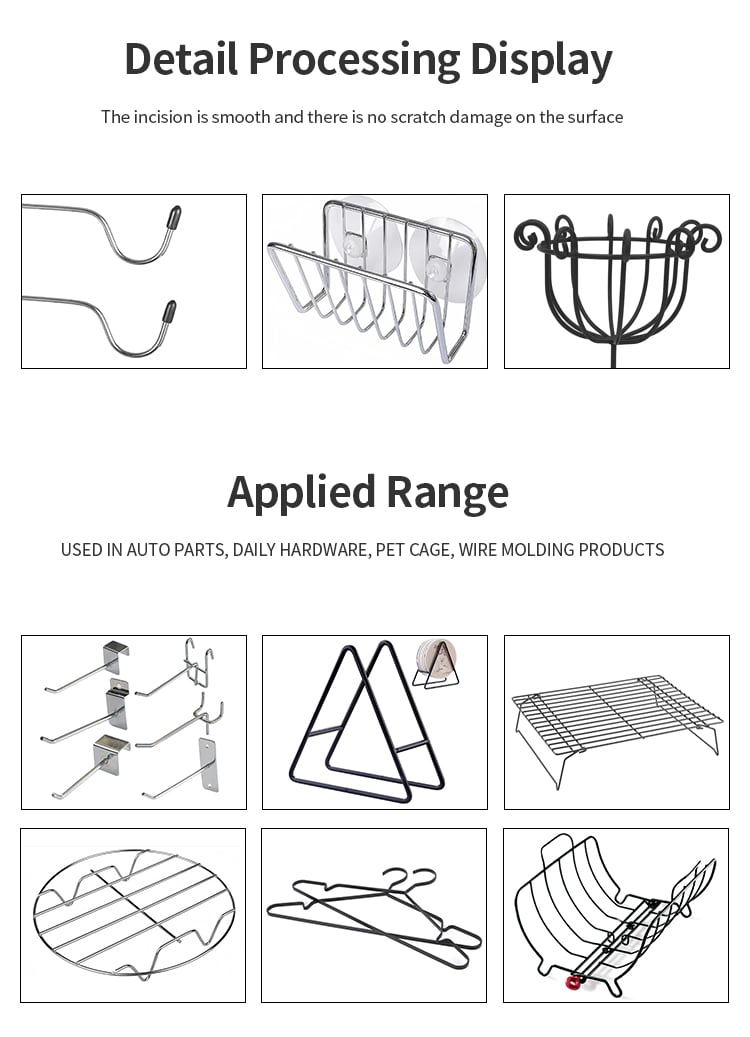
4. Tooling Cost, Setup Time and Changeover Requirements
Tooling is one of the most important differences between dedicated and programmable wire forming.
A pneumatic four-bend bending machine normally relies heavily on dedicated tooling. The tooling determines where and how the wire is bent, so the setup can be highly optimized for a specific part.
This can be an advantage in stable mass production.
Once the tooling is properly prepared and the machine is adjusted, operators can continue producing the same part without repeatedly creating new bending programs.
However, dedicated tooling becomes less attractive when your product range changes frequently.
Every major product variation may require tooling adjustment or replacement. If a factory produces many different wire products, the accumulated tooling requirements can affect both cost and production efficiency.
A CNC 2D wire bending machine shifts more of this flexibility into programmable control.
Instead of relying entirely on dedicated mechanical forming arrangements, different product dimensions and bending sequences can be managed through CNC programming, depending on the machine configuration.
This does not eliminate tooling considerations. Different wire diameters, materials, bend radii and product geometries can still require appropriate tooling and setup.
The difference is that CNC generally gives the manufacturer more flexibility when changing from one 2D product to another.
For factories with many SKUs, that flexibility can be more valuable than the initial simplicity of a dedicated machine.
5. Production Speed, Repeatability and Operator Requirements
Production speed should also be evaluated together with product variety.
For a stable, high-volume product, a pneumatic four-bend bending machine can be extremely efficient because the machine is dedicated to a defined forming sequence.
There is less need to rethink the production process for every new part. Once the machine and tooling are correctly configured, operators can focus on material feeding, production monitoring and quality inspection.
This can be particularly attractive for manufacturers with long production runs.
CNC 2D wire bending machines take a different advantage: repeatability combined with flexibility.
Once a product program has been properly developed and verified, the machine can reproduce the programmed geometry consistently. When another product is required, the operator can select or create another program rather than rebuilding an entirely dedicated production concept.
This makes CNC especially useful for factories that operate in a B2B environment where customer requirements change frequently.
For example, a wire-product manufacturer may receive orders for:
- 1,000 pieces of Product A
- 3,000 pieces of Product B
- 500 pieces of Product C
- 2,000 pieces of Product D
A flexible CNC solution may make more sense than maintaining dedicated tooling for every product.
The operator requirement also changes.
A dedicated pneumatic machine can be relatively straightforward once its tooling and process have been established. CNC equipment requires operators who understand programming, parameter setting and production adjustment.
Therefore, the correct question is not simply “Which machine needs fewer operators?”
Instead, ask:
“Which machine minimizes the total production effort for our product mix?”
6. Decision Table for Fixed Products and Mixed Production
The simplest way to make the decision is to start with your production model.
Choose a pneumatic four-bend bending machine if:
Your product has a fixed geometry and the same bending positions are repeated continuously.
Your production volume is high enough to justify dedicated tooling.
You want a machine optimized around one stable product rather than frequent product changes.
You value a dedicated forming process for long production runs.
Typical examples may include standardized wire frames, fixed brackets or other products with a stable four-bend configuration.
Choose a CNC 2D wire bending machine if:
You manufacture multiple wire products.
Product dimensions change frequently.
You receive customized orders from different customers.
You need to produce small and medium batches economically.
You expect your product range to expand.
You want programmable control over different 2D wire shapes.
For manufacturers supplying multiple industries, this flexibility can be especially important. Jinchun's website currently lists applications covering areas such as automotive and motorcycle parts, furniture, kitchen and bathroom products, warehousing and daily hardware.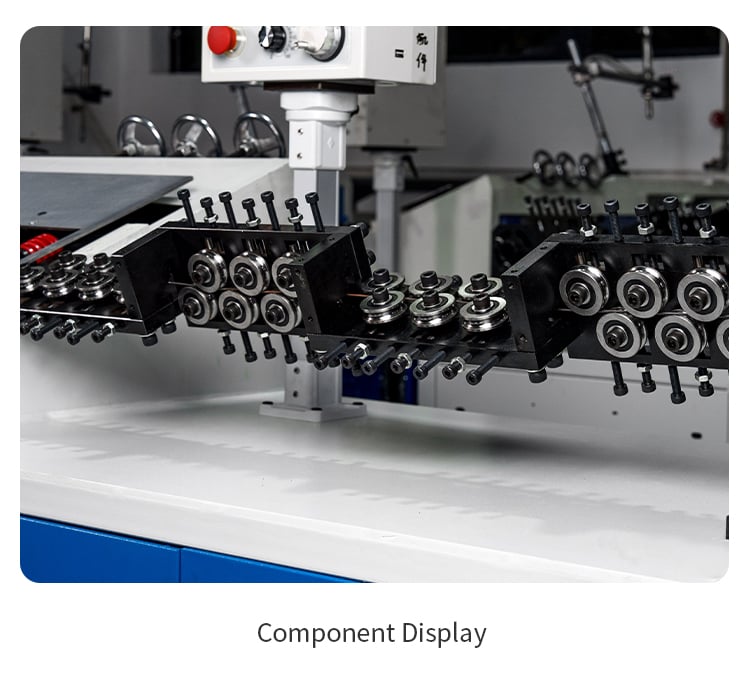
So, Which Machine Is Right for Your Parts?
There is no universal winner between a pneumatic four-bend bending machine and a CNC 2D wire bending machine.
The better choice depends on your production strategy.
If you have one stable product, high production volume and a repeatable four-bend geometry, a pneumatic four-bend solution can be a practical choice because the machine and tooling can be optimized specifically for that product.
If you have multiple product models, changing dimensions, customized orders or frequent changeovers, a CNC 2D wire bending machine is usually the more flexible solution.
The most important purchasing decision is therefore not simply comparing machine prices. You should compare the machine against your actual production requirements:
Product geometry + wire material + wire diameter + dimensional tolerance + product variety + target output = the right machine configuration.
Before choosing a machine, send Jinchun your product drawing or sample, wire material, wire diameter, key dimensions and required tolerances, together with your target production volume. Our team can then evaluate the forming process and recommend the machine configuration that best matches your parts.
A machine should fit your production—not the other way around.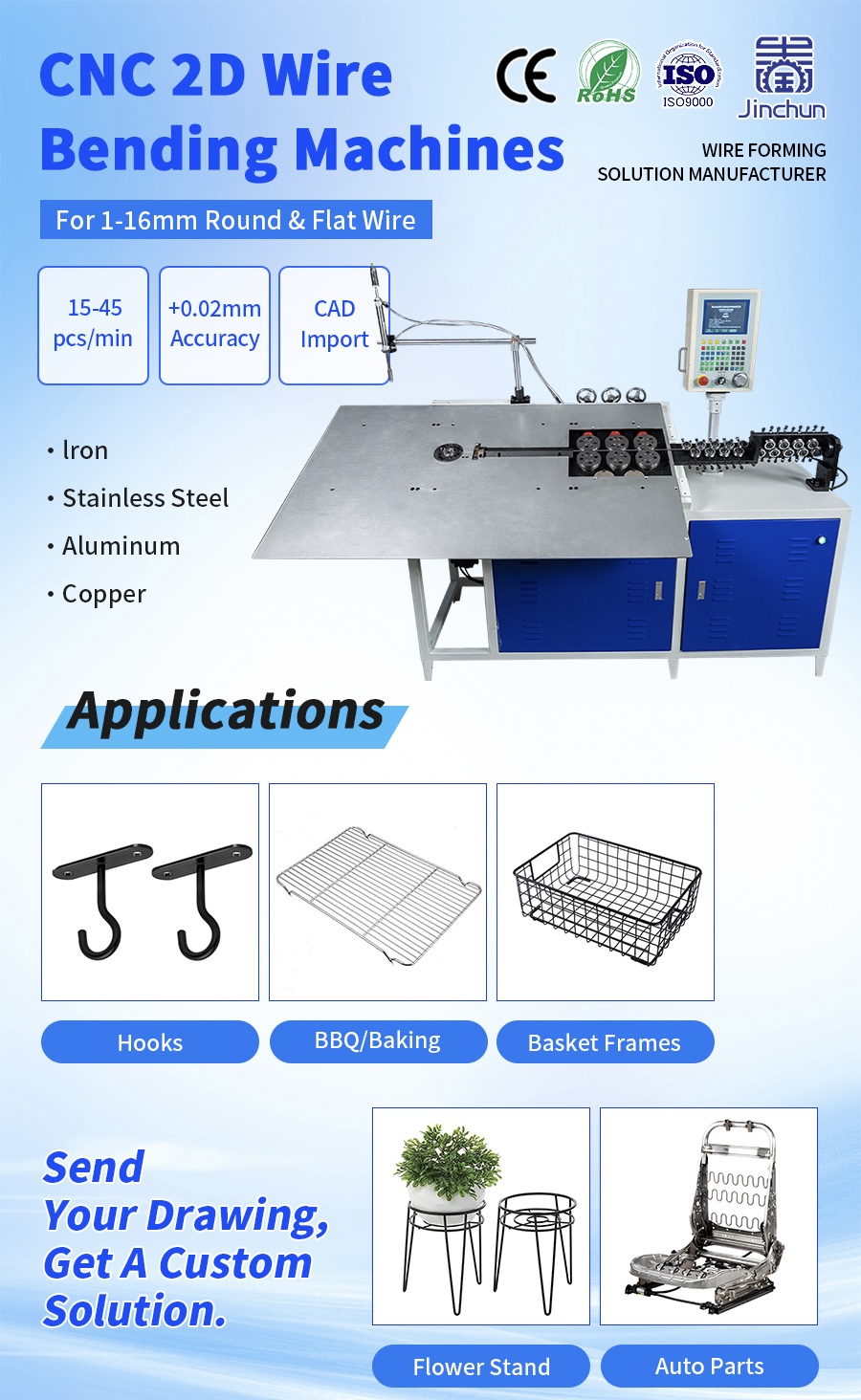
Table of Contents
- 1. How Pneumatic Four-Bend Forming Works
- 2. How CNC 2D Wire Bending Works
- 3. Part Geometry and Product-Variety Comparison
- 4. Tooling Cost, Setup Time and Changeover Requirements
- 5. Production Speed, Repeatability and Operator Requirements
- 6. Decision Table for Fixed Products and Mixed Production
- So, Which Machine Is Right for Your Parts?