101, Building 9, Jicheng Science And Technology Innovation Park, No. 25, Sanle East Road, Shunjiang Community, Beijiao Town, Foshan, Guangdong, China +86-18038626853 [email protected]
101, Building 9, Jicheng Science And Technology Innovation Park, No. 25, Sanle East Road, Shunjiang Community, Beijiao Town, Foshan, Guangdong, China +86-18038626853 [email protected]

As wire products become more complex, traditional 2D bending is no longer enough for every application.
Many modern wire components are not simply flat shapes. They require multiple bending directions, different angles, spatial offsets and precise three-dimensional geometries.
For manufacturers producing automotive seat frames, furniture frames, appliance components, wire baskets and other complex wire structures, this creates a common challenge:
How can you produce a complicated 3D wire component efficiently, accurately and consistently?
This is where a 3D Rotating Wire Forming Machine can make a significant difference.
By combining wire feeding, controlled rotation and multi-directional forming, Jinchun's 3D wire forming solutions help manufacturers move beyond traditional planar bending and build a more efficient automated production process. 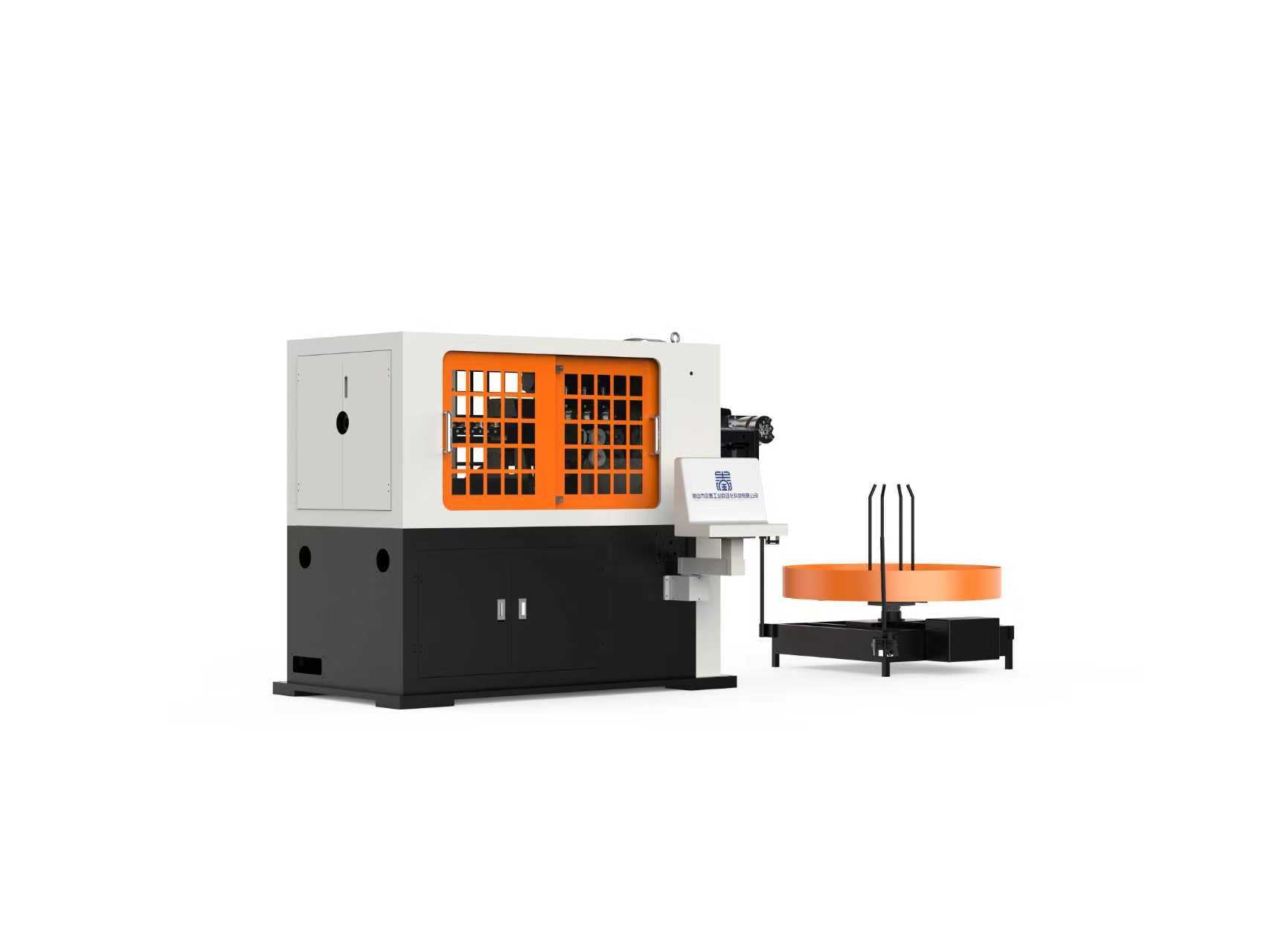
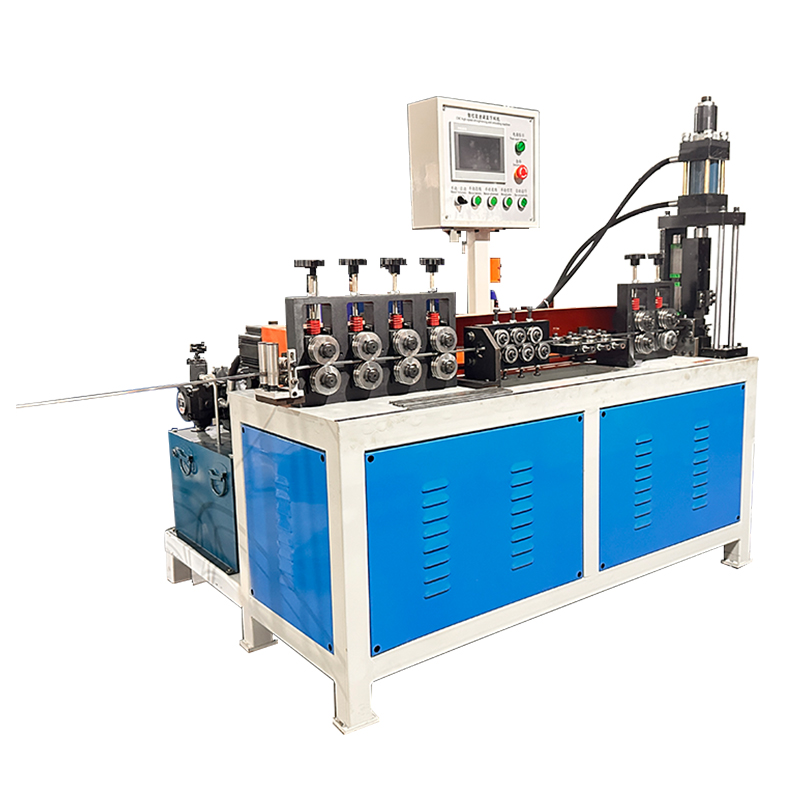
A 3D rotating wire forming machine is designed to form wire into three-dimensional structures rather than limiting the forming process to a single plane.
During production, the wire can be controlled and rotated while different bending operations are performed according to the programmed product geometry.
This makes it possible to produce complex wire components that would otherwise require:
Instead of repeatedly moving the workpiece between different processes, a 3D forming solution can integrate more operations into a continuous automated workflow.
The result? Less handling, fewer production steps and greater flexibility.
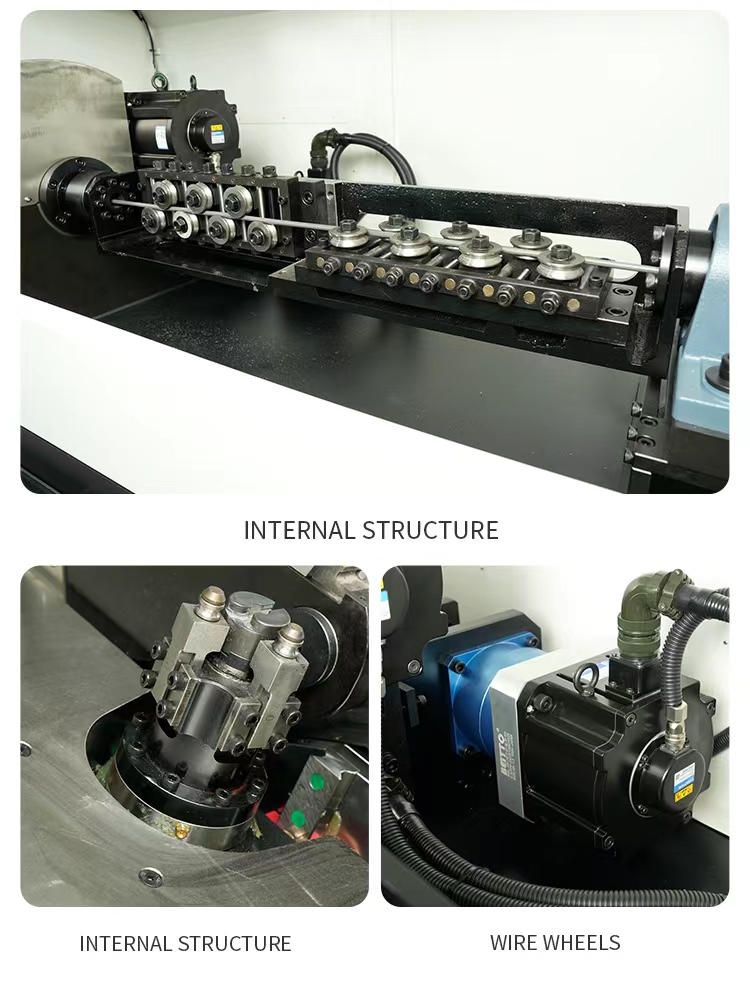
The biggest advantage of 3D wire forming is its ability to handle spatial wire geometries.
A conventional 2D bending machine mainly works within a flat plane. This is ideal for hooks, rings, flat frames and many standard wire components.
But what happens when your product requires the wire to:
This is where 3D forming becomes particularly valuable.
Instead of thinking only in terms of X and Y, 3D forming allows manufacturers to work with a more complex spatial geometry.
More forming freedom means more product possibilities.
Imagine producing a complicated wire frame using a conventional process.
You may need to:
Bend → Stop → Reposition → Bend again → Adjust → Transfer → Perform another operation
Every additional operation consumes time.
It also introduces another opportunity for:
A 3D rotating wire forming machine can integrate more forming movements into an automated sequence.
The production concept becomes closer to:
Wire Feeding → Straightening → 3D Rotation → Multi-Directional Forming → Cutting
Fewer manual interventions can mean a simpler and more efficient production flow.
For manufacturers producing thousands or even millions of wire components, production efficiency matters.
A few seconds saved on one component can become a significant amount of production time over an entire year.
3D wire forming can help improve efficiency by reducing:
Operators spend less time repeatedly positioning wire components.
More forming operations can potentially be completed within the same automated process.
Less movement between different machines can simplify production flow.
Once the appropriate program and tooling are established, production can be repeated more consistently.
For high-volume production, this can help manufacturers achieve higher throughput with fewer unnecessary production steps.
Complex wire products often require experienced operators to perform repeated bending and positioning.
As product complexity increases, the dependence on skilled labor can become a major production challenge.
A CNC-controlled 3D forming process can automate many repetitive movements.
This allows your production team to spend less time on:
Manual positioning → Manual bending → Manual adjustment
and more time on:
Production monitoring → Quality control → Process management
For factories facing rising labor costs or difficulty recruiting skilled workers, automation can become an important part of the production strategy.
For industrial customers, producing one good sample is not enough.
The real challenge is producing hundreds, thousands or millions of identical components.
Complex wire products can be sensitive to small changes in:
A CNC-controlled forming process helps standardize the forming sequence.
Once the machine is properly configured, the same programmed process can be repeated across production batches.
This can help manufacturers achieve:
Stable forming + Repeatable dimensions + Consistent production
For applications such as automotive components, where dimensional consistency is especially important, this can be a major advantage.
Automotive seat wire frames are a good example of why 3D wire forming is becoming increasingly important.
A seat frame may contain multiple bends and spatial changes that cannot be efficiently handled as a simple flat wire shape.
The wire may need to form:
Using a traditional production method may require multiple forming operations and manual repositioning.
A suitable 3D wire forming machine can coordinate different forming movements to create the required spatial structure more efficiently.
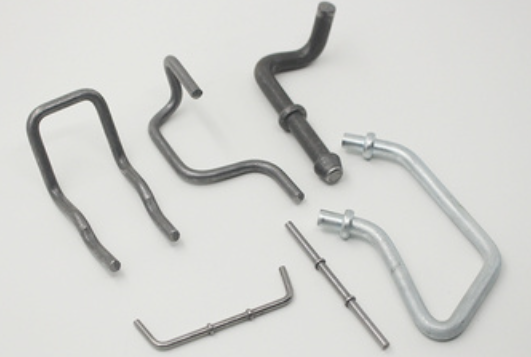
This makes 3D forming particularly attractive for manufacturers supplying automotive seating systems and other complex wire components.
Today's manufacturing market is moving toward smaller batches, customized designs and frequent product changes.
Customers may ask for:
A flexible CNC 3D wire forming system allows manufacturers to adjust production programs according to different product designs.
This means you are not simply buying a machine for today's product.
You are investing in a production system that can potentially support tomorrow's products and new customer projects.
That flexibility can be extremely valuable for manufacturers who want to expand their product portfolio.
A major advantage of 3D wire forming is its versatility.
Depending on the wire material, diameter, geometry and machine configuration, 3D forming technology can be considered for applications such as:
Instead of focusing on only one product, manufacturers can explore a wider range of wire-forming applications.
More applications can mean more opportunities for new orders.
When evaluating a new machine, purchase price is only one part of the equation.
A better question is:
How much can the machine save throughout its production lifetime?
A suitable 3D wire forming solution can potentially reduce costs associated with:
The goal is not simply to purchase a more advanced machine.
The goal is to build a more efficient production process.
You may want to consider a 3D wire forming solution if:
✔ Your products require bending in multiple directions
✔ Your current process requires repeated manual repositioning
✔ One product needs to pass through several bending operations
✔ You are using multiple machines to complete one wire component
✔ Labor costs are increasing
✔ You need better dimensional consistency
✔ Your customers are requesting more complicated wire designs
✔ You want to expand into higher-value wire products
If several of these situations sound familiar, 3D wire forming may be the next logical step for your production line.
At Jinchun, we understand that every wire product has different forming requirements.
There is no single machine configuration that is suitable for every application.
That is why we evaluate the actual product geometry and production requirements before recommending a solution.
Our technical team can consider factors such as:
Whether you are upgrading an existing production line or developing a completely new wire product, we can help evaluate the feasibility of a suitable 3D forming solution.
Complex wire products should not automatically mean complex production.
With the right 3D Rotating Wire Forming Machine, manufacturers can transform complicated spatial wire designs into a more automated, repeatable and efficient manufacturing process.
From automotive seat frames to customized industrial wire components, 3D forming technology provides manufacturers with greater freedom to produce what traditional 2D bending cannot easily achieve.
The future of wire forming is not only about bending faster.
It is about forming more complex products with fewer operations, less manual handling and greater consistency.
Send us your product drawing or sample, together with:
Our technical team can evaluate your product and recommend a suitable 3D wire forming solution.
Jinchun — Turning Complex Wire Designs into Efficient Production.
 Hot News
2026-09-19
2026-09-18
2026-09-17
2026-09-16
2026-09-15
2026-09-14
 EN
EN