101, Building 9, Jicheng Science And Technology Innovation Park, No. 25, Sanle East Road, Shunjiang Community, Beijiao Town, Foshan, Guangdong, China +86-18038626853 [email protected]
101, Building 9, Jicheng Science And Technology Innovation Park, No. 25, Sanle East Road, Shunjiang Community, Beijiao Town, Foshan, Guangdong, China +86-18038626853 [email protected]

In wire forming production, 2D bending machines are an effective solution for many products. But as product designs become more complex, manufacturers are increasingly looking for a more flexible way to produce three-dimensional wire components.
So, when should you consider upgrading from 2D to 3D wire bending?
The answer often comes down to product complexity, production efficiency, tooling requirements, and the need to reduce secondary operations.
For applications such as automotive seat wire frames, headrest frames, spring frames, and other spatial wire structures, a 3D wire forming machine can provide a significant production advantage.
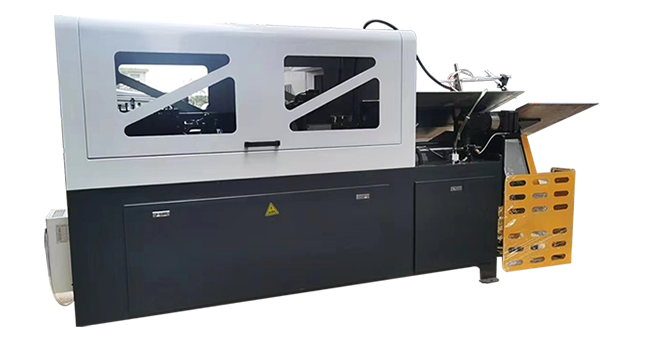
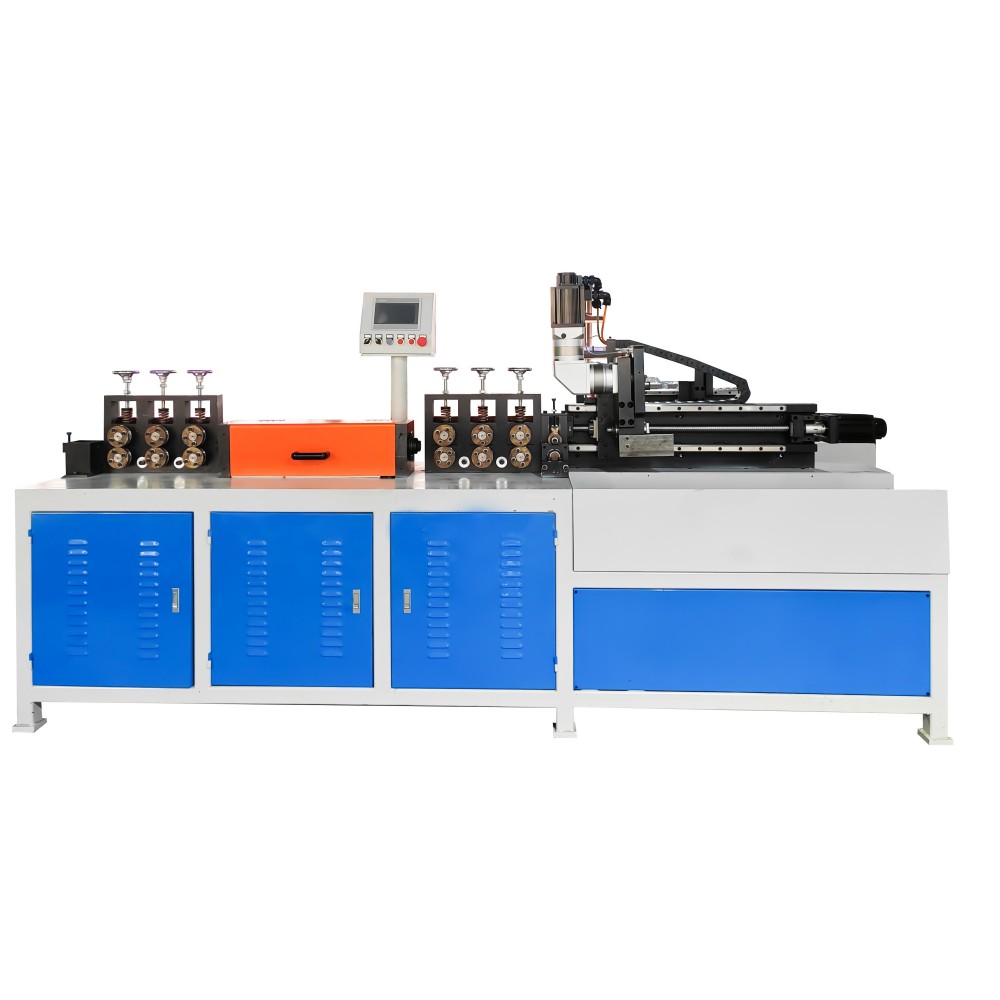
A 2D wire bending machine mainly forms wire within a flat plane. It is well suited for products such as simple frames, hooks, brackets, rings, and other flat wire components.
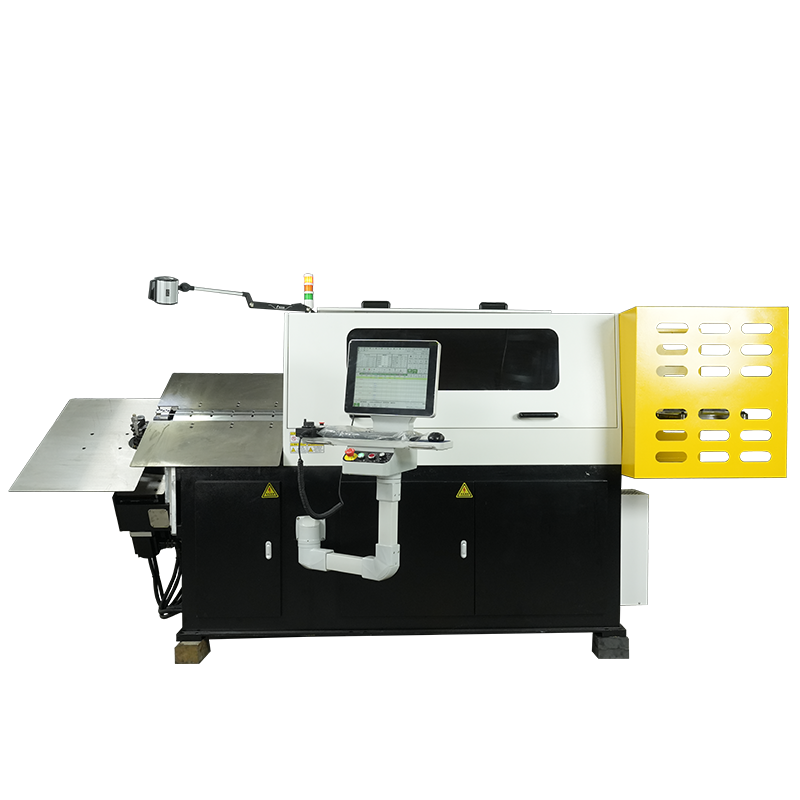
A 3D wire forming machine, however, can create bends in multiple directions, allowing the wire to be formed into a spatial structure.
This means manufacturers can produce more complex components in a continuous forming process, rather than relying on multiple machines or manual repositioning.
The key difference is simple:
2D forming creates shapes on a plane, while 3D forming creates complete spatial structures.
Let's take automotive seat wire frames as an example.
A seat wire frame may look simple at first glance, but its actual geometry can include:
With a traditional 2D production process, some of these operations may require multiple forming steps, manual repositioning, or additional equipment.
This can increase:
With a suitable 3D wire forming machine, more of these forming operations can be integrated into one automated process.
The wire can be fed, bent, rotated, and formed according to the programmed geometry, helping manufacturers achieve a more consistent finished product.
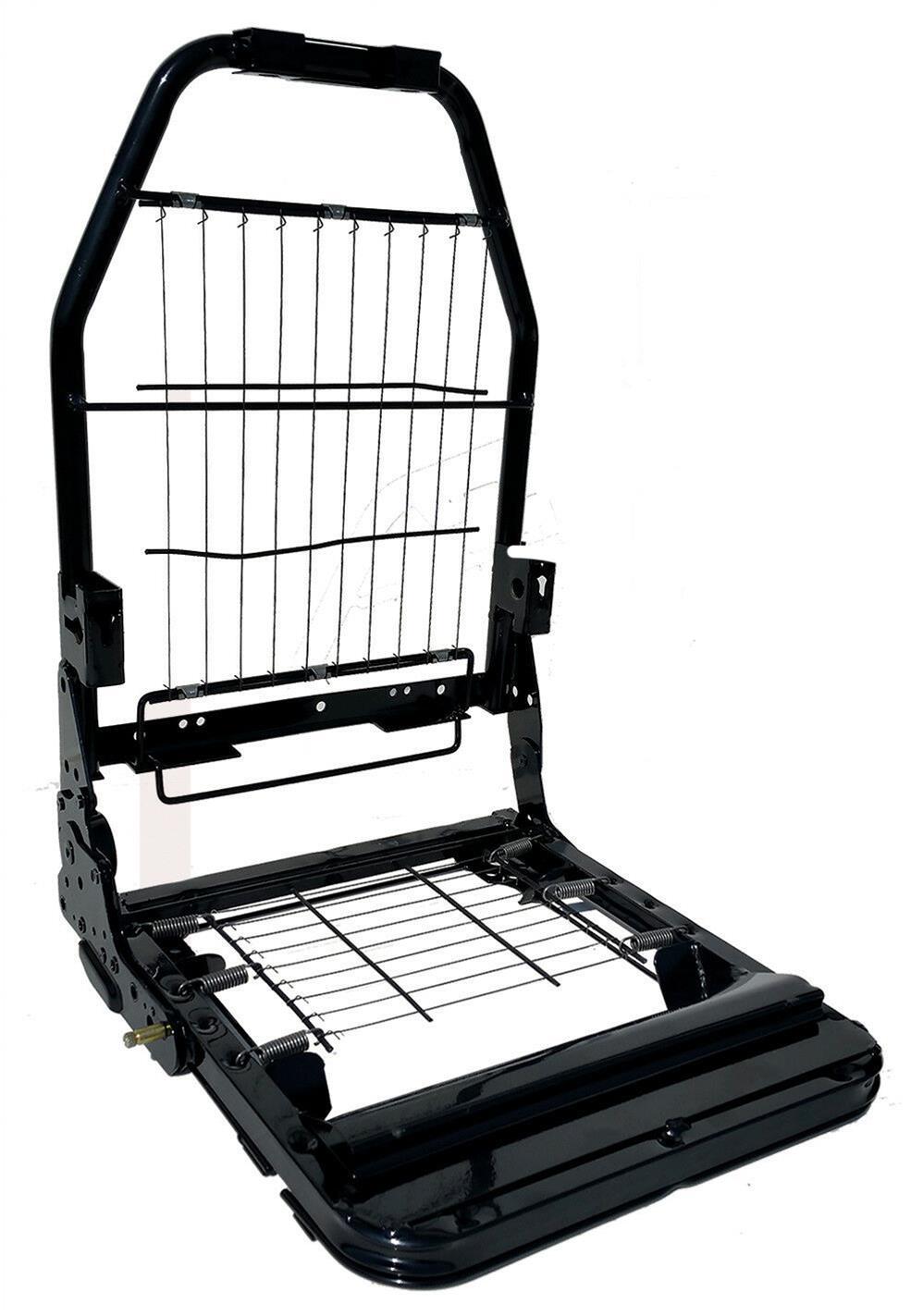
If your product is moving from a flat structure to a spatial structure, a 2D machine may no longer be the most efficient option.
3D forming provides additional forming freedom, making it possible to manufacture more complicated wire geometries.
For example, a seat wire frame may require bends in several directions. Instead of treating each bend as a separate operation, a 3D forming system can coordinate these movements within one production process.
One of the biggest advantages of 3D wire forming is the ability to combine multiple forming operations.
Instead of:
Bending → Repositioning → Secondary Bending → Manual Adjustment
the production process can move toward:
Wire Feeding → 3D Forming → Finished Component
This can help reduce unnecessary handling and improve production consistency.
For manufacturers producing thousands of wire components, even a small reduction in processing time can make a significant difference.
A 3D wire forming machine can help reduce:
This allows production teams to focus more on overall throughput and quality control.
For automotive components and other high-volume wire products, consistency is critical.
A programmed CNC 3D wire forming process can maintain repeatable bending sequences and dimensions across production batches.
This is especially valuable when customers require:
High repeatability + stable dimensions + consistent forming quality.
For products such as seat wire frames, even small dimensional deviations can affect downstream assembly.
Automated 3D forming helps manufacturers build a more stable production process.
Another reason to upgrade to 3D is product development.
Manufacturers rarely produce only one product forever.
New customers may request:
A flexible 3D wire forming machine can make it easier to adapt production to different designs through CNC programming and tooling adjustments.
This gives manufacturers greater flexibility when taking on new projects and customized orders.
Not every wire product requires a 3D machine.
A 2D wire bending machine can still be an excellent choice for simple planar products.
However, upgrading to 3D is worth considering when:
① Your products require bends in multiple directions
② You currently use several machines to complete one wire component
③ Your operators spend a lot of time repositioning wire
④ You need to reduce secondary forming operations
⑤ Your product designs are becoming more complex
⑥ You want to expand into higher-value customized wire components
For example, if your current 2D machine produces flat wire frames but your new project requires a spatial seat frame, 3D wire forming may provide a more efficient production solution.
At Jinchun, we focus on providing automated wire forming solutions for different industrial applications.
Our 3D wire forming machines are designed to help manufacturers produce complex spatial wire components with greater automation and flexibility.
Depending on the application, the solution can be configured around factors such as:
From automotive seat wire frames to furniture components, appliance parts, wire baskets, and other customized wire products, the right 3D forming solution can help simplify the production process.
Upgrading from 2D to 3D is not simply about buying a more advanced machine.
It is about asking a more important question:
Can we produce a more complex wire product with fewer operations, less manual handling, and better consistency?
If the answer is yes, 3D wire forming may be the next step for your production line.
For manufacturers looking to expand their product range or improve the efficiency of complex wire forming, Jinchun 3D wire forming machines provide a flexible solution for the next generation of wire production.
Send us your product drawing or sample, together with:
Our team can evaluate your application and recommend a suitable 2D or 3D wire forming solution.
Jinchun — Wire Forming Solutions for More Efficient Manufacturing.
 Hot News
2026-09-19
2026-09-18
2026-09-17
2026-09-16
2026-09-15
2026-09-14
 EN
EN