101, Building 9, Jicheng Science And Technology Innovation Park, No. 25, Sanle East Road, Shunjiang Community, Beijiao Town, Foshan, Guangdong, China +86-18038626853 [email protected]
101, Building 9, Jicheng Science And Technology Innovation Park, No. 25, Sanle East Road, Shunjiang Community, Beijiao Town, Foshan, Guangdong, China +86-18038626853 [email protected]

A wire frame may look simple. But producing hundreds or thousands of identical frames every day is a completely different challenge.
For many wire product manufacturers, the production process still involves separate bending, positioning, cutting and welding operations.
At first, this seems flexible.
But as production volume increases, hidden problems begin to appear:
This is where an integrated wire frame bending and butt welding machine can make a real difference.
Instead of treating bending and welding as two independent operations, the machine connects the two critical processes into one production solution.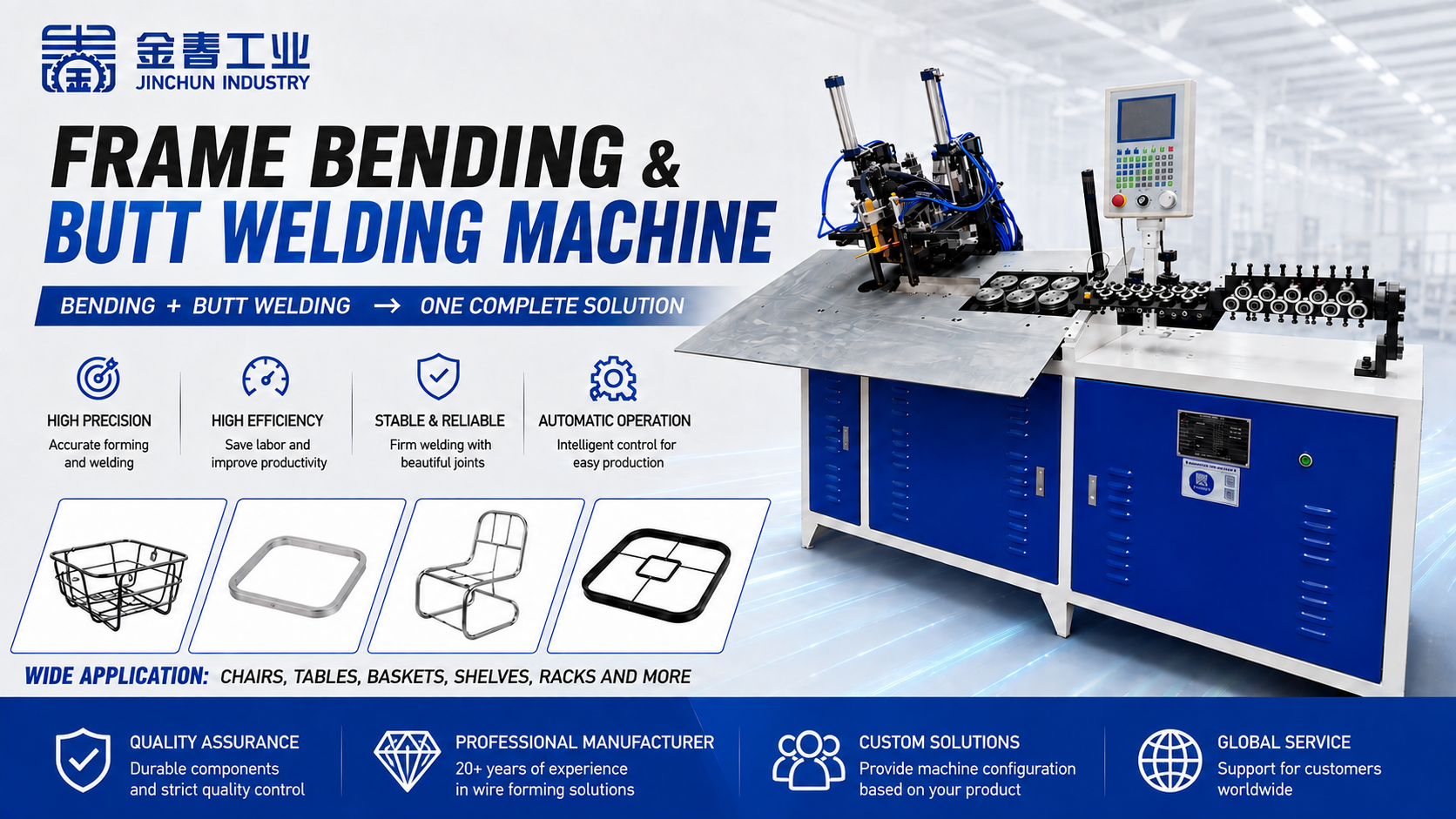
A frame can be bent correctly and still become a defective product during welding.
Why?
Because the final frame depends on more than the bending dimensions.
The wire length, bending position, frame geometry, joint position and welding alignment all need to work together.
Imagine producing a rectangular wire frame.
If the bending dimensions are slightly inconsistent, the two ends may not meet correctly.
If the joint position is inaccurate, the operator may need to manually adjust the frame before welding.
If this happens hundreds of times per shift, a small positioning problem can quickly become a major production problem.
The challenge is not simply making a bent frame.
The challenge is making a repeatable frame that is ready for accurate joining.
Traditional production may look like this:
Wire → Straightening → Cutting → Bending → Manual Positioning → Butt Welding → Inspection
Every additional transfer creates another opportunity for:
For high-volume manufacturers, manual handling becomes especially expensive.
An integrated bending and butt welding solution helps reduce unnecessary movement between forming and joining operations.
That's the real value of integration.
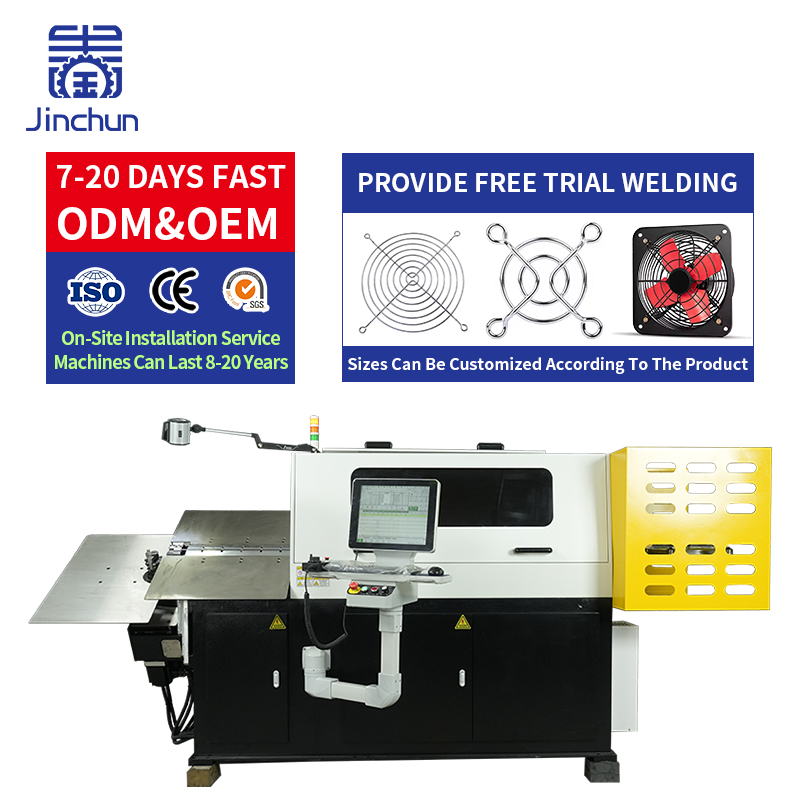
The biggest advantage of Jinchun's Wire Frame Bending & Butt Welding Machine is the integration of two critical processes.
Instead of producing the frame first and then transferring it to another workstation for welding, the production process is designed around the complete frame.
This can help manufacturers reduce intermediate handling and create a more streamlined workflow.
For factories producing wire frames in batches, this can mean a significant improvement in production organization.
For wire frames, the welding joint is often one of the most important points in the entire product.
A good-looking frame is not enough if the joint is:
With a separate bending and welding process, operators often need to manually bring the two ends together before welding.
This introduces human variation.
An integrated solution is designed to keep the forming and joining process more closely connected, helping manufacturers improve the consistency of the frame joint.
The goal is simple: make the welding position part of the forming process—not an afterthought.
One of the biggest hidden costs in wire frame production is not the machine itself.
It's labor.
An operator may spend significant time:
When production volume increases, these repetitive actions consume valuable labor hours.
By integrating bending and butt welding, Jinchun helps manufacturers move toward a more automated production workflow.
This allows operators to spend less time repeatedly positioning individual frames and more time managing the overall production process.
Consistency becomes increasingly important when producing:
Customers don't normally order one frame.
They order hundreds, thousands, or even more.
That means your production equipment needs to do more than make one good sample.
It needs to repeatedly produce frames with consistent dimensions and joint positioning.
That's where automated forming and welding can provide an advantage over highly manual production.
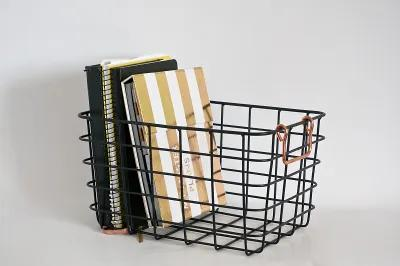
A factory floor is valuable.
Using separate equipment for bending, positioning and welding means more:
An integrated machine can help simplify the production layout by bringing key operations into one solution.
For manufacturers expanding production capacity without significantly expanding their workshop, this can be an important consideration.
More production capability doesn't always have to mean more floor space.
Not every wire frame is the same.
Different customers may require different:
That's why choosing a wire frame machine should not start with:
"What is the machine price?"
It should start with:
"Can this machine produce my actual product?"
At Jinchun, we recommend evaluating the machine configuration according to the customer's actual product requirements.
This allows the forming system, tooling and welding configuration to be considered around the product rather than forcing the product to fit a standard machine.
You should seriously consider an integrated solution if your factory is experiencing several of these problems:
If several of these sound familiar, the problem may no longer be your operators.
It may be time to rethink the production process itself.
Jinchun focuses on wire forming and welding automation, rather than simply supplying a standalone machine.
That means we look at the complete production requirement:
Wire → Forming → Frame Geometry → Joint Position → Welding → Finished Product
The machine configuration can then be evaluated according to the actual product.
Whether you're producing standard wire frames or developing a new customized product, the first step is understanding the product itself.
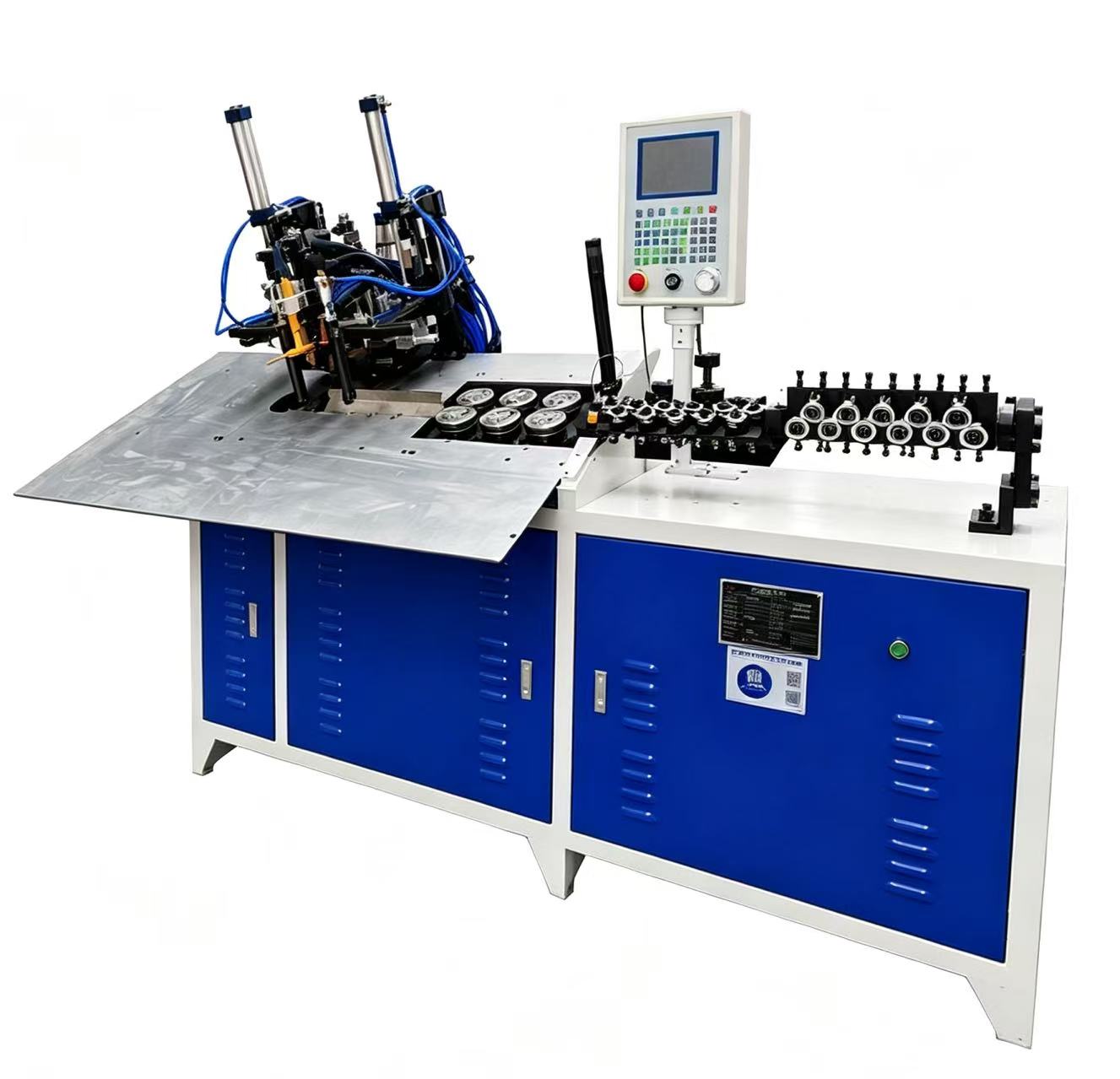
There is no universal wire frame machine that is perfect for every product.
The right solution depends on your:
That's why we don't recommend choosing a machine based only on a catalog photo.
Our technical team can evaluate your application and recommend a suitable wire frame bending and butt welding solution.
Your frame is unique. Your machine configuration should be, too.
Are you currently using separate bending and welding machines?
Are manual positioning and welding alignment slowing down your production?
Let's look at your actual product.
Send us:
📐 Frame drawing or product sample
📏 Wire diameter
🔩 Material
📦 Required production capacity
🎯 Frame dimensions
We'll help you evaluate the suitable machine configuration for your production.
 Hot News
2026-09-19
2026-09-18
2026-09-17
2026-09-16
2026-09-15
2026-09-14
 EN
EN