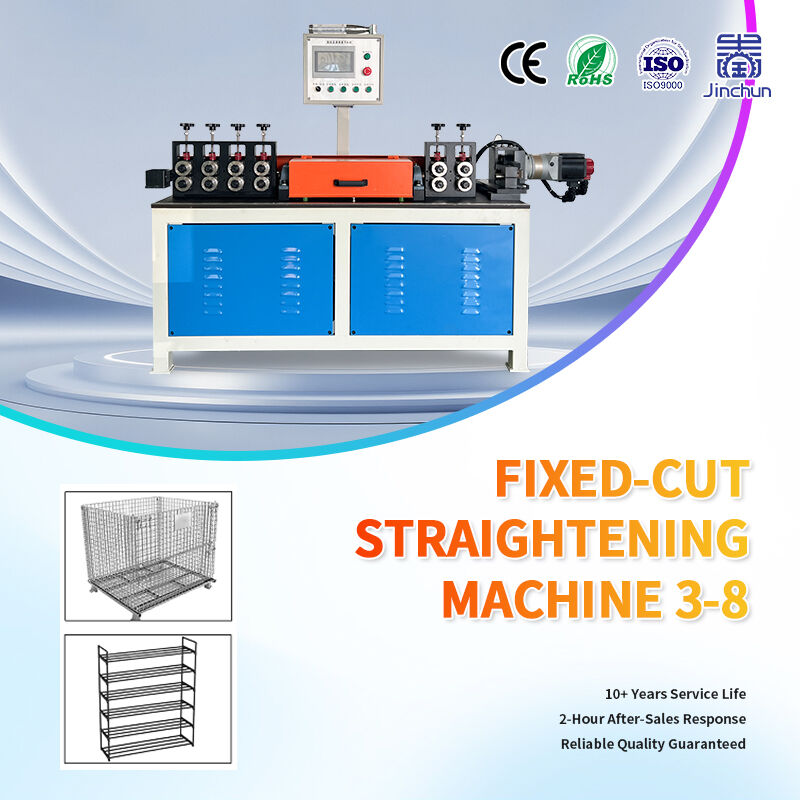
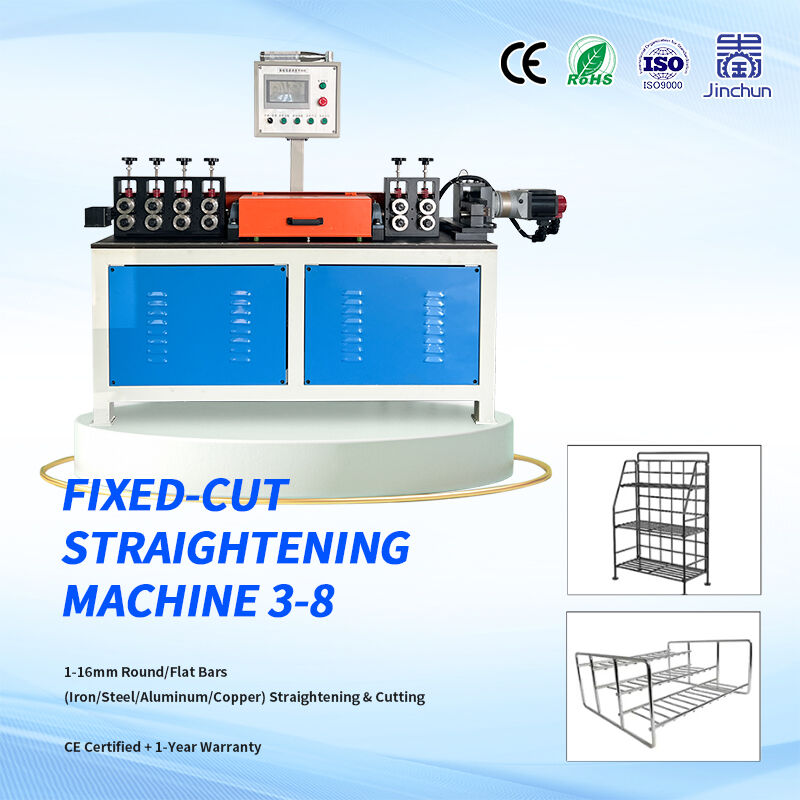
Professional Metal Straightening Machine Solutions - Precision Equipment for Industrial Applications

Get a Free Quote

Our representative will contact you soon.
Email
Name
Company Name
Phone / WhatsApp
Required Product
Message
0/1000

metal straightening machine

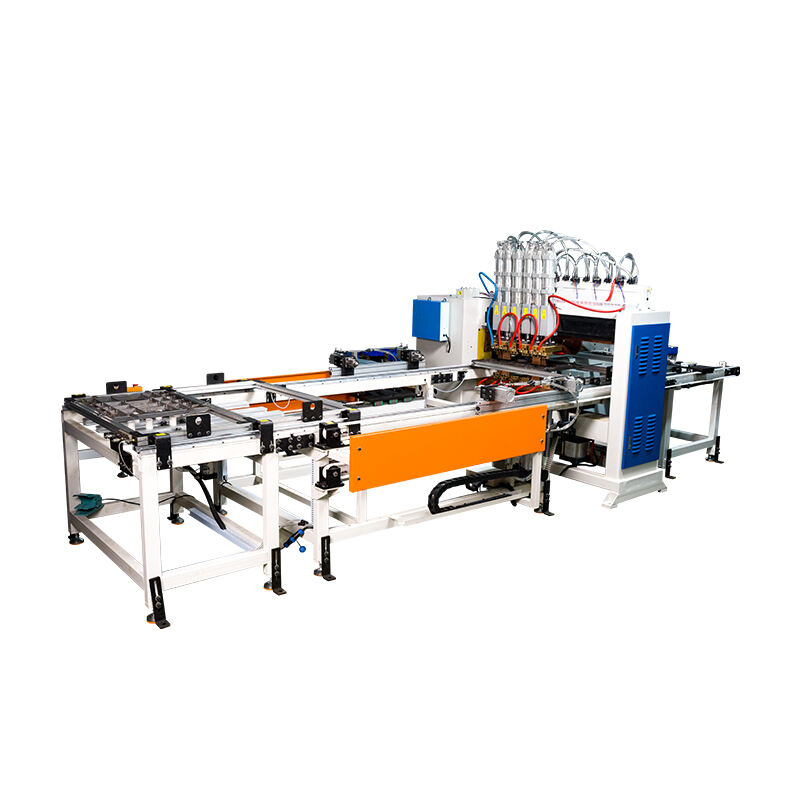
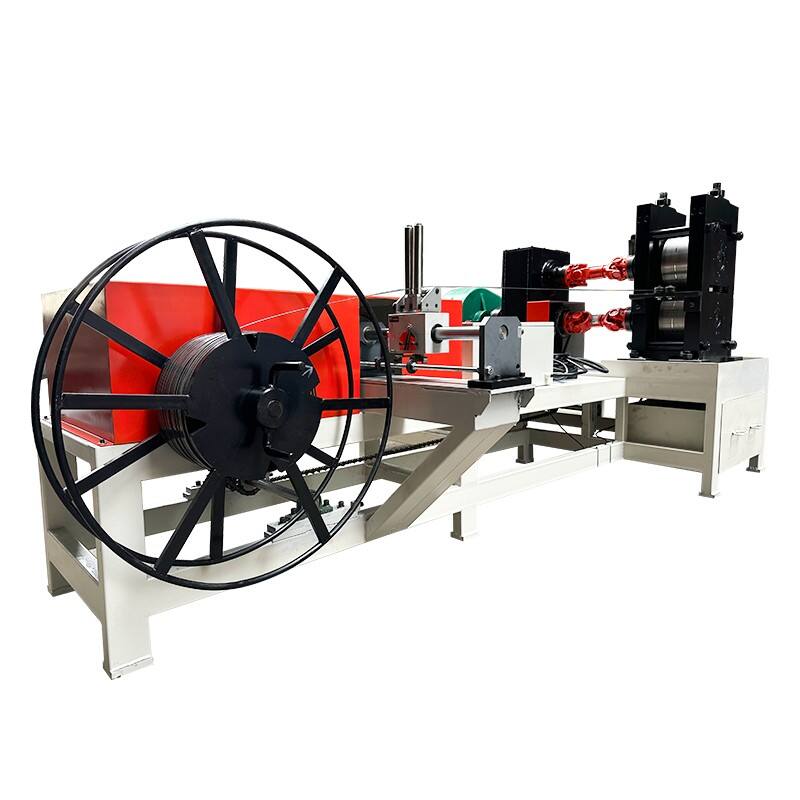
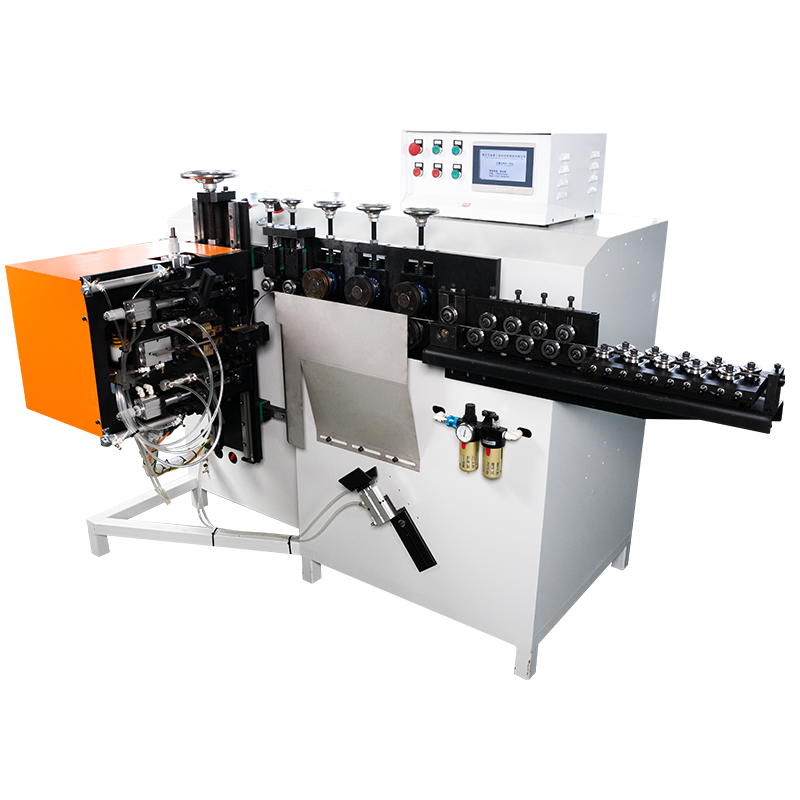
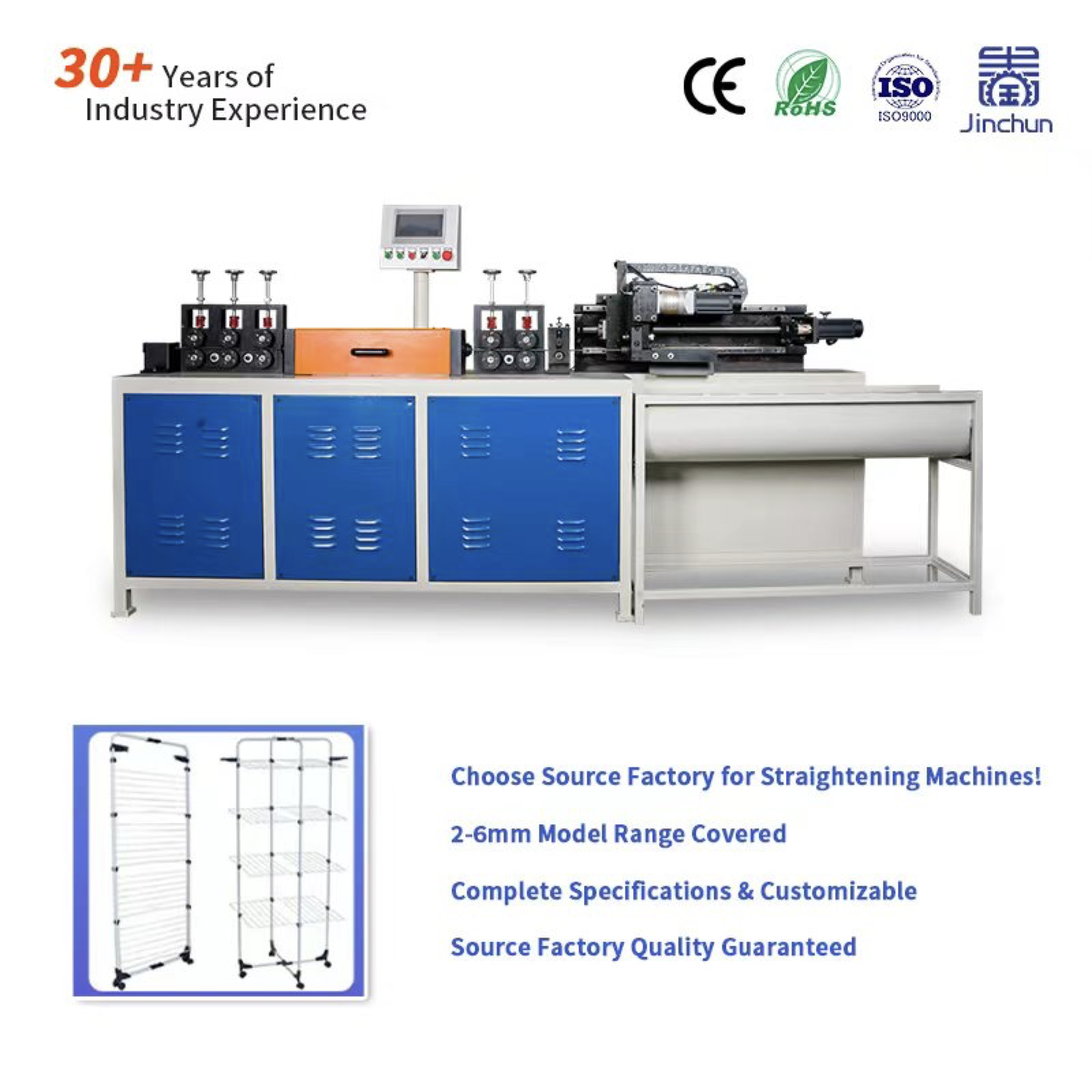
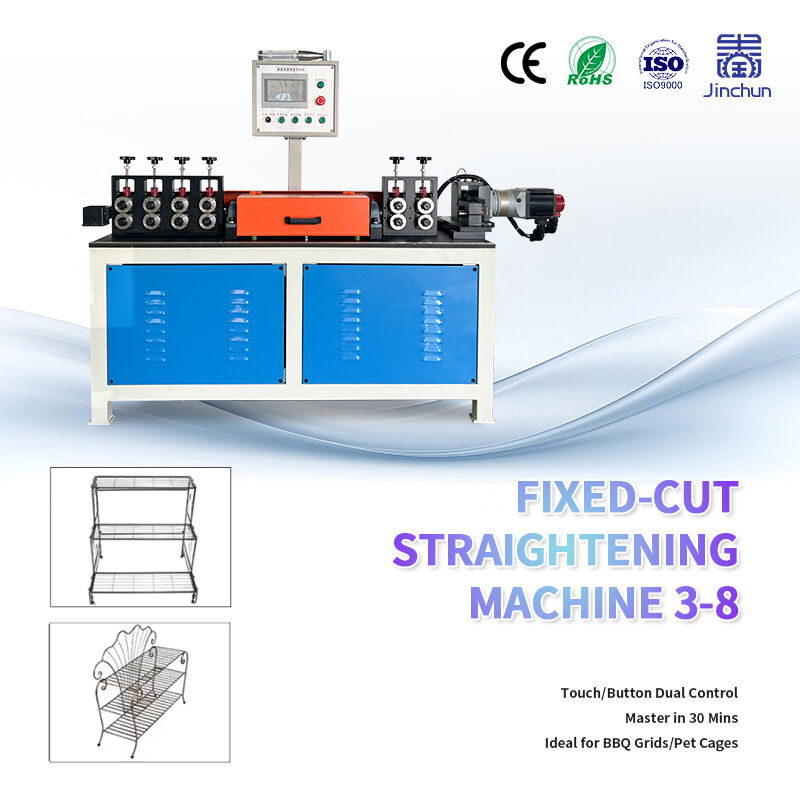
A metal straightening machine represents a fundamental piece of industrial equipment designed to correct distortions, warping, and deformations in metallic materials. This sophisticated machinery employs advanced mechanical principles to restore metal components to their intended flat or straight configuration, making it an indispensable tool across numerous manufacturing sectors. The metal straightening machine operates through precision-controlled pressure systems that gradually apply corrective forces to bent or warped metal sheets, bars, tubes, and structural components. Modern metal straightening machines incorporate cutting-edge hydraulic, pneumatic, or mechanical drive systems that deliver consistent and controllable straightening forces. These machines feature adjustable pressure settings, allowing operators to customize the straightening process according to specific metal types, thicknesses, and deformation severity. The technological architecture of a metal straightening machine typically includes robust steel frameworks, precision-engineered rollers or pressing mechanisms, and sophisticated control panels that enable precise operation. Advanced models integrate digital monitoring systems that track pressure application, material positioning, and straightening progress in real-time. The versatility of metal straightening machines extends across various metal types, including steel, aluminum, copper, brass, and specialized alloys. These machines accommodate different material dimensions, from thin sheets to heavy structural beams, making them suitable for diverse industrial applications. The straightening process eliminates internal stresses within metal components, improving their structural integrity and dimensional accuracy. Modern metal straightening machines often feature automated feeding systems, reducing manual handling requirements and increasing operational efficiency. Safety mechanisms, including emergency stops, protective guards, and pressure relief systems, ensure operator protection during operation. The precision capabilities of contemporary metal straightening machines enable them to achieve tolerances measured in fractions of millimeters, making them suitable for high-precision manufacturing environments where dimensional accuracy is critical for product quality and performance.

New Products

The metal straightening machine delivers exceptional operational benefits that directly impact manufacturing efficiency and product quality. These machines significantly reduce material waste by salvaging bent or warped components that would otherwise require replacement, resulting in substantial cost savings for manufacturers. The precision straightening capabilities eliminate the need for manual correction methods, which are time-consuming and often yield inconsistent results. Metal straightening machines process materials faster than traditional correction techniques, increasing overall production throughput and meeting tight delivery schedules. The automated operation reduces labor requirements, allowing skilled workers to focus on other critical manufacturing tasks while the machine handles straightening operations independently. Quality consistency represents another major advantage, as the metal straightening machine applies uniform pressure and follows predetermined parameters, ensuring every processed component meets exact specifications. This consistency eliminates quality variations that commonly occur with manual straightening methods. The machines handle various material sizes and types within a single unit, providing operational flexibility that adapts to changing production requirements without requiring additional equipment investments. Energy efficiency stands out as a significant benefit, with modern metal straightening machines consuming less power than alternative correction methods while delivering superior results. The reduced physical strain on operators creates safer working conditions and minimizes workplace injuries associated with manual metal manipulation. Maintenance requirements remain minimal due to robust construction and quality components, reducing downtime and maintenance costs. The metal straightening machine preserves material properties during the correction process, maintaining the original strength and integrity of processed components. Integration capabilities allow these machines to connect with existing production lines, creating seamless workflow integration that optimizes manufacturing processes. The precision control systems enable operators to adjust parameters for different materials and applications, ensuring optimal results regardless of specific requirements. Long-term reliability ensures consistent performance over extended periods, providing manufacturers with dependable equipment that supports continuous production schedules. The versatility of metal straightening machines makes them suitable for both high-volume production environments and specialized applications requiring precise material correction. Return on investment occurs rapidly through reduced material costs, increased efficiency, and improved product quality, making the metal straightening machine an economically sound investment for manufacturing operations.

Tips And Tricks

Maintenance Tips to Extend Your Bending Machines' Lifespan

20

Nov

Maintenance Tips to Extend Your Bending Machines' Lifespan

Manufacturing operations depend heavily on reliable equipment performance, and bending machines represent a significant investment that requires proper care to maximize return. These precision instruments form the backbone of countless production lin...
View More
 Integrating Straightening Machines into Automated Production Lines

22

Dec

Integrating Straightening Machines into Automated Production Lines

In the modern manufacturing industry's relentless pursuit of ultimate efficiency and consistency, seamless collaboration between equipment and processes has become the key to enhancing overall competitiveness. For sectors utilizing metal bars and wir...
View More
The Ultimate Guide to CNC Wire Forming: Technology, Applications, and Choosing the Right Partner

15

Jan

The Ultimate Guide to CNC Wire Forming: Technology, Applications, and Choosing the Right Partner

In the modern industrial landscape, precision and efficiency are the cornerstones of successful manufacturing. CNC wire forming (Computer Numerical Control wire forming) has emerged as an essential technology, allowing for the rapid manipulation of m...
View More
How a 3D Bending Machine Can Revolutionize Your Metal Fabrication Process

05

Feb

How a 3D Bending Machine Can Revolutionize Your Metal Fabrication Process

In the competitive landscape of metal fabrication, precision and speed are the dual pillars of success. Traditional manual bending methods often struggle with complex spatial geometries and consistency. Enter the 3D Wire Bending Machine (Rotary Head ...
View More

Get a Free Quote

Our representative will contact you soon.
Email
Name
Company Name
Phone / WhatsApp
Required Product
Message
0/1000

metal straightening machine

Advanced Hydraulic Pressure Control System

Advanced Hydraulic Pressure Control System

The metal straightening machine features a state-of-the-art hydraulic pressure control system that revolutionizes how manufacturers approach metal correction processes. This sophisticated system delivers precise, controllable force application that adapts to various metal types, thicknesses, and deformation patterns with remarkable accuracy. The hydraulic technology enables operators to fine-tune pressure settings within extremely narrow tolerances, ensuring optimal straightening results without compromising material integrity. The system incorporates multiple pressure zones that can operate independently, allowing for targeted correction of specific problem areas while maintaining gentle handling of undamaged sections. This selective pressure application prevents over-correction and material damage that commonly occurs with conventional straightening methods. The hydraulic control system responds instantly to operator adjustments, providing real-time feedback through digital displays that show exact pressure readings, application duration, and material response. Advanced sensors monitor the straightening process continuously, automatically adjusting pressure levels to maintain optimal correction parameters throughout the operation. The system includes fail-safe mechanisms that prevent excessive pressure application, protecting both the material and the machine from potential damage. The hydraulic components utilize high-grade seals and precision-manufactured cylinders that ensure consistent performance over extended operational periods. Maintenance intervals for the hydraulic system extend significantly beyond conventional mechanical systems, reducing operational downtime and maintenance costs. The pressure control system accommodates rapid changeover between different materials and applications, requiring minimal setup time and operator intervention. The hydraulic technology enables the metal straightening machine to handle materials ranging from delicate thin sheets to robust structural components with equal precision and effectiveness. Energy efficiency remains exceptional, as the hydraulic system only consumes power during active straightening operations, reducing operational costs significantly compared to continuously operating mechanical systems. The pressure control precision eliminates the guesswork traditionally associated with metal straightening, providing consistent, predictable results that meet exact dimensional specifications every time.
Multi-Point Straightening Technology

Multi-Point Straightening Technology

The metal straightening machine incorporates revolutionary multi-point straightening technology that addresses complex deformations through simultaneous correction at multiple locations along the material length. This advanced approach eliminates the limitations of single-point correction methods that often create new distortions while attempting to fix existing problems. The multi-point system features strategically positioned correction stations that work in precise coordination to apply graduated pressure across the entire material surface. Each correction point operates independently while maintaining perfect synchronization with adjacent stations, ensuring smooth, progressive straightening that preserves material properties and dimensional accuracy. The technology accommodates varying material thicknesses and width dimensions without requiring extensive setup modifications, providing exceptional operational flexibility for diverse manufacturing requirements. Advanced computerized controls manage the interaction between multiple correction points, calculating optimal pressure distribution based on material specifications, deformation patterns, and desired final dimensions. The system automatically adjusts individual correction points in real-time, responding to material feedback and ensuring consistent results regardless of initial condition variations. The multi-point technology significantly reduces processing time compared to sequential single-point methods, increasing production throughput while maintaining superior quality standards. Material handling becomes more efficient as the metal straightening machine processes longer sections in single passes, eliminating the need for multiple positioning cycles. The technology prevents the spring-back effect common in traditional straightening methods by maintaining control over the entire material length simultaneously. Quality improvements are immediately apparent, with processed materials exhibiting uniform flatness and dimensional consistency across their entire surface area. The multi-point approach reduces material stress concentrations that can lead to fatigue failures in finished products, extending the service life of straightened components. Operator skill requirements decrease significantly, as the automated multi-point system eliminates the need for experienced technicians to manually coordinate multiple correction operations. The technology adapts to various material types and configurations, from flat sheets to complex profiles, without requiring specialized tooling or extensive reconfiguration. Setup procedures become streamlined through programmable memory functions that store optimal settings for frequently processed materials, reducing changeover times and improving operational efficiency.
Precision Measurement and Quality Monitoring System

Precision Measurement and Quality Monitoring System

The metal straightening machine integrates an advanced precision measurement and quality monitoring system that ensures exceptional accuracy and consistent results throughout the straightening process. This comprehensive monitoring technology employs high-resolution sensors, laser measurement devices, and sophisticated data processing capabilities to track material condition in real-time. The system continuously monitors multiple parameters including material flatness, dimensional accuracy, surface condition, and straightening progress, providing operators with detailed feedback about processing quality. Digital measurement displays present information in easily understood formats, allowing operators to make informed decisions about processing parameters and quality acceptance. The monitoring system establishes quality baselines before processing begins, documenting initial material conditions and creating reference standards for final quality verification. Throughout the straightening operation, the system compares actual results against predetermined specifications, alerting operators to any deviations that require attention or adjustment. Advanced algorithms analyze measurement data to predict optimal processing parameters for different material types and conditions, improving efficiency and reducing setup times. The quality monitoring system generates comprehensive reports documenting processing parameters, measurement results, and quality metrics for each processed batch, supporting quality assurance requirements and traceability needs. Automatic reject systems integrate with the monitoring technology to remove non-conforming materials from the production stream, preventing defective components from reaching subsequent manufacturing stages. The measurement precision exceeds traditional methods by significant margins, detecting variations measured in thousandths of inches and ensuring compliance with demanding specification requirements. Statistical process control capabilities track quality trends over time, identifying patterns that indicate potential equipment maintenance needs or process optimization opportunities. The monitoring system stores historical data for analysis and comparison, enabling continuous improvement initiatives and supporting quality management system requirements. Integration capabilities allow the measurement and monitoring system to communicate with plant-wide quality management systems, providing seamless data flow and comprehensive quality tracking. Calibration procedures ensure measurement accuracy remains within specified tolerances, with automatic calibration verification and alert systems that notify operators when calibration updates become necessary. The system accommodates various measurement standards and units, adapting to different customer requirements and international quality specifications without requiring additional equipment or complex conversions.

Get a Free Quote

Our representative will contact you soon.
Email
Name
Company Name
Phone / WhatsApp
Required Product
Message
0/1000

Get a Free Quote

Our representative will contact you soon.
Email
Name
Company Name
Phone / WhatsApp
Required Product
Message
0/1000