 EN
EN


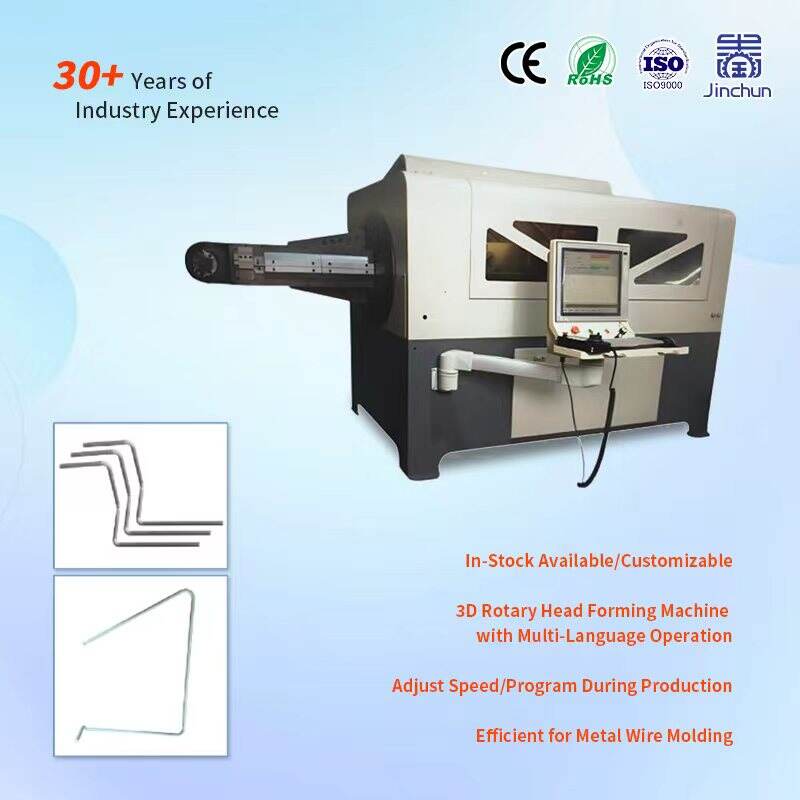
In the competitive landscape of metal fabrication, precision and speed are the dual pillars of success. Traditional manual bending methods often struggle with complex spatial geometries and consistency. Enter the 3D Wire Bending Machine (Rotary Head Type)—a sophisticated CNC solution designed to transform raw wire into intricate three-dimensional components with unparalleled efficiency.
Whether you are producing automotive seat frames or designer furniture, this technology offers a quantum leap in production capability.
1. Innovative "Rotary Head" Principle
Unlike traditional machines where the wire itself rotates (often causing wobbling and precision errors in long or thin wires), this 3D bending machine utilizes the "Rotary Head, Stationary Wire" principle.
Stability: The lightweight head structure rotates around the wire. This prevents vibration and material deformation, ensuring stable operation even at high speeds.
Precision: By keeping the wire stationary during the forming process, the machine maintains a tight tolerance of ±0.02 mm, making it ideal for small-volume, high-precision 3D parts.
2. High-Speed Performance & Versatility
Time is money in metal fabrication. This machine is engineered to handle a wide range of materials and complex shapes without sacrificing output.
Material Range: Capable of processing 1–16 mm diameter round or flat bars, including iron, stainless steel, aluminum, and copper. Switching between materials is as simple as a quick mold change.
Multi-Axis Agility: Configurable with 7 to 13 axes, the machine uses a synchronized gearbox to rotate and bend products at multiple angles simultaneously.
Mass Production: It can form 15–30 complex 3D parts per minute, significantly outperforming manual or 2D automated alternatives.
3. Intelligent Interface and Ease of Use
One of the biggest hurdles in adopting CNC technology is the learning curve. This 3D bending machine is designed with a "user-first" philosophy:
Smart Programming: The multi-language intelligent system features both physical buttons and a touchscreen. The computer allows for real-time adjustments—you can modify programs and adjust speeds while the machine is actively producing.
Low Barrier to Entry: Beginners can typically master the basic operation within 2 hours.
Massive Memory: With the capacity to store up to 10,000 programs, switching between different product specifications (e.g., from a kitchen rack to an automotive fastener) takes only seconds.
4. Diverse Industry Applications
The flexibility of the 3D bending machine makes it an essential asset across multiple sectors:
Automotive & Transit: Specialized steel wire forming for car seats, motorcycle parts, and high-strength fasteners.
Home & Lifestyle: Hardware for kitchen and bathroom pendants, furniture frames, and high-end metal crafts.
Retail & Industrial: Supermarket shelf accessories, storage racks, and instrument components.
Toys & Hardware: Complex wire shapes for toy internal frames and various hardware tools.
5. Long-Term Reliability and ROI
Investing in a 3D bending machine is a commitment to the future of your workshop.
Built to Last: With an average service life exceeding 15 years and an annual failure rate of less than 2%, this machine ensures consistent uptime.
Certified Quality: Every unit undergoes strict Quality Control (QC) inspection before shipping and carries full CE Certification.
Unmatched Support: Gain peace of mind with a 1-year warranty and a dedicated technical support team boasting an average response time of under 2 hours.
Conclusion
From improving the aesthetics of metal furniture to meeting the rigorous safety standards of automotive components, the 3D Rotary Head Wire Forming Machine is more than just a tool—it is a competitive advantage. It eliminates the errors of manual bending, slashes labor costs, and opens the door to complex designs that were previously impossible to mass-produce.