 EN
EN

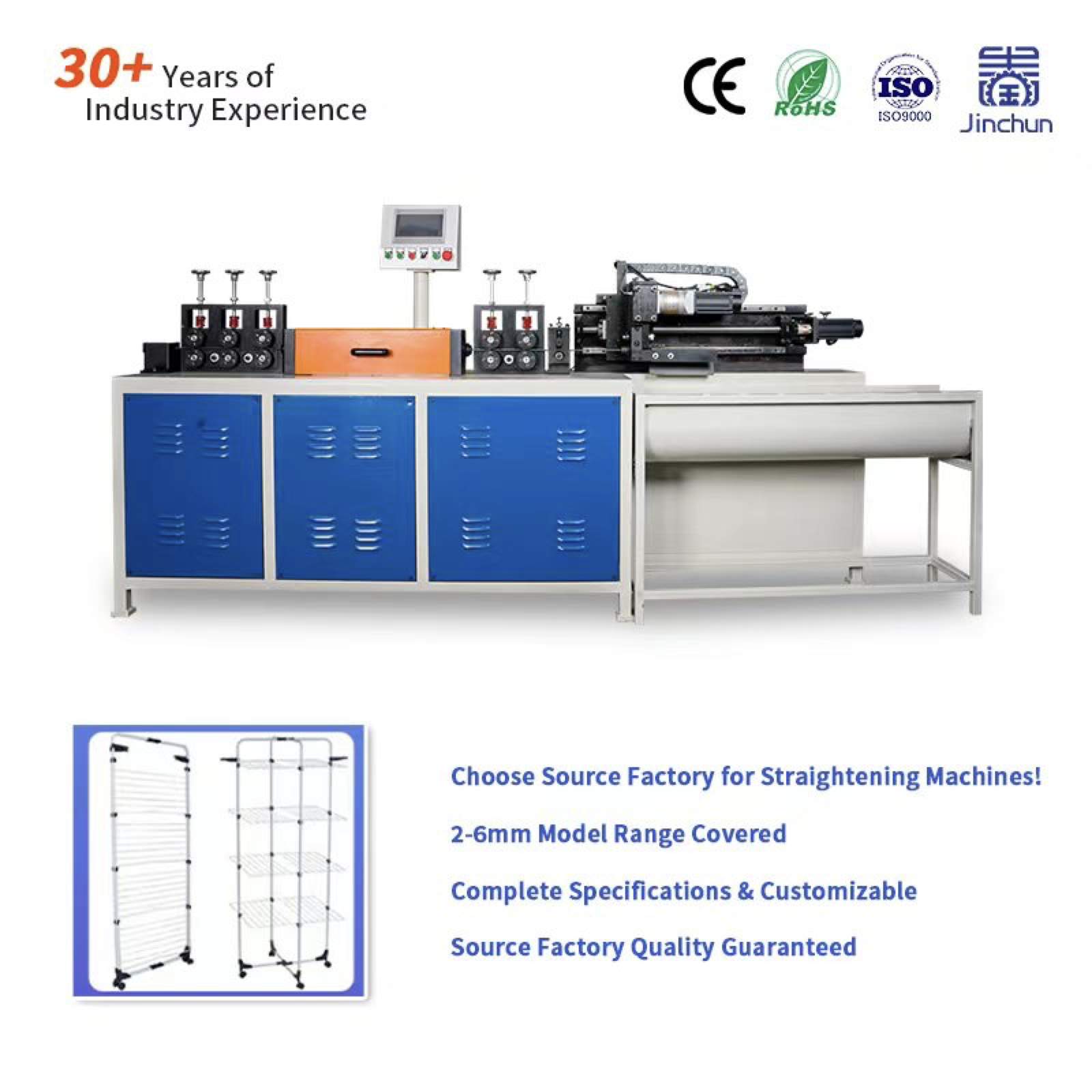
In the modern manufacturing industry's relentless pursuit of ultimate efficiency and consistency, seamless collaboration between equipment and processes has become the key to enhancing overall competitiveness. For sectors utilizing metal bars and wires, the automation and integration of straightening and fixed-length cutting processes are central to increasing capacity, ensuring consistent quality, and reducing costs. This article explores how to efficiently and intelligently integrate high-performance straightening and cutting machines into automated production systems.
Why is Automated Integration Critical?
In traditional production models, processes like straightening, length measurement, and punching are often dispersed and independent, requiring substantial manual handling, positioning, and monitoring. This leads to low efficiency, error accumulation, and high management costs. The core objective of a modern automated production line is to achieve a continuous "raw material in, finished product out" flow. A high-performance straightening and cutting machine serves as the essential "core pre-processing unit" to realize this goal. It transforms coiled or disorganized wire and bar stock into standardized, straight strips with precise lengths and flawless surfaces, ready for immediate use. This provides stable and reliable input for subsequent automated processes like welding, weaving, or assembly.
The Solid Foundation for Integration: Core Commonalities of the Equipment
Understanding the standardized interfaces and capabilities provided by the equipment forms the basis for "plug-and-play" automation before planning integration.
Consistent Output Standards: Whether processing iron, stainless steel, or copper, the machine guarantees the output of straight strips free of burrs and scratches, with a smooth surface. This provides stable, predictable conditions for downstream automated equipment.
Universal Quick-Change Die System: By changing dies, the machine can flexibly handle materials of different diameters (1-20mm) and shapes (round/flat). Combined with rapid die-change design, the production line can switch to producing different specification products with minimal downtime upon command, meeting the needs of multi-variety, small-batch flexible production and maximizing the reduction of changeover time.
Precise Dimension and Speed Control: A cutting accuracy of up to ±0.02mm is the cornerstone of automated assembly. Coupled with a wide cutting range from 45mm to 8m, it can precisely meet various needs from short connectors to long support rods. Different speed grades (25-35 m/min, 80-130 m/min, 35-55 m/min) allow you to select the most suitable model for integration based on material diameter, production line cycle time, and capacity requirements, achieving a balanced production rhythm.
Intelligent Control and Communication Interfaces: The equipped multi-language intelligent system (buttons and touchscreen) is not only easy to operate but, more importantly, typically supports standard industrial communication protocols. This enables the straightening and cutting machine to easily connect to the factory's central control system, receive production commands, and report operational status and production data, becoming an intelligent node in the digital factory.
Optional In-line Secondary Processing Functions: Custom functions such as punching, flattening, or dot marking can be completed synchronously during the straightening and cutting process. This means that when integrated into a production line, separate subsequent processing stations can be eliminated. Positioning holes, connection flats, or identification marks are formed directly on the material, simplifying the overall process flow.
Core Benefits Brought by Integration
Deeply integrating such straightening and cutting machines into automated production lines leads to significant multidimensional improvements for manufacturers:
Significant Reduction in Production Cycle Time and Downtime: The entire process from material loading to completed straightening and cutting proceeds automatically and continuously, eliminating inter-process waiting. Universal dies and intelligent changeovers compress product switchover time to a minimum.
Enhanced Quality Consistency and Traceability: The high precision and stability of the equipment eliminate fluctuations caused by manual operations. All cutting lengths and speed parameters are digitally set and recorded by the system, enabling traceability of data for each batch of products.
Reduced Reliance on Labor and Operational Costs: The production line requires only minimal personnel for monitoring and maintenance, significantly reducing dependence on skilled operators and corresponding labor and training costs.
Increased Production Flexibility and Market Responsiveness: Rapid die changes and digital settings make small-batch custom orders economically viable, helping enterprises respond faster to market changes.
Data-Driven Decision Making: Real-time uploading of equipment operation data (such as output, fault alarms, maintenance reminders) assists managers in optimizing production planning, predictive maintenance, and overall equipment effectiveness (OEE) analysis.
Integration Implementation Pathway
Requirements Analysis and Model Selection: Define your core product material range (diameter, material), production cycle time requirements, and needs for in-line secondary processing. Select the most suitable model based on these criteria.
Production Line Flow Planning: Collaborate with the equipment supplier or a system integrator to design the complete material flow and information flow layout.
Communication and Interface Confirmation: Identify the existing control systems in your factory and confirm communication protocol compatibility with the straightening and cutting machine supplier to ensure seamless data connectivity.
Integration and Commissioning: Complete mechanical installation, electrical wiring, communication connections, and joint commissioning with the support of the supplier's professional technical personnel to optimize the overall production line cycle time.
Personnel Training and Operation/Maintenance: Utilize the equipment's user-friendly features (beginners can master basic operations within 30 minutes) to train staff in basic operation, status monitoring, and routine maintenance.
Technical Assurance: Safeguarding Reliable Operation Post-Integration
Successful integration relies not only on equipment functionality but also on a solid reliability foundation. Straightening and cutting machines have an average service life exceeding 10 years and an annual failure rate below 3%, providing a stable operational base for automated production lines. Furthermore, an average after-sales service response time of under 2 hours ensures rapid support in case of failure, minimizing overall line downtime losses. Strict QC inspections and CE certification prior to shipment guarantee that the equipment meets international safety and performance standards from the source.
Conclusion
Integrating high-performance straightening and cutting machines into automated production lines is no longer a simple serial connection of equipment. It involves transforming them into a core intelligent unit within a flexible manufacturing system through digital and intelligent means. With characteristics of high precision, high flexibility, high reliability, and intelligent connectivity, straightening and cutting machines can become a powerful engine for upgrading your production process automation. Investing in such an integrated solution means investing in more efficient capacity, more stable quality, and lower long-term operational costs, thereby building a sustainable competitive advantage in the field of metal product manufacturing.