 EN
EN


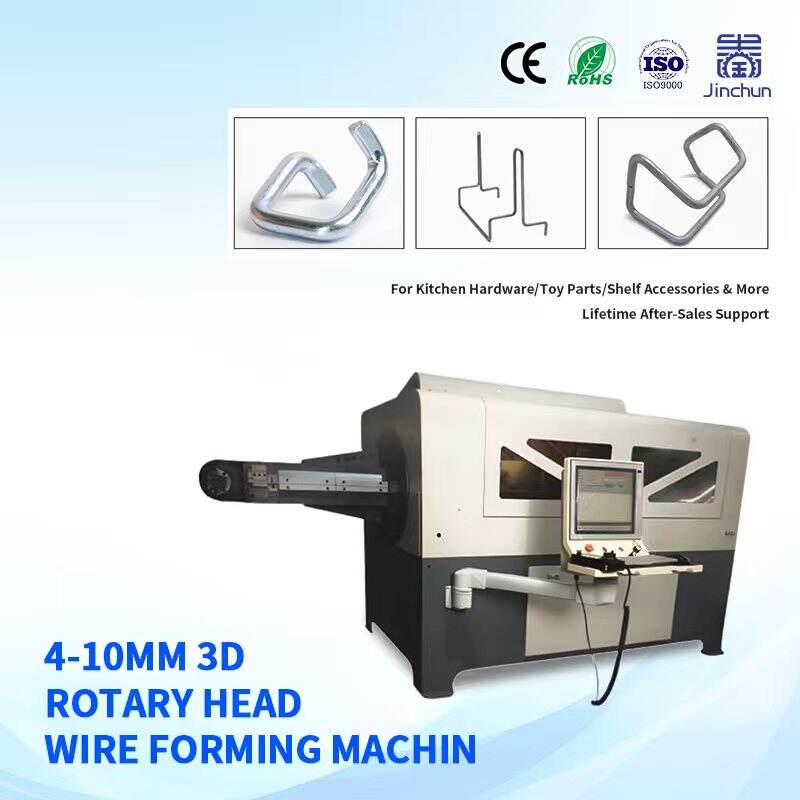
In the rapidly evolving landscape of metal fabrication, staying competitive requires more than just skilled labor; it demands cutting-edge automation that can handle complex geometries with speed and consistency. For manufacturers dealing with iron wire, stainless steel, aluminum, or copper, the 3D Bending Machine represents a significant leap from traditional manual or 2D processes to high-precision, industrial-grade production. Whether your business involves automotive seat frames, kitchen hardware, or intricate decorative crafts, understanding the benefits of automated wire forming is essential for long-term profitability and operational excellence.
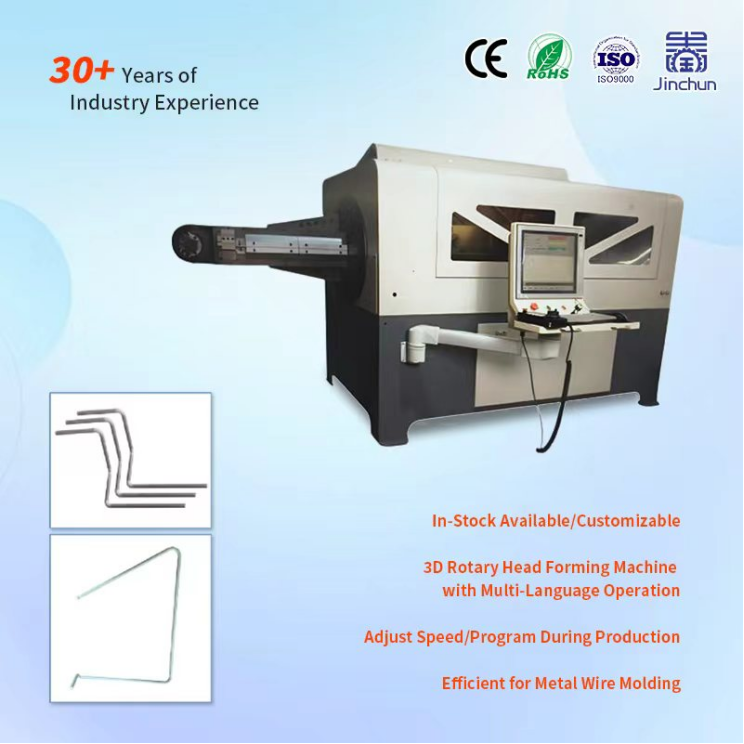
This guide explores the five primary advantages of integrating advanced 3D wire bending technology into your production line, focusing on both wire-rotating and head-rotating configurations to help you make an informed investment.
1. Unmatched Precision and Structural Integrity
The primary concern in metal wire forming is maintaining tight tolerances across multi-angle, complex geometries. A professional-grade 3D Bending Machine ensures that every bend is executed with a precision of up to 0.01mm, a level of accuracy that manual labor simply cannot replicate. This precision is achieved through two distinct mechanical designs tailored to specific product sizes.
The wire-rotating configuration utilizes a specialized gearbox to synchronously rotate the product during the forming process, making it the ideal solution for smaller, high-precision 3D items. By rotating the wire itself, the machine can achieve multi-angle bends with extreme repeatability. Conversely, for larger components such as automotive seat frames, the head-rotating (or "rotating head") system is used. In this setup, the wire remains stationary while a lightweight rotating arm performs the bends. This prevents the errors caused by the oscillation of larger, heavier materials, ensuring that the structural integrity of the frame is maintained throughout the production run.
2. Revolutionary Speed and Production Efficiency
Transitioning to an automated 3D Bending Machine directly impacts a factory's output and throughput. These machines are capable of forming between 15 to 30 complex 3D parts per minute. This rapid pace is supported by advanced head structures designed to minimize mechanical inertia. In head-rotating models, the "rotating head" principle ensures that the wire does not turn, which allows for fast and stable operation even when handling smaller wire diameters that are prone to vibrating or deforming under tension.
Efficiency is further enhanced by the intelligent control system. The integrated computers feature fast startup times and intuitive interfaces that allow operators to adjust production speeds and modify programs in real-time without halting the machine. This means that if a minor adjustment is needed for an automotive seat wire or a kitchen gadget accessory, it can be done "on the fly". This seamless interaction between software and hardware maximizes the number of units produced per shift, making it highly effective for high-volume industries like fasteners and supermarket shelf accessories.
3. Minimal Entry Barriers and Operational Ease
One of the most significant advantages of modern 3D Bending Machine technology is the drastic reduction in required training time. While traditional CNC bending might have once required highly specialized engineers, the intelligent multilingual systems integrated into these machines allow beginners to master basic operations within just two hours. The combination of physical buttons and a responsive touch-screen interface makes the programming process straightforward for users of all technical backgrounds.
Furthermore, the machine’s memory capacity is a game-changer for diverse production lines. These systems can store up to 10,000 unique programs. Once a job is configured for a specific product—such as a piece of hardware furniture or a toy accessory—it can be recalled instantly for future runs. This "plug-and-play" capability removes the technical threshold for entry, allowing manufacturers to switch between product lines—from simple iron wire crafts to complex motorcycle parts—with minimal downtime.
4. Unrivaled Durability and Industrial Reliability
Investing in heavy machinery is a long-term commitment, and the build quality of these automated systems reflects that requirement. With an average service life exceeding 15 years, these machines are built for continuous industrial use in demanding environments. The annual failure rate is maintained at a remarkably low level of less than 2%, ensuring that production schedules are not derailed by frequent mechanical breakdowns.
To ensure this level of reliability, every machine undergoes a strict quality control (QC) inspection before shipment. They are also CE certified, ensuring they meet international safety and performance standards. Manufacturers can operate with peace of mind knowing that the equipment is backed by a 2-year warranty and a responsive after-sales support system. In the event of a technical query, the average response time is less than two hours, ensuring that your production of metal furniture or instrument accessories remains profitable and consistent.
5. Flexibility Across Materials and Applications
The final major benefit is the sheer versatility of the equipment. By simply changing a mold, a single machine can transition between processing iron, stainless steel, aluminum, and copper. The machine supports both round wire and flat bar materials with diameters ranging from 2mm to 16mm. This flexibility allows a single factory to serve multiple industries simultaneously, from automotive seating and kitchenware to handicrafts and fasteners.
Depending on the complexity of the product, the machines can be configured with a variable number of axes. The wire-rotating models can be customized with 3-9 axes, while head-rotating models typically range from 5-10 axes. This modularity ensures that even the most complex 3D items, such as supermarket shelf components or intricate bathroom hangers, can be produced rapidly and accurately.
Comparison of 3D Bending Technologies
Feature |
3D Bending Machine (Wire-Rotating) |
3D Bending Machine (Head-Rotating) |
Ideal Material |
Iron, Stainless Steel, Aluminum, Copper |
Iron, Stainless Steel, Aluminum, Copper |
Material Shape |
Round wire or Flat bar |
Round wire or Flat bar |
Diameter Range |
2mm - 16mm |
2mm - 16mm |
Accuracy |
Up to 0.01mm |
Up to 0.01mm |
Best Used For |
Small volume, precision 3D products |
Large precision 3D products (e.g., car seat frames) |
Axis Configuration |
3 - 9 axes |
3 - 9 axes |
User Interface |
Multilingual Touch Screen & Buttons |
Multilingual Touch Screen & Buttons |
Expected Life |
Over 15 Years |
Over 15 Years |
Warranty |
2 Years |
2 Years |
Frequently Asked Questions (FAQ)
What is the main difference between "Head-Rotating" and "Wire-Rotating" machines?
The wire-rotating machine uses a gearbox to rotate the wire itself during the bending process, which is highly efficient for smaller, intricate parts. The head-rotating machine rotates the bending head around the stationary wire, which is necessary for maintaining precision and stability in larger, heavier items like car seat frames.
Can these machines handle different wire shapes?
Yes. Both machines are compatible with round wire and flat bar materials. Switching between different wire shapes or diameters (from 2mm up to 16mm) simply requires a quick mold change.
How long does it take for a new operator to learn the system?
The intelligent control system is designed for ease of use. Most beginners can get started and begin producing parts within just 2 hours of training thanks to the intuitive touch-screen interface and multilingual support.
What are the primary applications for these 3D Bending Machines?
They are widely used in the automotive sector (car seat frames), kitchen and bathroom hardware, supermarket shelving, toy and instrument accessories, and various decorative crafts.
What happens if the machine has a technical issue?
We offer a 2-year warranty and a very high level of support. Our average after-sales response time is less than 2 hours, and the machines themselves have a low annual failure rate of less than 2%.