 EN
EN


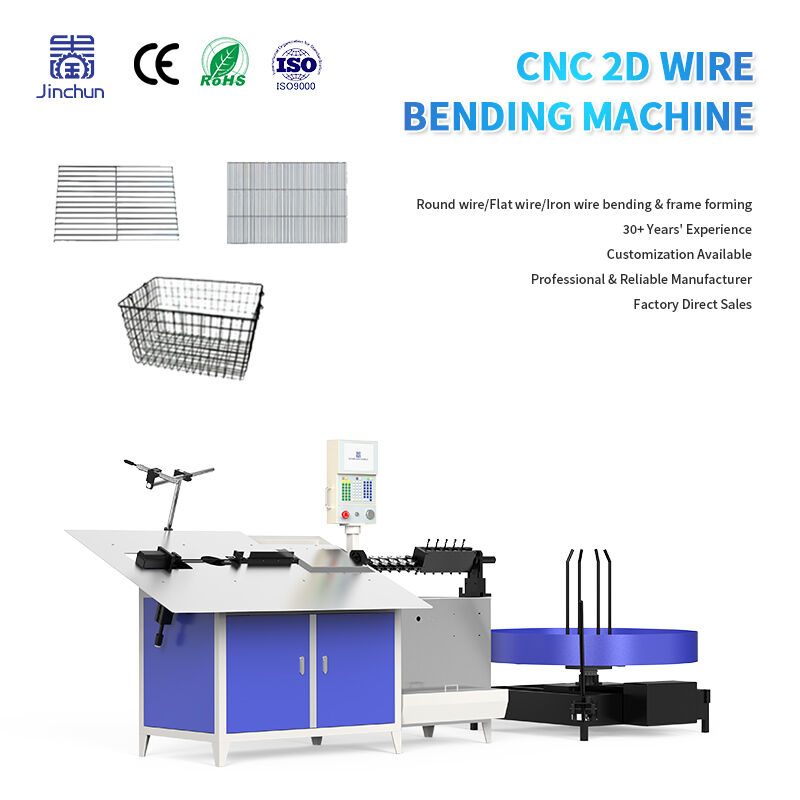
In the precision-driven world of metal fabrication, choosing the right equipment is the foundation of a successful production line. When it comes to wire forming, the debate often centers on whether to invest in a 3D or a 2D Bending machine. Both technologies offer unique advantages tailored to specific industrial needs, from household hardware like stainless steel hangers to complex automotive seat frames. Understanding the mechanical capabilities, production speeds, and ideal applications of each will ensure you select a machine that maximizes your return on investment.
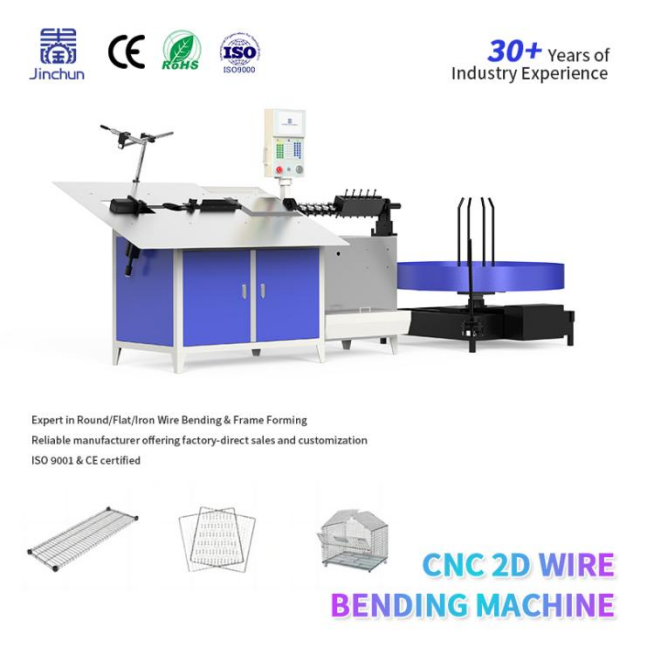
The Fundamentals of 2D Bending Technology
A 2D Bending machine is specifically designed for high-speed production of flat, two-dimensional wire forms. This equipment is the workhorse of industries that require mass-produced wire items that exist on a single plane, such as hooks, flat frames, and decorative ornaments. Modern 2D systems are highly versatile, capable of processing round or flat bar materials including iron, stainless steel, aluminum, and copper. With a diameter range of 1-16mm, these machines require only a simple mold change to switch between different wire thicknesses or material types.
The efficiency of a 2D Bending machine is unmatched for planar parts, with production speeds ranging from 20 to 25 parts per minute (Taking a 20×20 mm mesh size as an example). These machines maintain a high precision of up to 0.05mm, ensuring that even high-volume runs of automotive accessories or kitchen storage racks remain consistent. For businesses looking to integrate multiple processes, these machines often offer optional custom functions such as welding, punching, or chamfering. Ease of use is a significant factor, as beginners can master the multilingual intelligent touch-screen system within just one hour. Furthermore, the ability to generate programs directly from CAD imports and store up to 10,000 programs makes it an incredibly flexible asset for modern workshops.
Exploring 3D Bending: Wire-Rotating and Head-Rotating Systems
When bending intricate three-dimensional geometric shapes, a 3D wire bending machine becomes essential. Unlike the 2D version, 3D machines are categorized by their mechanical movement: wire-rotating (wire-rotating) and head-rotating (head-rotating). Wire-rotating systems utilize a gearbox to synchronously rotate the product for multi-angle forming, making them ideal for smaller volume precision 3D products such as crafts or small automotive fasteners. These systems can be configured with 3-9 axes to handle even the most intricate multi-dimensional designs.
For larger precision 3D products, such as automotive seat frames, the head-rotating system is the preferred choice. This system uses rotating arms for multi-angle forming while the wire itself remains stationary. This "head-rotating" principle ensures that even smaller, more delicate wires can be formed accurately without the vibration or oscillation that can occur when rotating a long piece of wire. Both 3D configurations offer production speeds of 15-30 parts per minute with an accuracy of 0.01mm. While the learning curve is slightly longer than that of a 2D machine, beginners can still become proficient within just two hours. These machines are built for longevity, with an average service life exceeding 15 years.
Key Differences in Performance and Reliability
Choosing between these machines requires a careful look at their technical specifications and long-term reliability. While the 2D machine excels in speed for flat products, 3D machines offer the axis-flexibility needed for complex automotive and motorcycle parts. Reliability is a shared trait across these high-precision systems, though 3D machines generally offer a longer average service life and a slightly lower annual failure rate due to their specialized industrial engineering.
Feature |
2D Bending Machine |
3D Machine (Wire-Rotating) |
3D Machine (Head-Rotating) |
Material Range |
1-16mm (Round/Flat) |
2-16mm (Round/Flat) |
2-16mm (Round/Flat) |
Production Speed |
15-45 parts / minute |
15-30 parts / minute |
15-30 parts / minute |
Accuracy |
Up to 0.05mm |
Up to 0.01mm |
Up to 0.01mm |
Learning Curve |
~1 Hour |
~2 Hours |
~2 Hours |
Service Life |
10+ Years |
15+ Years |
15+ Years |
Annual Failure Rate |
< 3% |
< 2% |
< 2% |
Best For |
Flat hooks, racks, hangers |
Small, complex precision parts |
Large frames (e.g., car seats) |
Application Scenarios for 2D and 3D Systems
The choice of machine is largely dictated by the industry and the specific parts you intend to produce. 2D machines are widely used in the production of household items like refrigerator trays, fan net rings, and pet cages. They are also perfect for stationery accessories, hair accessories, and garden tool components where high-speed flat forming is the primary requirement. Their ability to process round, square, and flat wire into irregular shapes or standard plana buckles (like S-hooks and carabiners) makes them indispensable for the hardware and lighting sectors.
In contrast, 3D machines dominate the high-end automotive and motorcycle industries. The head-rotating machines are specifically designed for car seat skeletons and accessories, while wire-rotating machines handle smaller instrument parts and toy accessories. The automotive sector relies on the precision and multi-axis flexibility of 3D technology to produce components that meet strict safety and design standards. Whether you are manufacturing kitchen and bathroom hardware, supermarket shelving accessories, or complex decorative crafts, the deciding factor is whether your product is 2D or 3D.
Long-Term Value and Support
Regardless of which machine you choose, industrial-grade wire bending equipment is a significant investment that requires professional backing. Both 2D and 3D machines undergo strict quality control (QC) inspections before shipment and hold CE certification to ensure international safety standards are met. Manufacturers often provide robust after-sales support, with average response times of less than two hours to ensure production lines remain operational.
While 2D machines typically come with a 1-year warranty, the more complex 3D systems often include a 2-year warranty, reflecting their more intensive industrial design and longer expected service life. The computer systems are designed for modern convenience, featuring fast startup speeds and intuitive interfaces that allow operators to adjust speeds or modify programs while the machine is actively producing. This ensures that your facility can adapt quickly to new orders or design changes, maintaining a competitive edge in the global hardware and automotive markets.
Frequently Asked Questions (FAQ)
What materials can these machines process?
Both 2D and 3D machines are designed to work with iron wire, steel wire, stainless steel, and non-ferrous metals like aluminum and copper. They can handle various shapes including round, square, and flat wire bars.
How difficult is it to learn the machine software?
Modern wire bending machines feature highly intuitive multilingual intelligent systems. A 2D machine can typically be mastered in about one hour, while the more complex 3D machines may take up to two hours for a beginner to get started.
Can the machine be upgraded with extra features?
Yes, specifically with 2D machines, manufacturers often offer optional custom functions such as integrated welding, punching, or chamfering to create a more comprehensive production solution.
Which machine is better for the automotive industry?
Both have their place. 2D machines are used for simpler automotive wire accessories, but 3D machines (specifically head-rotating models) are essential for complex, multi-dimensional parts like car seat frames and instrument skeletons.