 EN
EN


In the world of precision manufacturing, selecting the right equipment can be the difference between a high-margin production line and a series of technical bottlenecks. As industries move toward more complex geometries in automotive seating, kitchen hardware, and metal furniture, the demand for a versatile 3D Bending Machine has skyrocketed. Whether you are a small workshop specializing in handicrafts or a large-scale industrial facility producing fasteners and car parts, understanding the mechanical nuances of wire rotation versus head rotation is essential for making an informed investment.
Understanding the Core Mechanics of 3D Bending Technology
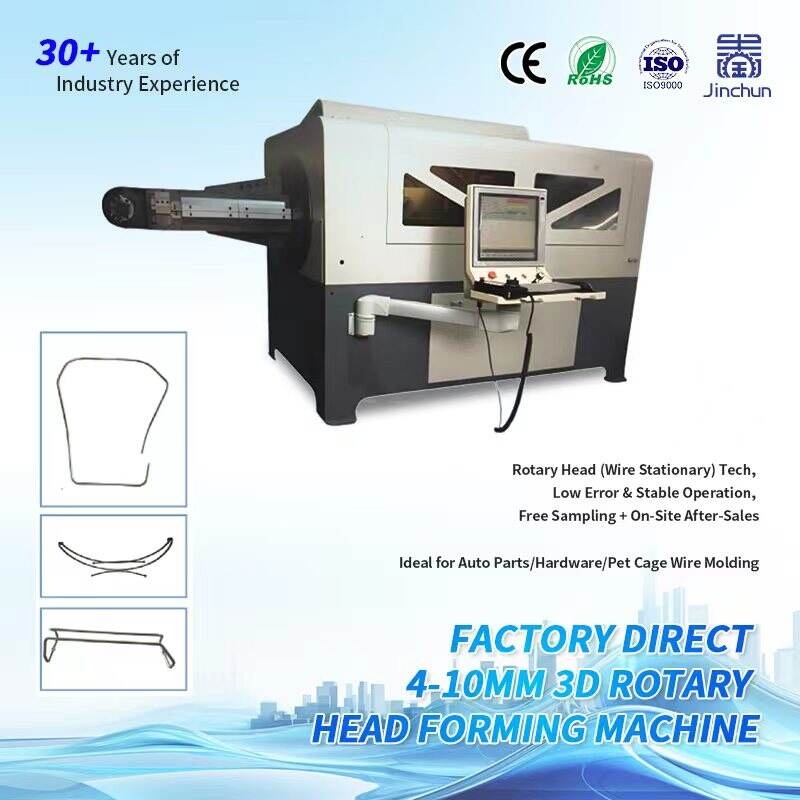
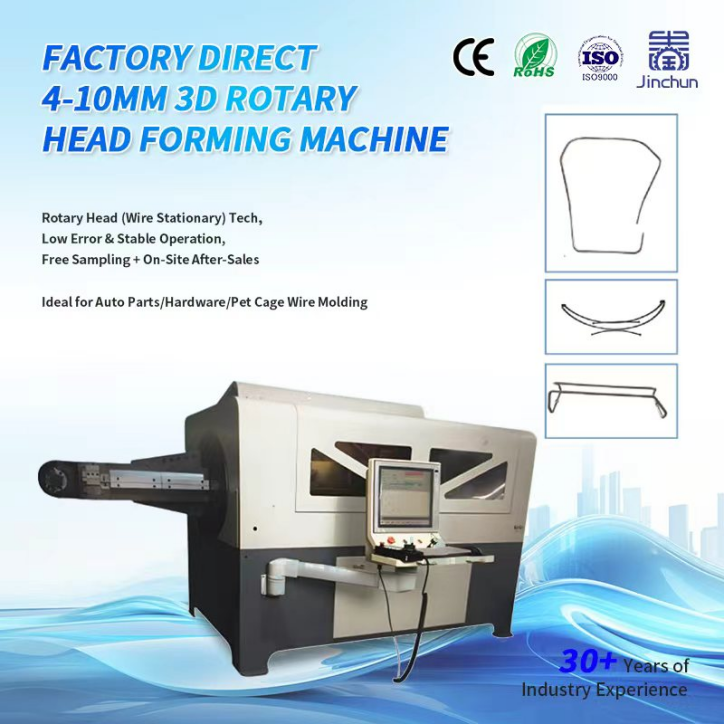
The fundamental principle behind a high-performance 3D Bending Machine involves manipulating metal wire across multiple axes to create complex shapes without manual intervention. Modern machines typically fall into two categories: wire-rotating systems and head-rotating systems (also known as "rotating head" machines). For precision-focused tasks, the rotating head principle is often preferred because the machine rotates the bending head rather than the wire itself. This lightweight head structure ensures that the wire remains stationary during the forming process, which eliminates the errors caused by wire oscillation and ensures rapid, stable operation.
Technological integration has also made these machines significantly more accessible. Current systems feature high-speed computer startup and intuitive interfaces that support multi-language operations. A key advantage of modern software is the ability to adjust speeds and modify programs simultaneously while the machine is in active production. This flexibility reduces downtime and allows for real-time optimization. These machines are the backbone of various sectors, including the production of automotive seat wires, kitchen and bathroom hardware, toy accessories, instrument parts, and supermarket shelf components.
Exploring the 3D Wire Bending Machine with Wire-Rotating Capability
The wire-rotating 3D Bending Machine is a powerhouse designed for high-precision, smaller-volume 3D products. This machine operates by using a synchronous gearbox to rotate the product itself, allowing for multi-angle forming with incredible accuracy. It is highly adaptable, supporting circular or flat materials made of iron, stainless steel, aluminum, and copper with diameters ranging from 2-16mm. By simply changing the molds, manufacturers can transition between different product lines seamlessly, achieving a production speed of 15 to 30 pieces per minute (Depending on product type and specifications) with a precision tolerance as tight as 0.01mm.
This system is particularly well-suited for industries that require intricate designs, as it can be customized with 3 to 9 axes to handle even the most complex 3D geometries. Despite its technical sophistication, the machine is designed for ease of use. The smart system, which combines buttons and touch-screen controls, allows a beginner to master basic operations within just two hours. With the capacity to store up to 10,000 different programs, it is an ideal choice for the fasteners, furniture, and handicraft industries where variety and repeatability are equally important.
Selecting the Head-Rotating 3D Bending Machine for Large-Scale Parts
When your production needs shift toward larger, more cumbersome 3D parts—such as automotive seat frames—the head-rotating 3D Bending Machine becomes the superior choice. Unlike wire-rotating models, this machine uses a rotating arm to move around the wire, allowing the material to stay stable regardless of its size or weight. This design prevents the centrifugal force issues that occur when large wire frames are spun at high speeds. It maintains the same impressive 2-16mm material range and 0.01mm precision, ensuring that large-scale components meet strict industrial standards.
Customization for the head-rotating model typically ranges from 3 to 9 axes, providing enough flexibility for rapid production of complex automotive and motorcycle accessories. Like its wire-rotating counterpart, it features a user-friendly multi-language interface and intelligent control systems that storage up to 10,000 programs. This machine is built for longevity, with an average service life exceeding 15 years and an annual failure rate of less than 2%. For businesses concerned with maintenance, the two-year warranty and a guaranteed after-sales response time of under two hours provide significant peace of mind.
Comparing Technical Specifications and Performance Metrics
Choosing between these two technologies requires a clear comparison of their functional limits and output capabilities. While both machines share high-quality standards, such as CE certification and rigorous pre-factory QC testing, their mechanical applications differ based on the physical dimensions of the end product. The table below outlines the shared and specific technical specifications to help guide your purchasing decision.
Feature |
Wire-Rotating (Wire-Rotating) |
Head-Rotating (Head-Rotating) |
Compatible Materials |
Iron, Stainless Steel, Aluminum, Copper |
Iron, Stainless Steel, Aluminum, Copper |
Material Shape |
Round Wire / Flat Iron |
Round Wire / Flat Iron |
Wire Diameter Range |
2 - 16 mm |
2 - 16 mm |
Precision |
0.01 mm |
0.01 mm |
Axis Customization |
3 - 9 Axes |
3 - 9 Axes |
Program Storage |
10,000 Programs |
10,000 Programs |
Best Application |
Small, high-precision 3D parts |
Large 3D products (e.g., Seat frames) |
Service Life |
15+ Years |
15+ Years |
Warranty |
2 Years |
2 Years |
Evaluating Longevity and After-Sales Support for Modern Bending Systems
The total cost of ownership for a 3D Bending Machine is determined by more than just the initial price tag; durability and support are critical factors. Both the wire-rotating and head-rotating models are engineered for a service life of over 15 years, significantly outlasting cheaper, non-industrial alternatives. With an annual failure rate kept under 2%, these machines are designed to run 24/7 with minimal interruption. Every unit is subjected to strict quality control inspections to ensure compliance with CE certification standards before it reaches the customer’s floor.
In the event of a technical query, the speed of support can prevent costly production delays. A guaranteed response time of less than two hours ensures that operators receive the help they need almost immediately. Combined with a comprehensive two-year warranty, these machines represent a low-risk, high-reward investment for metal furniture makers and automotive suppliers. The ability for beginners to start production within two hours further maximizes the machine's utility, ensuring that your budget is spent on a tool that starts generating value from day one.
Frequently Asked Questions (FAQ)
What is the main difference between wire-rotating and head-rotating machines?
The wire-rotating machine turns the wire itself via a gearbox, making it ideal for smaller, intricate parts. The head-rotating machine rotates the bending arm around the wire, which is necessary for larger products like automotive seat frames to maintain stability and precision.
Can these machines handle materials other than standard iron wire?
Yes, both types of machines are compatible with iron, stainless steel, aluminum, and copper. They can process both circular materials and flat iron bars by simply changing the molds.
How difficult is the software to operate for someone without coding experience?
The systems are designed with a "no-threshold" entry point. They feature multi-language support and an intelligent touch-screen interface. Most new operators are capable of running the machine and modifying programs within two hours of training.
Is it possible to change the production speed while the machine is running?
Yes, the computer interface allows you to adjust the production speed and even modify the program while the machine is in operation. This feature is designed to increase efficiency and allow for on-the-fly optimization.
What kind of accuracy can I expect for mass-produced parts?
Both the rotating head and rotating wire systems maintain a high precision of 0.01mm. This level of accuracy is consistent even at the maximum production speed of 30 pieces per minute.
Table of Contents
- Understanding the Core Mechanics of 3D Bending Technology
- Exploring the 3D Wire Bending Machine with Wire-Rotating Capability
- Selecting the Head-Rotating 3D Bending Machine for Large-Scale Parts
- Comparing Technical Specifications and Performance Metrics
- Evaluating Longevity and After-Sales Support for Modern Bending Systems
- Frequently Asked Questions (FAQ)