 EN
EN


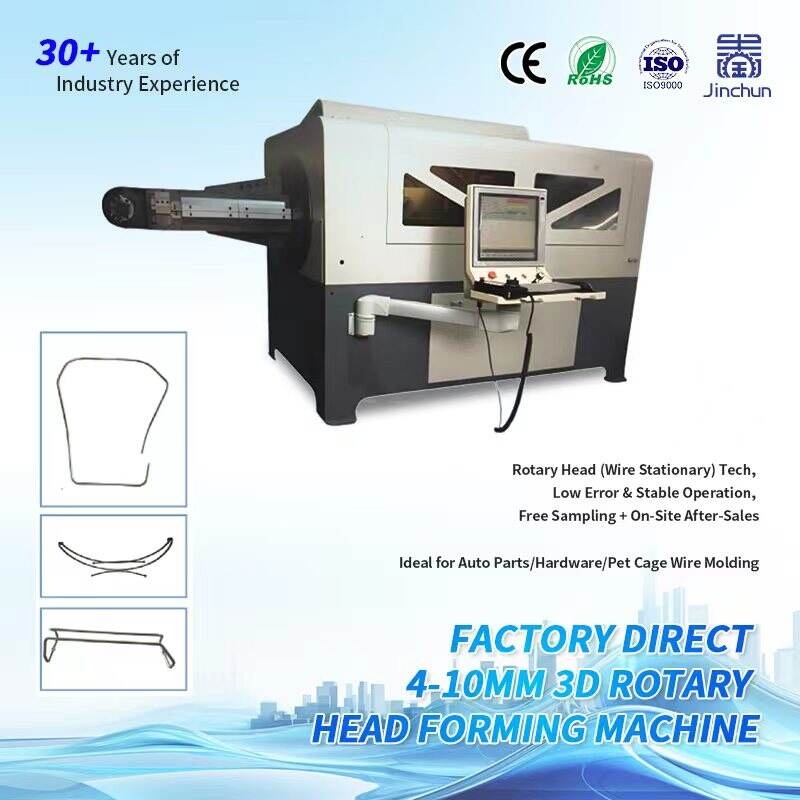
The metal fabrication industry continuously seeks methods to enhance precision, accelerate cycle times, and minimize material waste. Traditional two-dimensional wire forming techniques, while reliable for flat plane components, struggle when confronted with the complex, multi-planar geometries demanded by modern engineering. For manufacturers aiming to elevate their production capabilities, implementing an advanced 3D Bending machine offers a transformative solution. This technology transitions manufacturing facilities from multi-stage manual bending setups to streamlined, single-station automated processing ecosystems.
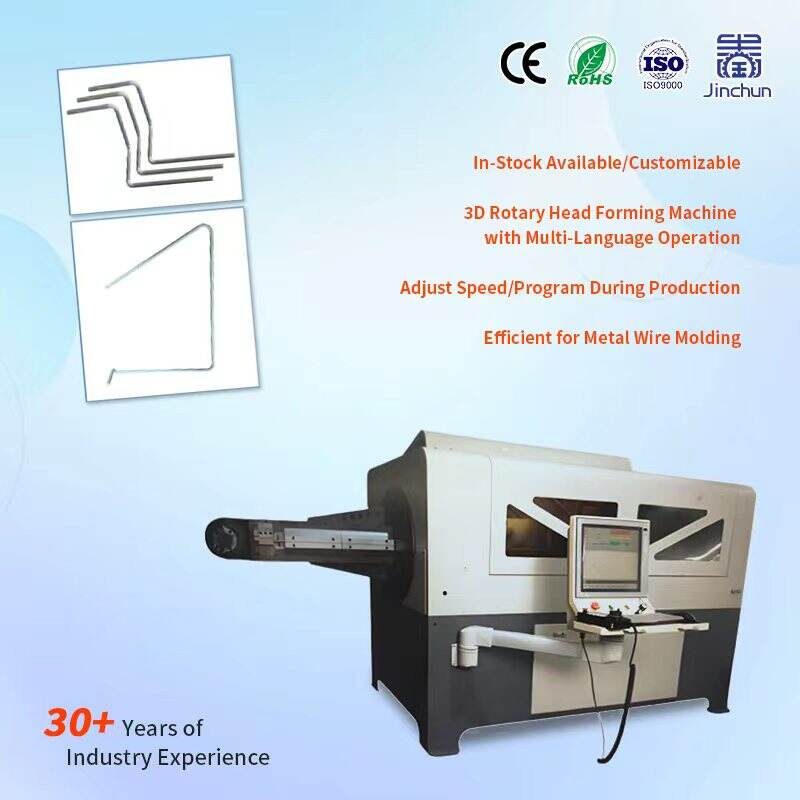
By executing three-dimensional wire and bar manipulation in a single continuous automated cycle, these systems eliminate human positioning errors and post-forming handling. Factories can feed raw metal wire or flat bars directly into the system to receive fully formed, highly intricate components without manual intervention. This automated capability guarantees exceptional structural symmetry and part-to-part consistency. Investing in a high-performance 3D Bending machine allows businesses to scale their production volumes, lower overhead costs, and meet the strict dimensional tolerances required by global supply chains.
Technological Variants of Three-Dimensional Wire Forming
To accommodate different part sizes and geometric complexities, industrial three-dimensional wire forming technology has diverged into two primary mechanical approaches: wire-rotating systems and head-rotating systems. Choosing the correct configuration depends on the physical dimensions and structural behavior of the fabricated product.
The wire-rotating variant is engineered primarily for smaller, highly precise three-dimensional items. In this setup, the machine utilizes a synchronized gearbox to rotate the wire or bar material itself during the bending sequence. This synchronized rotation allows for rapid, multi-angle forming across 7 to 13 programmable axes, enabling the fast production of complex geometries such as intricate baskets, retail displays, and decorative crafts.
Conversely, the head-rotating configuration targets larger, precision three-dimensional products, such as automotive seat frames, where spinning a long, heavy wire would cause structural distortion or mechanical instability. Instead of moving the material, this configuration utilizes a highly agile rotating arm and head mechanism to bend the wire from multiple angles. Configured with 5 to 10 axes, this method maintains perfect material stability while forming heavy-gauge perimeter frames and large-scale industrial components.
Mechanical Specifications and Control Integration
Sustaining rapid cycle times while processing resilient wire materials requires robust servo positioning and heavy-duty structural engineering. Both mechanical variants handle round or flat bar materials—including iron, stainless steel, and copper profiles—with diameters ranging from 2mm up to 16mm, requiring only a simple mold change to transition between material sizes. The integrated multi-axis servo networks allow the machinery to achieve a positioning accuracy of up to 0.01mm, which is vital for automotive and motorcycle subassemblies where minor deviations can prevent proper integration.
Modern wire fabrication relies on intuitive industrial software to simplify complex programming. These systems feature a multilingual intelligent control interface that integrates tactile buttons with a responsive touch screen, allowing beginners to get started and operate the machine safely within just 2 hours of training. To accommodate high-mix, low-volume manufacturing, the internal memory drive stores up to 10,000 distinct production programs, minimizing setup times during product changeovers.
Comprehensive Industrial Performance and Technology Matrix
The technical data table below outlines the mechanical boundaries, performance rates, and structural differences between the two primary three-dimensional forming methods.
Operational & Engineering Metric |
Wire-Rotating 3D Bending System |
Head-Rotating 3D Bending System |
Primary Target Product Scale |
Optimized for smaller volume, high-precision 3D components and intricate wire matrices. |
Engineered for larger precision 3D products and extended heavy-gauge frames. |
Multi-Angle Bending Mechanism |
Synchronized industrial gearbox rotates the wire material during forming. |
High-agility rotating arms and bending heads move around stationary wire. |
Programmable Axis Configuration |
Versatile 7 to 13 axes for complex, multi-planar geometries. |
Efficient 5 to 10 axes optimized for large structural profiles. |
Material Profile Compatibility |
Round or flat bar stock in high-grade Iron and Stainless Steel. |
Round or flat bar stock in high-grade Iron and Stainless Steel. |
Material Thickness Threshold |
Fully adjustable for wire diameters from 2mm up to 16mm via quick mold changes. |
Fully adjustable for wire diameters from 2mm up to 16mm via quick mold changes. |
Volumetric Production Velocity |
Outputs 15 to 30 completed 3D parts per minute based on design complexity. |
Outputs 15 to 30 completed 3D parts per minute based on design complexity. |
Mechanical Forming Accuracy |
Ultra-precise servo-driven tolerances down to 0.01mm. |
Ultra-precise servo-driven tolerances down to 0.01mm. |
Control Interface Framework |
Multilingual system with combined touch screen and physical button controls. |
Multilingual system with combined touch screen and physical button controls. |
Program Storage Capacity |
Secures up to 10,000 unique production programs within internal storage. |
Secures up to 10,000 unique production programs within internal storage. |
Operator Adaptation Period |
Beginner-friendly interface allowing complete operator proficiency within 2 hours. |
Beginner-friendly interface allowing complete operator proficiency within 2 hours. |
Equipment Lifespan & Certification |
Exceeds 15 years average service life; annual failure rate under 2%; CE certified. |
Exceeds 15 years average service life; annual failure rate under 2%; CE certified. |
Warranty & Technical Support |
2-year warranty; strict pre-shipment QC; after-sales response under 2 hours. |
2-year warranty; strict pre-shipment QC; after-sales response under 2 hours. |
Target Industrial Applications and Long-Term Reliability
The multi-axis versatility of automated three-dimensional wire forming makes it an essential asset across several demanding industrial sectors. In the automotive and motorcycle parts industries, it is utilized for mass-producing car seat frames, exhaust hangers, and precision engine bay brackets. The furniture and craft industries leverage the machinery to form elegant steel wire chairs, structural table skeletons, heavy-duty display shelving, and decorative home hardware. Additionally, the fast processing speeds are ideal for manufacturing heavy-duty fasteners and specialized industrial wire hooks that require absolute structural uniformity.
Purchasing a three-dimensional wire forming system represents a long-term investment in a factory's core production capacity. These machines are engineered with premium industrial components and heavy steel frames, achieving an average operational lifespan exceeding 15 years. This durable construction maintains an annual operational failure rate of less than 2%. Before leaving the factory floor, each machine undergoes strict quality control (QC) inspections to ensure compliance with CE certification standards. To minimize unexpected downtime during busy shifts, after-sales technical support provides a rapid response time averaging less than 2 hours, backed by a comprehensive 2-year warranty.
Frequently Asked Questions Regarding Three-Dimensional Wire Automation
Q1: What is the main factor when deciding between a wire-rotating and a head-rotating machine?
A1: The decision depends on the physical dimensions and weight of your target product. Wire-rotating machines are ideal for smaller, compact 3D parts because they spin the wire using a synchronized gearbox. For larger parts, like an automotive seat frame, a head-rotating machine is preferred because it keeps the long wire stationary while a rotating arm bends it, preventing material distortion.
Q2: Can the machine switch between processing round wire and flat iron bars easily?
A2: Yes, the system accommodates both round and flat bar profiles made of iron, stainless steel, or copper within the 1-16mm thickness range. Transitioning between different material shapes or diameters requires only a simple mold change, allowing a single machine to handle diverse product lines.
Q3: How difficult is it for a factory worker with no CNC experience to learn to program the machine?
A3: The system is designed for rapid onboarding. It features a user-friendly, multilingual interface that combines a touch screen with physical buttons, allowing a beginner to learn the programming layout, input coordinates, and operate the machine safely within 2 hours of initial training.
Q4: How does the machine maintain a low annual failure rate during high-volume production?
A4: The machine achieves an annual failure rate of less than 2% over its 15-year lifespan due to rigid manufacturing standards and thorough pre-shipment quality control (QC) testing. This reliable performance is supported by full CE certification and a 2-year factory warranty, with technical support responding in under 2 hours to protect your schedules.
Table of Contents
- Technological Variants of Three-Dimensional Wire Forming
- Mechanical Specifications and Control Integration
- Target Industrial Applications and Long-Term Reliability
- Frequently Asked Questions Regarding Three-Dimensional Wire Automation
- Q1: What is the main factor when deciding between a wire-rotating and a head-rotating machine?