 EN
EN


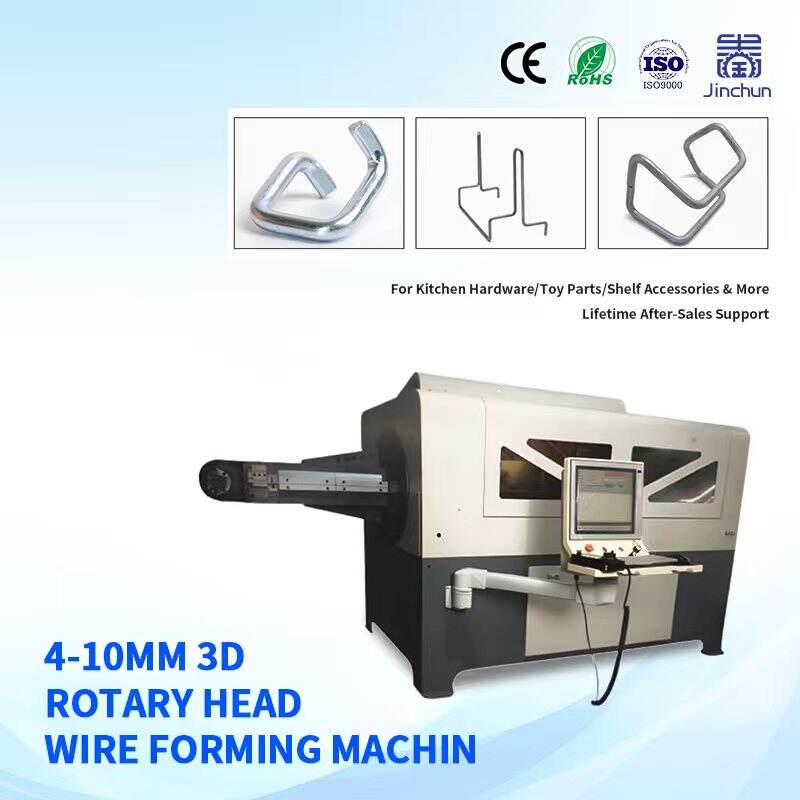
The modern metal manufacturing sector requires equipment that maximizes speed, accuracy, and versatility to remain competitive. Traditional multi-stage forming methods often fail to meet the strict dimensional requirements and rapid cycle times demanded by high-end engineering applications. Upgrading your factory floor with an advanced 3D Bending Machine offers a comprehensive solution, transforming raw wire coils or solid metal bars into highly intricate, finished three-dimensional components in a single automated pass.
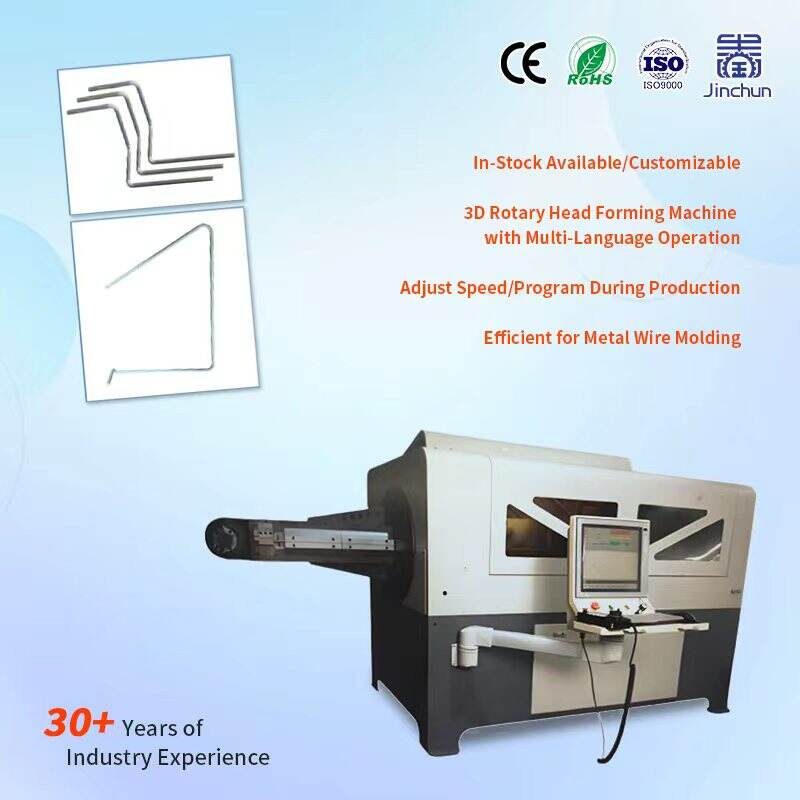
By automating the bending process across multiple planes, this advanced equipment eliminates manual transfer errors and drastically reduces part handling time. Factories can safely scale up production volumes while maintaining strict uniformity across every production batch. Investing in an automated 3D Bending Machine helps your manufacturing business reduce operational overhead and fulfill high-volume international orders with absolute confidence.
1. Unmatched Multi-Axis Precision and Processing Speed
Achieving consistent results across complex multi-planar wire designs requires absolute mechanical control. Modern three-dimensional fabrication equipment achieves an exceptional structural forming accuracy of up to 0.01mm. This level of precision is necessary for tight-tolerance automotive subassemblies, motorcycle components, industrial fasteners, and structural furniture elements where minor manufacturing deviations can compromise final assembly.
The machinery also delivers impressive production speeds, outputting 15 to 30 completed 3D parts per minute depending on geometric complexity. This automated output allows your facility to complete high-volume manufacturing orders in a fraction of the time required by traditional methods.
2. Dynamic Mechanical Options for Varied Product Volumes
Industrial wire and bar manipulation technology features specialized mechanical variations tailored to distinct product sizes and shapes. Choosing the right mechanism optimizes material handling and ensures long-term part stability.
The Wire-Rotating Mechanical Configuration
The wire-rotating variant targets smaller volume precision 3D products and intricate components. This design utilizes a robust synchronized industrial gearbox to rotate the raw metal wire or bar stock itself during the bending cycle. Configurable with 7 to 13 distinct programmable axes, this system enables the rapid and flawless production of complex 3D items with high geometric density.
The Head-Rotating Mechanical Configuration
The head-rotating variant targets larger precision 3D products, such as structural automotive seat frames, where spinning a heavy, extended wire would cause material distortion. Instead of rotating the wire material, this system utilizes high-agility rotating arms and bending heads to execute multi-angle forming. Configurable with 5 to 10 axes, this mechanism keeps the long metal bar completely stationary to maintain structural stability while forming heavy-gauge profiles.
3. High Material Adaptability and Tooling Flexibility
Modern metal fabrication requires equipment that adapts quickly to changing design parameters. This advanced machinery processes round or flat bar stock—including iron, stainless steel, and copper profiles—with diameters ranging from 2mm up to 16mm. Transitioning between entirely different material shapes or thicknesses requires only a quick, simple mold change. This multi-material compatibility allows a single 3D Bending Machine to seamlessly manufacture retail displays, high-end crafts, or heavy automotive frames on the same production line.
4. Intelligent Control Integration and Minimal Training Needs
Modern fabrication equipment must be simple to program to minimize downtime during product changeovers. These automated machines feature an intuitive, multilingual intelligent system that combines a digital touch screen with robust physical button controls. This user-friendly interface allows beginners and non-CNC operators to master the system, input parameters, and manage the equipment safely within just 2 hours of initial training. Furthermore, the software contains a massive internal storage drive capable of securing up to 10,000 distinct operational programs, enabling operators to instantly recall pre-saved designs and execute rapid product transitions without tedious recalibration.
5. Industrial-Grade Durability and Long-Term Reliability
Investing in industrial-grade automation provides long-term operational security for your facility. Built with heavy-duty structural frames and premium mechanical wear components, these automated systems maintain an average service life exceeding 15 years. This reliable construction keeps the annual operational failure rate below 2%.
Each unit undergoes strict quality control (QC) inspections before leaving the factory floor to ensure compliance with CE certification standards. To minimize unexpected downtime during busy production shifts, the technical support network provides a rapid after-sales response time averaging under 2 hours, backed by a comprehensive 2-year warranty.
Technical Specifications and Industrial Capabilities Matrix
The technical data table below details the performance boundaries, axis choices, and target industry applications for both automated three-dimensional wire forming methods.
Operational & Engineering Metric |
Wire-Rotating 3D Bending Configuration |
Head-Rotating 3D Bending Configuration |
Primary Target Product Volume |
Optimized for smaller volume, high-precision 3D components and compact shapes. |
Targets larger precision 3D products and extended heavy-gauge frames. |
Multi-Angle Forming Mechanism |
Uses an industrial gearbox to synchronously rotate the product during forming. |
Uses high-agility rotating arms and bending heads around stationary wire. |
Programmable Axis Range |
Configurable with 7 to 13 axes for complex, multi-planar geometries. |
Configurable with 5 to 10 axes for large structural profiles. |
Material Profile Compatibility |
Round bar or flat bar shapes in high-grade Iron, Stainless Steel. |
Round bar or flat bar shapes in high-grade Iron, Stainless Steel. |
Material Thickness Capacity |
Fully adjustable for wire diameters from 2mm up to 16mm via quick mold changes. |
Fully adjustable for wire diameters from 2mm up to 16mm via quick mold changes. |
Volumetric Production Speed |
Forms 15 to 30 completed 3D parts per minute based on design complexity. |
Forms 15 to 30 completed 3D parts per minute based on design complexity. |
Mechanical Forming Accuracy |
Ultra-precise servo-driven movement maintaining tolerances up to 0.01mm. |
Ultra-precise servo-driven movement maintaining tolerances up to 0.01mm. |
Control Interface Framework |
Multilingual system with combined digital touch screen and physical buttons. |
Multilingual system with combined digital touch screen and physical buttons. |
Program Storage Threshold |
Secures up to 10,000 unique production programs within internal storage. |
Secures up to 10,000 unique production programs within internal storage. |
Operator Adaptation Period |
User-friendly interface allowing complete operator proficiency within 2 hours. |
User-friendly interface allowing complete operator proficiency within 2 hours. |
Equipment Lifespan Metric |
Average machine service life exceeds 15 years with full CE certification. |
Average machine service life exceeds 15 years with full CE certification. |
Reliability & Factory Support |
Annual failure rate <2%; 2-year warranty; after-sales response under 2 hours. |
Annual failure rate <2%; 2-year warranty; after-sales response under 2 hours. |
Frequently Asked Questions (FAQ)
Q1: Which mechanical design is best for producing complex automotive seat frames?
A1: The head-rotating 3D machine is the ideal choice for automotive seat frames. Because seat frames are larger, precision products, rotating the heavy metal bar during forming can cause material distortion or geometric instability. The head-rotating machine utilizes agile rotating arms to form multi-angle bends while keeping the heavy wire securely stationary.
Q2: Does the machine require an operator to replace the entire toolset when switching between iron and copper wires?
A2: No, the machine does not require entirely separate toolsets for different metal types. The equipment handles round or flat bars made of iron, stainless steel, or copper within the 2-16mm thickness range, requiring only a simple, rapid mold change to adapt perfectly to the new material diameter.
Q3: How difficult is it for a traditional factory worker to learn the multi-axis programming system?
A3: The setup is designed for rapid onboarding. It features a multilingual intelligent system that pairs physical buttons with an intuitive touch screen. This user-friendly interface allows beginners and non-technical workers to safely configure axes, input program paths, and operate the machinery within 2 hours of training.
Q4: What production safeguards protect my factory from sudden downtime during busy production shifts?
A4: The machinery undergoes strict pre-shipment quality control (QC) inspections and holds full CE certification to guarantee long-term reliability. With an annual failure rate of less than 2% over its 15-year service life, the machine is highly reliable. If an unexpected operational issue occurs, technical support responds in under 2 hours, backed by a comprehensive 2-year factory warranty.
Table of Contents
- 1. Unmatched Multi-Axis Precision and Processing Speed
- 2. Dynamic Mechanical Options for Varied Product Volumes
- 3. High Material Adaptability and Tooling Flexibility
- 4. Intelligent Control Integration and Minimal Training Needs
- 5. Industrial-Grade Durability and Long-Term Reliability
- Technical Specifications and Industrial Capabilities Matrix
- Frequently Asked Questions (FAQ)