101, Building 9, Jicheng Science And Technology Innovation Park, No. 25, Sanle East Road, Shunjiang Community, Beijiao Town, Foshan, Guangdong, China +86-18038626853 [email protected]
101, Building 9, Jicheng Science And Technology Innovation Park, No. 25, Sanle East Road, Shunjiang Community, Beijiao Town, Foshan, Guangdong, China +86-18038626853 [email protected]

A shopping cart production line must coordinate several different processes. Straight wire becomes frames and basket wires; welded panels become a basket; assembled structures then need finishing and purchased components before the cart is ready for use. The best starting point is an approved cart design and production target, because not every cart uses the same materials, components or sequence.
A typical cart may include a wire basket, reinforcing frames, a chassis, a handle, a rear gate, wheel assemblies and plastic accessories. Some chassis and handles use tube rather than solid wire. Identify these components on a bill of materials before selecting machinery.
Separate the scope into wire processing, tube or other structural fabrication, basket assembly, surface finishing and final assembly. Confirm which components are manufactured in-house and which are purchased. A wire bending and mesh welding package should not be assumed to include tube processing, wheels or a coating line.
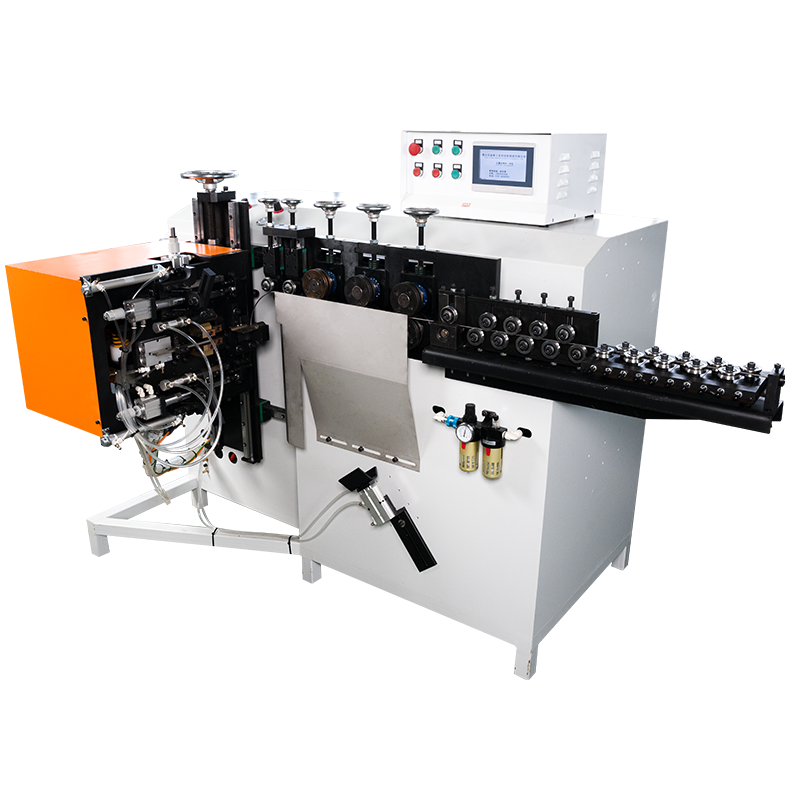
A wire straightening machine prepares cut lengths for mesh panels and other components that use straight blanks. Match its material range, cut quality and output to the basket design and the consuming station. Cut-length consistency and straightness help keep loading and welding fixtures predictable.
Some coil-fed CNC bending operations straighten and feed wire within their own machine, so a separate cutting stage is not required for every component. Map the material route for each part rather than sending all wire through the same sequence. Keep wire grades and diameters identified through storage and transfer.
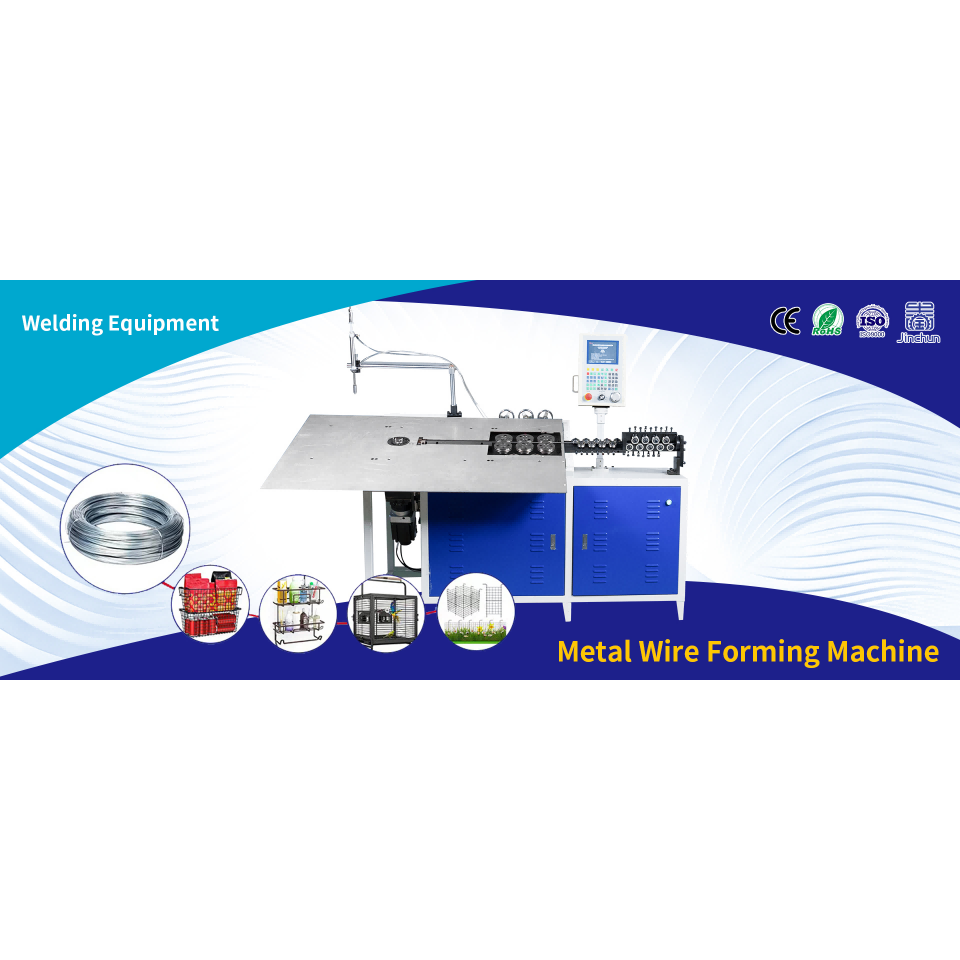
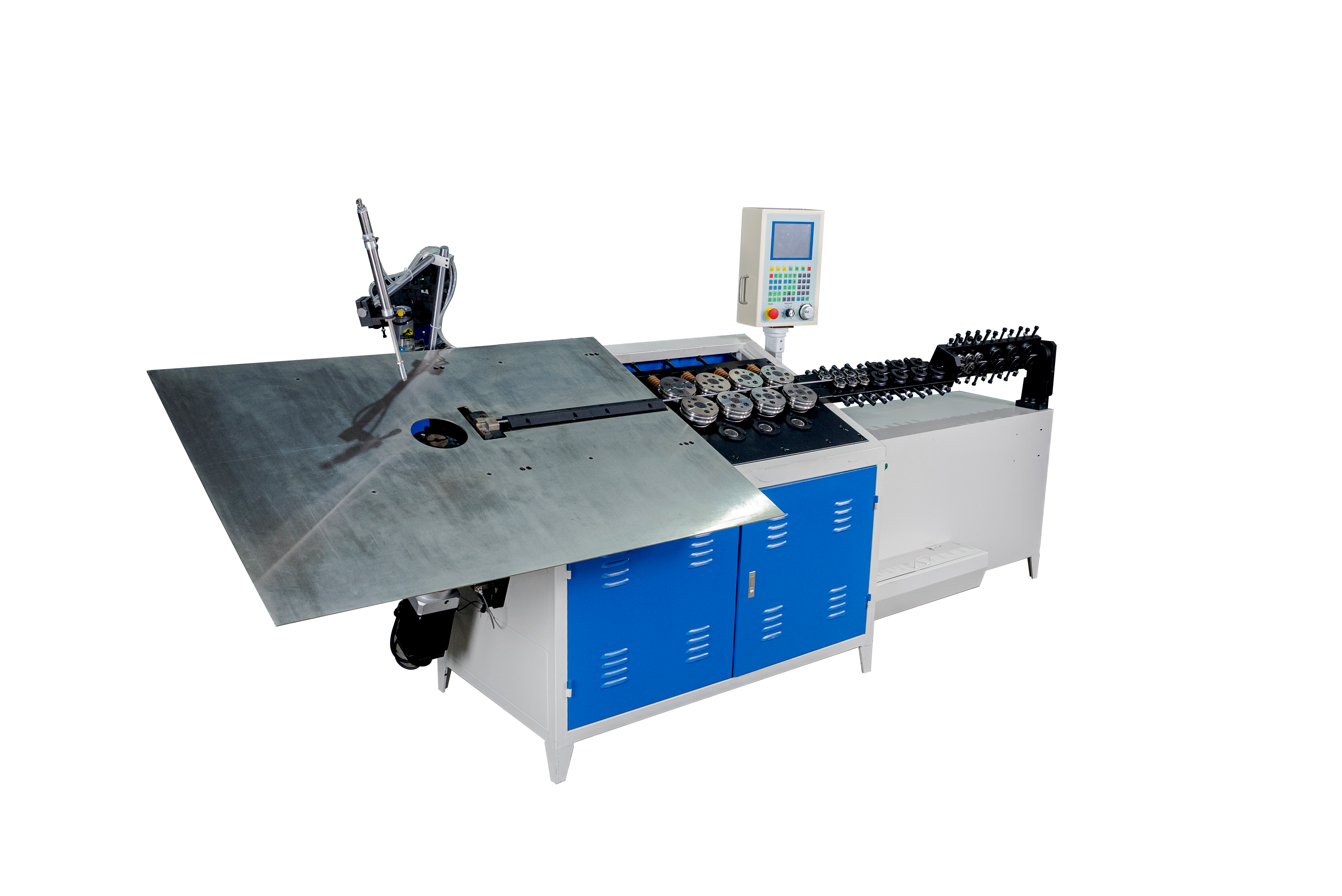
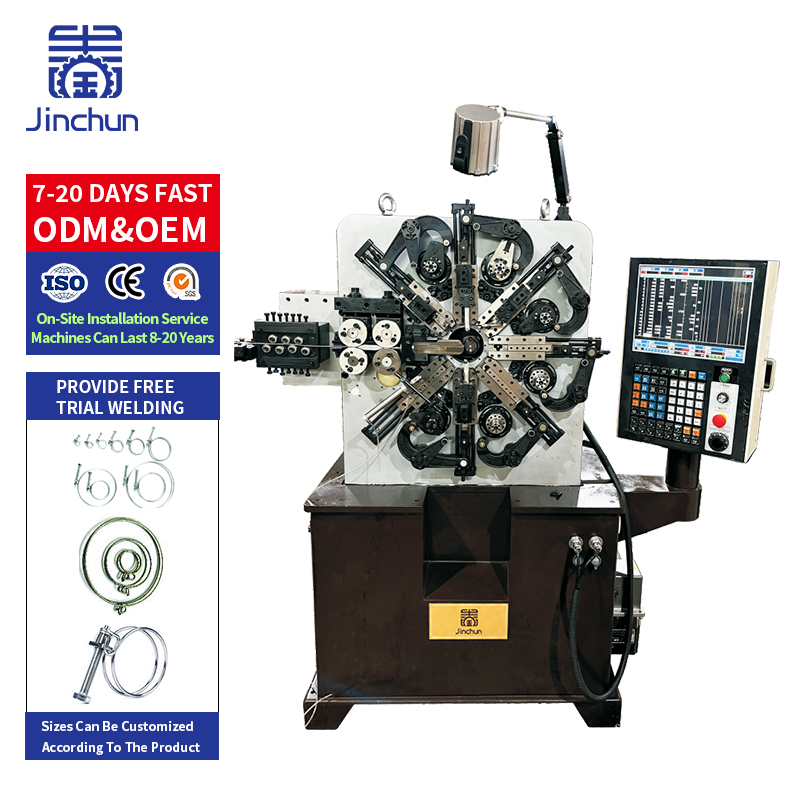
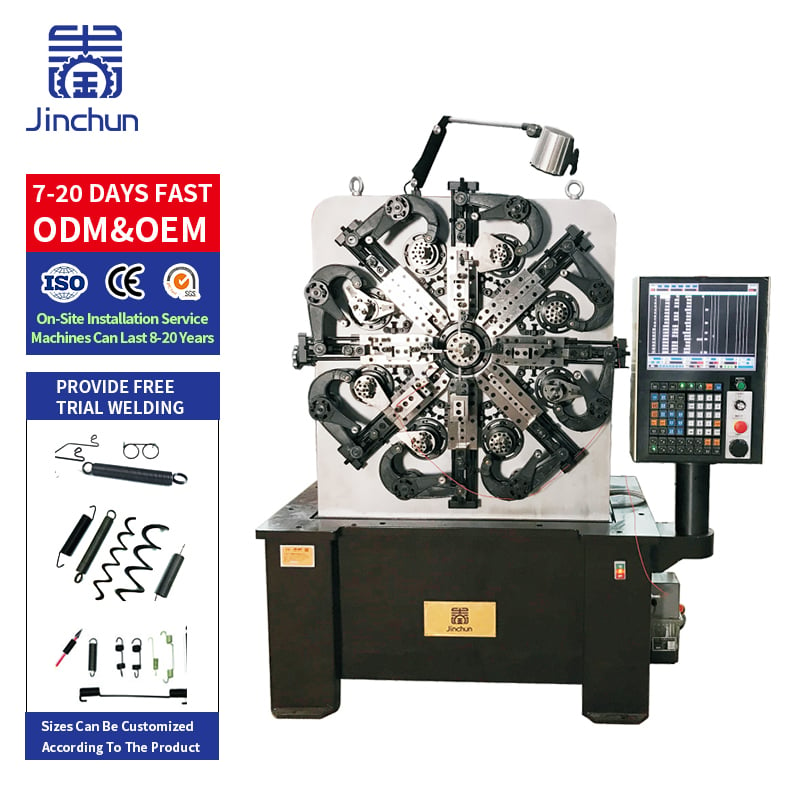
A CNC 2D wire bending machine can be evaluated for planar wire frames and reinforcement parts. Components with bends in several planes may require 3D forming or another defined forming operation. If a handle or chassis member is tubular, select a suitable tube process separately.
Check bend radii, corner positions, joint access and fit with the basket or chassis. Tooling must accommodate the complete shape and its unloading path. Trial the largest and smallest representative components to identify interference and changeover requirements before committing to a shared machine.
A mesh welding machine joins crossing wires into panels or basket-related structures according to the selected equipment arrangement. The loading fixture establishes wire pitch and positioning; the welding sequence must suit the wire materials and intersections.
Some designs use panels that are welded flat and then formed. Others use separate panels assembled in a later fixture. Confirm the chosen route with drawings and samples. Inspect wire spacing, missing or displaced wires, weld consistency and distortion. Do not treat a visually complete grid as sufficient evidence of joint performance.
Depending on the cart design, welded mesh may be formed into basket geometry before joining to reinforcing frames. Other arrangements assemble separately formed panels. Fixtures control locating points while brackets, gates and support members are added.
Plan access for each joint and the handling of partially assembled structures. A forming or welding cell may need additional fixtures, presses or transfer equipment. Define which transfers are manual and which are automatic. The word automatic on an individual machine does not establish an unattended line from coil to finished cart.
Inspect basket dimensions, frame alignment, fixture fit, weld condition and the relationships needed for gate movement and cart nesting. Agree joint tests and functional checks for the actual design. Complete any required structural or load-related validation using the project's approved test plan.
After metal fabrication, the product may require surface preparation and a specified coating or plating process. Final assembly adds wheels, handles and accessories, followed by the relevant functional inspection. These steps affect finished-cart output even if the wire-processing section is fast. Confirm whether finishing is supplied, outsourced or excluded from the equipment quotation.
Calculate the demand for each component per cart, then compare it with accepted output at each station. A cart may use multiple panels and many wires; one basket per minute cannot be compared directly with one wire per minute. Include changeovers, material replenishment, inspection and planned downtime.
For illustration, a target of 120 carts per shift with four identical panels per cart requires 480 accepted panels per shift. The four-panel assumption is only an example, not a universal cart design. Use the actual bill of materials to size equipment, buffers and staffing. The slowest required operation can constrain the full line.
Provide cart and component drawings, basket dimensions, wire and tube specifications, joint details, finish requirements, product variants and accepted carts per shift. State shift duration, floor layout, utilities, loading access and desired automation level.
Request an itemized scope covering machines, tooling, fixtures, transfer systems, purchased components, finishing, installation, training and acceptance. Ask the supplier to identify exclusions and interfaces with third-party equipment. A layout and a component-by-component process route make quotations easier to compare than a single total price.
Does a shopping cart line always include coating? No. Finishing must be identified in the quotation and layout, including any outsourced operations.
Can all cart frames be made on a wire bender? No. Tubular or other structural parts may require different equipment. Use the bill of materials to separate them.
Which machine determines line capacity? The limiting station depends on component quantities, accepted output and availability across the entire route. Determine it from a balanced process plan.
Shopping cart manufacturing needs a coordinated route from raw material to inspected assembly. Define the bill of materials, verify critical forming and welding operations, and make finishing and assembly responsibilities explicit. Send your shopping cart drawings, basket dimensions, wire specifications and expected output. Jinchun can review the required machines and line layout.
 Hot News
2026-09-19
2026-09-18
2026-09-17
2026-09-16
2026-09-15
2026-09-14
 EN
EN