 EN
EN


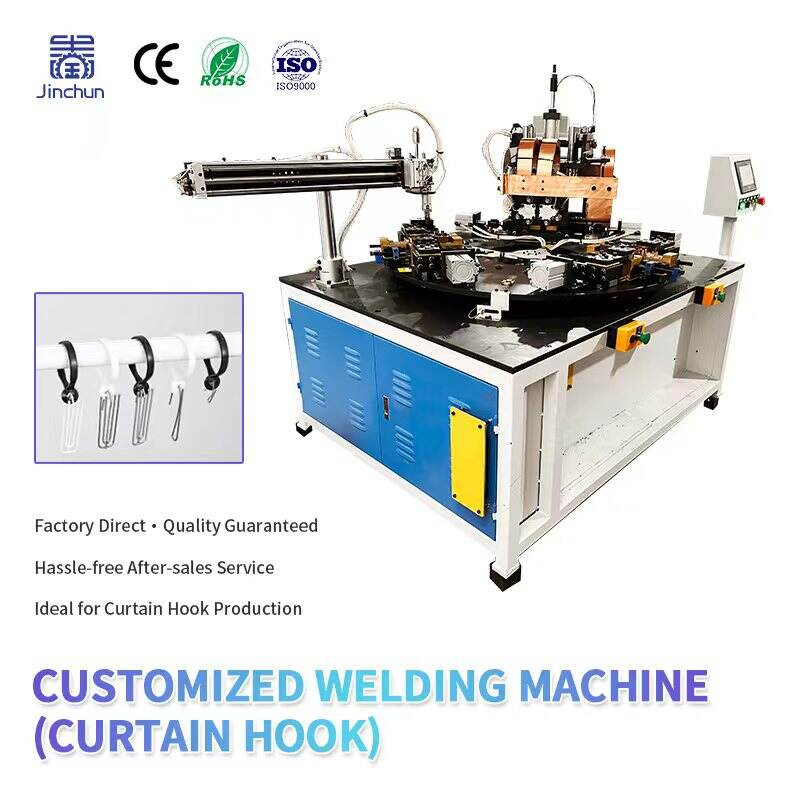
In the modern manufacturing landscape, efficiency, precision, and automation are vital for maintaining competitiveness. Across sectors ranging from furniture production to automotive components, the demand for high-quality metal wire and flat iron frames continues to escalate. Traditionally, producing these components required separate manual or semi-automated operations for wire straightening, precision cutting, bending, and resistance welding. This fragmented approach not only increased labor costs but also introduced human error, high rejection rates, and significant downtime during tool changeovers. The arrival of advanced Frame Bending & Welding Machines has fundamentally transformed this manufacturing sector by combining multiple complicated fabrication stages into one continuous, high-speed automated cycle.
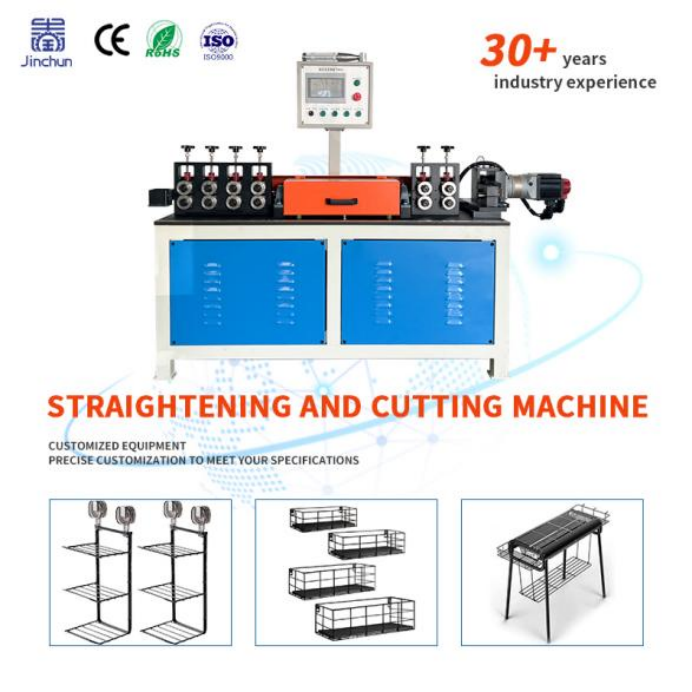
By integrating wire forming and structural resistance welding into a single workflow, these modern production systems eliminate manual handling between separate stations. Manufacturers can now raw feed metal wire or flat bars directly into a single automated line and receive fully formed, robustly welded square or geometric frames within seconds. This technical article explores how a state-of-the-art Frame Bending & Welding Machine optimizes output, maintains strict geometric tolerances, and resolves persistent labor shortage challenges across various metal fabrication sectors.
The Mechanical Process of One-Step Frame Fabrication
The primary engineering achievement of modern wire processing machinery lies in its single-stage, fully automatic forming loop. The machine processes raw coiled metal wires or flat iron bars directly through a series of integrated operations. Upon entering the system, the raw material goes through high-precision straightening rollers to eliminate any natural coil set, ensuring perfect flatness and alignment. Once straightened, a computerized numerical control system feeds the wire to the bending head, which executes flawless bends according to exact programmed angles. Immediately following the completion of the final bend to form a closed square, rectangle, or custom silhouette, the machine engages its integrated resistance welding head to secure the joint.
By completing the entire cycle without any human handling, the system achieves a degree of part-to-part consistency that traditional multi-stage workshops cannot replicate. The smooth alignment between the bending mandrel and the welding electrodes ensures that the raw wire ends meet under exact, uniform pressure. This precise mechanical alignment results in perfectly flat frames, eliminated twisting, and exceptionally strong joints. Furthermore, because the entire forming loop is enclosed within a single automated workstation, the structural footprint required on the factory floor is minimized, optimizing workspace efficiency.
Technical Attributes and Operational Performance Parameters
To understand the high efficiency of these automated systems, it is essential to examine their technical attributes and capabilities. These heavy-duty industrial machines are engineered to process round wires and flat iron materials up to 8mm in diameter. Featuring universal tooling and advanced structural mechanisms, a premium Frame Bending & Welding Machine can manufacture 6 to 10 fully completed, welded frames per minute. When producing standard two-dimensional components without complex welding requirements, the machine's output can increase significantly, yielding 15 to 45 formed units per minute. This flexible operational capability is supported by high-precision servo systems that achieve a dimensional tolerance accuracy of 0.02mm.
This high manufacturing precision is accompanied by rapid operational setup capabilities. Traditional wire forming lines require hours of manual mechanical adjustments and die replacements to switch between different product sizes. In contrast, modern automated systems utilize advanced universal tooling mechanisms. Operators can completely change product dimensions or geometry configurations via software adjustments within 15 minutes, completely eliminating traditional die-swapping downtime. Additionally, the modular architecture of the machine allows factories to integrate customized processing stations, such as automated stamping or punching units, enabling the fabrication of complex perforated components within the exact same processing cycle.
(A comprehensive technical performance matrix summarizing these operational specifications is detailed in the table below.)
Performance & Design Criteria |
Technical Specifications & Operational Capabilities |
Material Compatibility |
Iron wires, Stainless Steel, Copper, and Carbon Steel (Round, Square, Flat, and Hexagonal profiles) |
Wire Diameter Capacity |
Processes raw wire and flat materials up to 8mm in diameter |
Production Speed (Welded Frames) |
6 to 10 fully welded closed frames per minute |
Production Speed (2D Wire Forming) |
15 to 45 formed components per minute (depending on geometry) |
Mechanical Accuracy & Tolerance |
High-precision servo control ensuring positional accuracy down to 0.02mm |
Tooling & Setup Downtime |
Universal modular tooling; adjustment setup completed within 15 minutes |
Geometrical Profiles |
Squares, Rectangles, Hearts, Hangers, Fans, Ovals, Trapezoids, and customized shapes |
Integrated Secondary Operations |
Modular options for inline Punching, Structural Stamping, and Custom Pressing |
Control System Interface |
Multilingual touch-screen smart control supporting direct CAD file import (.dxf) |
Memory Storage Capacity |
Internal storage for up to 10,000 unique production program presets |
Equipment Longevity & Quality |
10+ years average lifespan; annual failure rate under 3%; CE certified |
Industrial Applications and Target Sectors
The flexibility of the integrated 2D and 3D wire forming and welding technology makes it an essential asset across a wide range of industrial sectors. In the commercial storage and logistics industry, these machines are heavily utilized to manufacture heavy-duty shelf units, display racks, and metal wire shelving mesh. The livestock equipment sector relies on the machinery to fabricate sturdy livestock pens, animal cages, and durable enclosure grates that can withstand harsh environments. Additionally, the commercial furniture sector utilizes these systems to produce strong furniture skeletons, metal chair frames, and supportive architectural sub-structures.
Beyond these primary sectors, the machinery is highly effective for manufacturing everyday consumer items and specialized industrial components. For example, it is widely used to produce hardware kitchenware, commercial wire baskets, chopstick cages, automotive parts, and household hanger components. In environmental engineering, these systems facilitate the automated production of dust collector filter cages, also known as environmental bag cage structures, which require flawless alignment and multiple secure weld points. The machine easily processes standard iron wires, carbon steel, stainless steel, and non-ferrous copper wires. This broad material compatibility allows manufacturers to seamlessly transition from producing simple structural iron hooks to intricate, aesthetic stainless steel bathroom fixtures or multi-angle geometric crafts.
Environmental Benefits and Smart Control Integration
Modern industrial equipment must balance high output with environmental sustainability and operator-friendly interfaces. To address environmental regulations, the integrated welding system utilizes precise resistance welding technology. This approach offers significant advantages over manual arc welding, as it generates minimal smoke and airborne particulates, creating a cleaner and safer factory environment. Additionally, resistance welding produces clean, high-strength joints without needing consumable filler metals or shielding gases, which helps lower per-part manufacturing costs and minimizes cleanup requirements.
This clean mechanical process is managed by an advanced, beginner-friendly intelligent control system. Equipped with a multilingual touch screen and physical button interface, new operators can learn to run the system safely with just one hour of practical training. The control software supports a direct CAD import function, allowing engineers to upload a .dxf design file and automatically generate the complete bending and welding program. With an internal memory capacity capable of storing 10,000 distinct programs, factory supervisors can instantly recall past designs, minimizing setup delays and ensuring reliable, repeatable production runs over the machine's operational lifespan.
Economic Benefits, Reliability, and Return on Investment
Investing in full automation addresses one of the most pressing challenges in modern manufacturing: persistent skilled labor shortages and rising operational overhead. By implementing a fully automated wire forming and welding production cycle, factories can run continuous manufacturing shifts with minimal human oversight. A single operator can manage multiple automated units, lowering factory labor requirements and reducing human handling errors. This shift to automated production helps manufacturers lower production costs, eliminate material waste from improper manual bends, and maintain highly competitive per-unit pricing.
Beyond daily operational savings, equipment reliability is vital for long-term profitability. These robust production machines are built with high-grade structural components, delivering an average operational lifespan exceeding 10 years. Strict quality control testing ensures that the equipment maintains an annual operational failure rate of less than 3%. This long-term reliability is backed by a comprehensive 2-year warranty and compliance with CE safety certification standards. With rapid after-sales support responding in under two hours, manufacturing facilities can minimize unexpected downtime, secure a quick return on investment, and build a scalable production foundation for the future.
Frequently Asked Questions Regarding Automated Wire Forming Machinery
Q1: What specific geometrical shapes can be produced by these integrated machines?
A1: While these systems are highly optimized for automated square and rectangular frame production, their universal tooling enables the fabrication of diverse geometric profiles. This includes hangers, heart shapes, fans, ovals, trapezoids, multi-angle flat hooks, and complex three-dimensional hardware structures like storage baskets and multi-tier kitchen organizers without requiring expensive custom mold modifications.
Q2: How does the software interface simplify operation for a factory with no programming experience?
A2: The machine features a highly intuitive, beginner-friendly multilingual smart interface that combines physical button controls with a responsive touch screen. Instead of writing complex machine code manually, operators can import standard CAD design files with a single click to automatically generate the required forming and welding paths. This simple process allows new personnel to operate the system confidently after less than one hour of basic training.
Q3: What are the main environmental advantages of the integrated welding system compared to manual methods?
A3: The equipment uses advanced resistance welding technology, which provides a cleaner process than traditional manual arc welding. It creates smooth, secure joints while generating minimal smoke and emissions, helping factories comply with strict environmental and workplace safety regulations. Furthermore, because the welding process occurs instantly at the machine's contact points, it requires no consumable welding wires or shielding gases, keeping the surrounding work environment clean and lowering material costs.
Q4: How does the universal tooling design reduce setup downtime during product changeovers?
A4: Traditional wire forming systems require operators to manually swap out heavy, product-specific dies whenever a frame's dimensions or shapes change, a process that can take hours. The universal tooling design eliminates these mechanical die changes entirely. Operators adjust dimensions directly through the digital control interface, allowing the machine to reset its positioning automatically and complete a full product changeover within 15 minutes.
Table of Contents
- The Mechanical Process of One-Step Frame Fabrication
- Technical Attributes and Operational Performance Parameters
- Industrial Applications and Target Sectors
- Environmental Benefits and Smart Control Integration
- Economic Benefits, Reliability, and Return on Investment
- Frequently Asked Questions Regarding Automated Wire Forming Machinery