 EN
EN


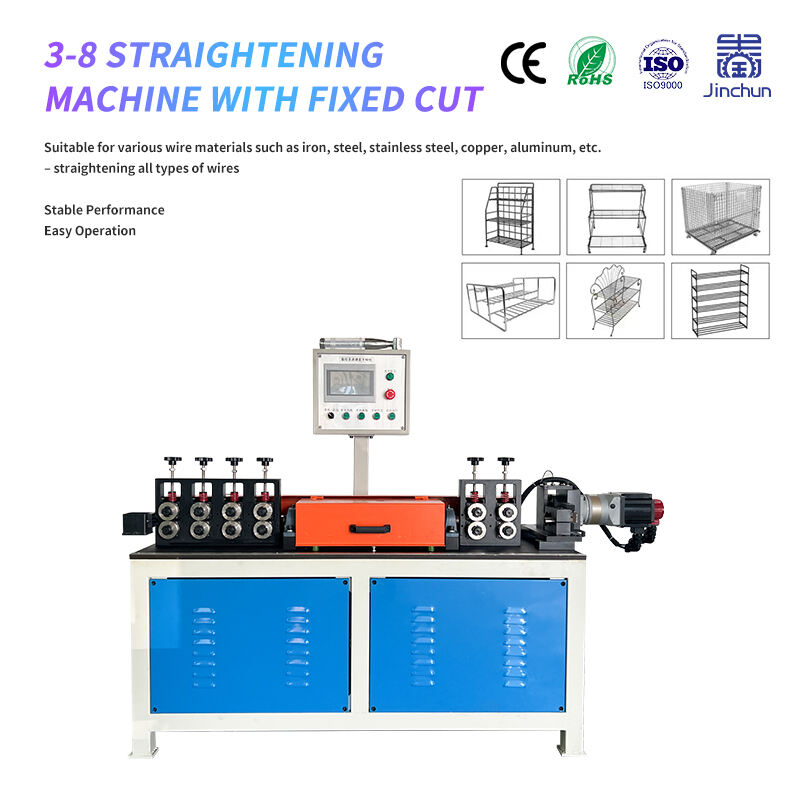
The consumer demand for high-end, visually appealing, and highly durable home hardware has accelerated the technological transformation within the manufacturing industry. Kitchenware and bathware production setups have historically depended on multi-step processes to transform raw wire coils into elegant storage components, spice racks, and shower caddies. These manual methods frequently introduce dimensional inaccuracies, slow down line speeds, and create structural variance at critical weld spots. To overcome these operational bottlenecks, forward-thinking manufacturing facilities are rapidly integrating high-precision Frame Bending & Welding Machines to achieve uninterrupted, single-station automated processing cycles.
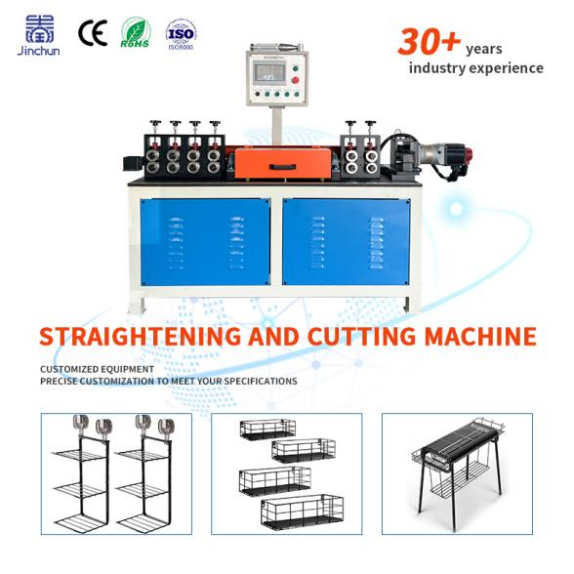
By executing high-speed wire straightening, precise multi-angle bending, and structural resistance welding in a single continuous automated routine, these systems eliminate traditional human processing errors. Factories can feed raw metal wire or flat bars directly into the input stage and receive perfectly square, round, or complex geometric structures without touching the material mid-cycle. This automated approach guarantees exceptional structural symmetry, which is essential for home hardware storage baskets and cabinet pulling drawers. Investing in an advanced Frame Bending & Welding Machine allows manufacturers to scale production volumes safely, lower material waste, and achieve a robust return on capital overhead.
Automating Complex Shapes for Commercial Organizers
The consumer hardware sector demands a vast catalog of shapes and dimensions, ranging from traditional square pull-out cabinet baskets to specialized oval towel rings, circular plate slots, and heart-shaped decorative racks. Advanced wire forming machinery delivers exceptional versatility, processing steel, stainless steel, and copper profiles with ease. When configured for standalone automated two-dimensional wire processing, the equipment can yield 15 to 45 formed structures per minute. If the production layout requires a fully enclosed frame, the system automatically engages its integrated resistance welding unit to secure the butt joint, outputting 6 to 10 fully completed frames every minute.
This automated flow ensures high flatness and joint alignment, which are crucial for subsequent premium electroplating or powder coating finishes. Traditional wire forming setups require operators to manually swap heavy tooling dies during product transitions, a process that can cause hours of factory downtime. Modern automation addresses this challenge by utilizing universal tooling mechanisms. Plant personnel can alter dimensional parameters and geometric specifications directly through the computerized software dashboard, reducing setup time to 15 minutes. This feature enables short production runs and specialized hardware manufacturing without sacrificing line efficiency.
Technical Integration and Heavy-Duty Construction
To sustain rapid cycle times while processing resilient wire materials up to 16mm in diameter, these heavy-duty systems rely on precise servo-driven positioning and high-grade structural engineering. The integration of numerical control allows the machinery to achieve an exceptional positional tolerance accuracy of 0.02mm. This high accuracy is vital for producing multi-tier spice organizers, pull-out wire baskets, and chopstick cages, where even a minor dimensional variation can prevent the components from fitting correctly inside pre-built wooden cabinetry or metal slider brackets.
Furthermore, the machine incorporates a modular architecture that lets owners add customized auxiliary processing units along the same automated line. Depending on product requirements, manufacturers can integrate custom punching or stamping mechanisms to flatten specific wire areas or pierce fixing holes into flat iron profiles. The system is operated via an intuitive, multilingual smart touch-screen interface, allowing new operators to manage the entire manufacturing cycle safely after just one hour of initial training. With an internal memory capacity that stores up to 10,000 unique production program presets, switching from a complex commercial pull-out shelf run to a simple retail clothes hanger line requires only a single tap on the digital panel.
Technical Performance and Operational Capability Index
Operational & Structural Metric |
Detailed Engineering Capabilities & Specifications |
Primary Material Compatibility |
Processes high-grade Iron wire, Stainless Steel, Carbon Steel, and Copper (Round, Square, and Flat profiles) |
Wire Diameter Limits |
Fully adjustable for raw wire and flat iron materials from 2mm up to 10mm in diameter |
Integrated Welding Speed |
Delivers 6 to 10 completely formed and resistance-welded closed frames per minute |
2D Wire Forming Velocity |
Outputs 15 to 45 geometric wire pieces per minute when welding is bypassed |
Mechanical Tolerance Accuracy |
High-precision servo components achieving precision tolerances within 0.02mm |
Tooling Transition Downtime |
Universal tooling mechanism reduces complete shape or size adjustments to 15 minutes |
Geometric Profile Diversity |
Squares, Rectangles, Ovals, Circles, Fans, Trapezoids, Hearts, and customized shapes |
Secondary Functional Options |
Modular expansion supports automated inline Punching, Pressing, Stamping, and Flattening |
Smart Interface Framework |
Multilingual touch-screen and push-button control supporting direct CAD (.dxf) file import |
Program Storage Threshold |
Secures up to 10,000 distinct operational programs within the integrated storage drive |
Reliability & Certification |
10+ years operational lifespan; annual failure rate under 3%; CE certified; 2-year warranty |
Eco-Friendly Processing and Workshop Sustainability
Beyond increasing daily production volumes, modern hardware manufacturing must prioritize eco-friendly operations and employee health. Traditional manual arc or gas welding stations generate substantial fumes, hazardous sparks, and airborne particulates, requiring extensive ventilation investments. In contrast, an advanced Frame Bending & Welding Machine utilizes precise resistance welding technology. This approach forms strong joints under mechanical pressure with minimal smoke, aligning with strict environmental and safety regulations while keeping the factory air clean.
Because resistance welding uses the material's internal electrical resistance to create a smooth joint, it requires no consumable filler metals, welding rods, or shielding gases. This helps manufacturers lower per-part production costs, eliminate post-weld slag cleanup, and keep a tidy workshop. It also allows a single operator to supervise multiple automated lines, helping factories mitigate skilled labor shortages and maintain steady production schedules.
Equipment Reliability and Industrial Lifetime Metrics
Purchasing capital equipment requires a thorough evaluation of structural reliability, component life, and long-term return on investment. These integrated systems are manufactured using heavy-duty industrial steel and premium mechanical components, achieving an average operational lifespan of over 10 years. Before leaving the factory floor, every machine undergoes strict quality control and multi-point testing to ensure its annual operational failure rate remains under 3%. This reliable performance is supported by full compliance with CE safety certification standards and a comprehensive 2-year warranty.
To prevent unexpected downtime from disrupting busy delivery timelines, after-sales technical support provides a rapid response time averaging less than two hours. This combination of robust build quality, automated operation, and swift customer care helps manufacturers lower production costs and operate efficiently. By transitioning to automated wire forming, consumer hardware brands can achieve the precision and scale needed to secure a strong position in the global market.
Frequently Asked Questions Regarding Home Hardware Wire Automation
Q1: Can these automated machines handle premium stainless steel wire without marring the surface?
A1: Yes, the integrated machinery is designed with smooth, precision-ground straightening rollers and specialized bending mandrels that process stainless steel, iron, and copper wire without scratching the surface. This careful material handling is critical for premium kitchen organizers and bathroom fixtures that require flaw-free surfaces for subsequent mirror-polishing or chrome-plating treatments.
Q2: How does the CAD import feature reduce setup time for custom kitchenware designs?
A2: Instead of requiring operators to manually program exact coordinate points or multi-axis angles, the intelligent control system supports direct CAD file import (.dxf format). An engineer can upload a product drawing directly into the multilingual interface, and the software automatically calculates the required wire feeding lengths, precise bend angles, and resistance weld points, allowing the machine to start a new production run in minutes.
Q3: What specific types of kitchen and bathware accessories can be produced on this machine?
A3: The machine is highly versatile and handles a broad variety of residential hardware products within its material thickness range. Common applications include pull-out cabinet wire baskets, multi-tier spice racks, chopstick cages, countertop dish drying racks, wall-mounted shower caddies, towel bar support structures, soap holders, and decorative metal crafts.
Q4: Does the resistance welding mechanism create a smooth joint that is safe for consumer touch?
A4: Yes, the integrated resistance welding system provides precise control over current and pressure, creating uniform, flat joints that align perfectly with the wire profile. This approach eliminates the sharp burrs, deep cracks, and rough slag typical of manual arc welding, delivering smooth joints that enhance consumer safety and look exceptional after plating.