 EN
EN


Introduction
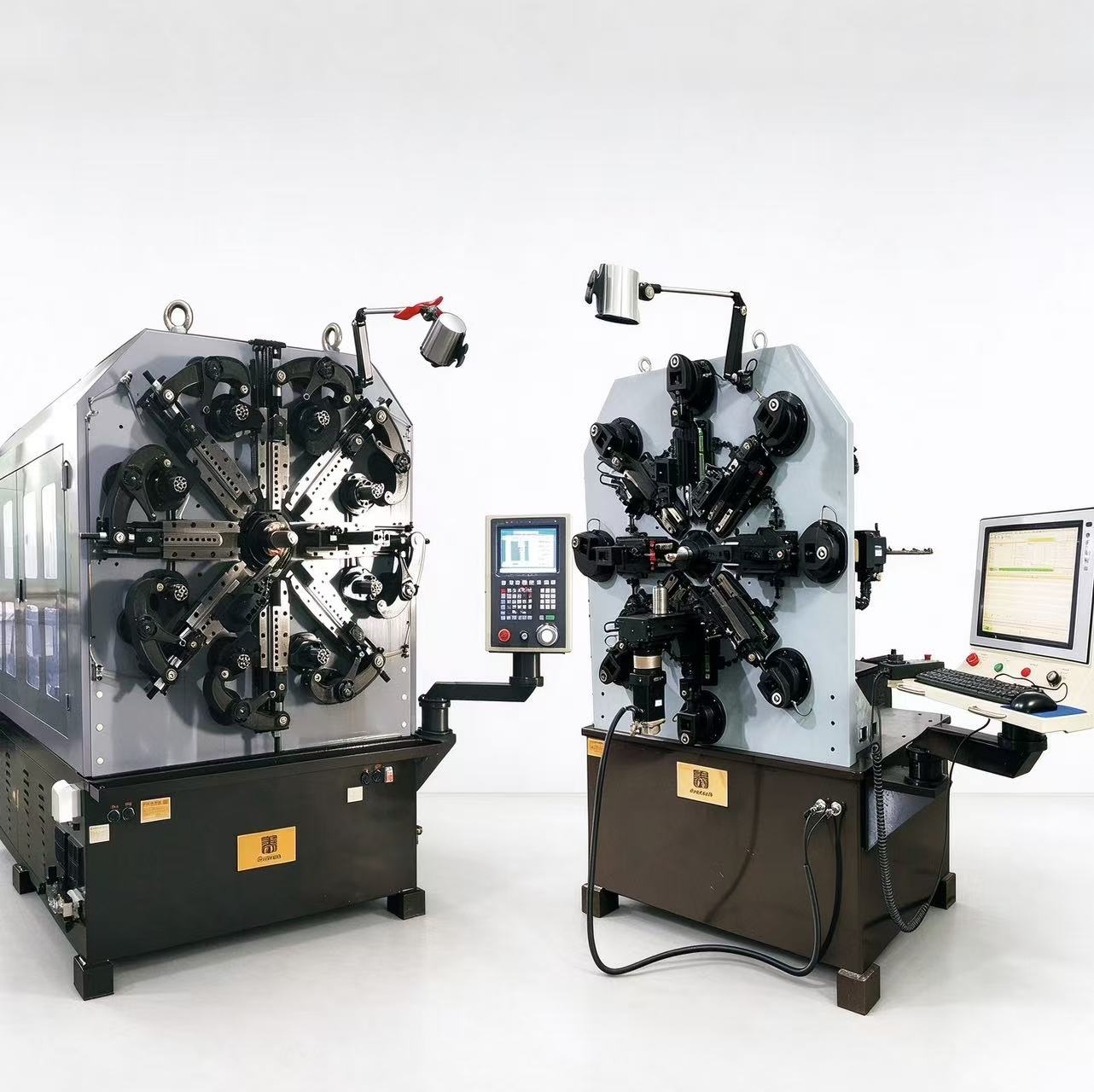
Cam-driven and camless spring forming machines can both produce complex springs and wire-formed components, but they obtain flexibility in different ways. A cam-driven system uses mechanical cam profiles to create planned tool movements, while a camless multi-axis system uses independently programmable servo-controlled movements. The correct choice depends on the product family, forming sequence, tooling strategy, order stability, changeover frequency, and operator experience.
1. How Cam-Driven Forming Works
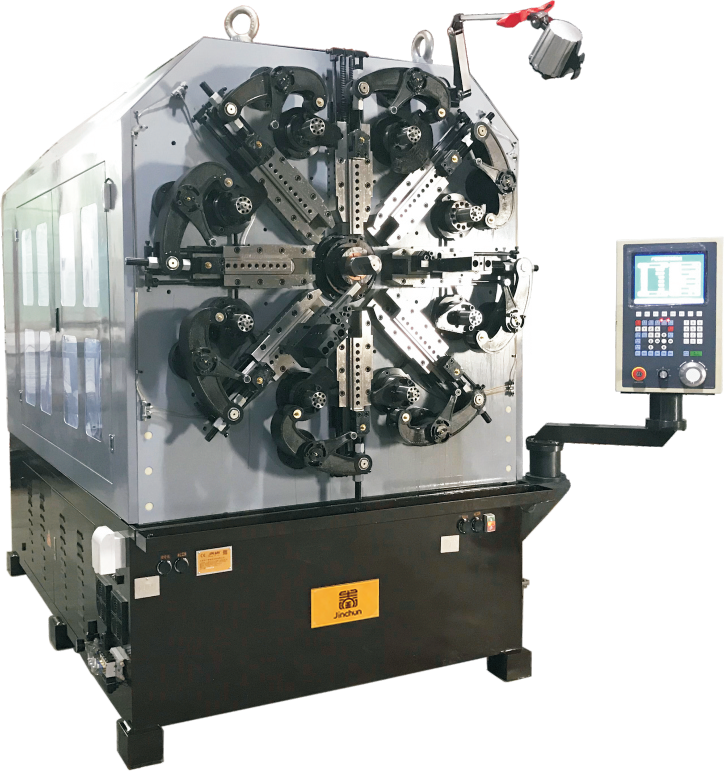
A cam-driven forming system converts rotary motion into controlled movements of forming tools. Once the cam profile, tool positions, and timing are established, the same mechanical sequence can be repeated through a production batch. This architecture is attractive for recurring products because a proven cam and tooling arrangement can deliver stable, repeatable movement.cam-driven spring machine
can also combine cam-controlled tool action with wire rotation, allowing coils, hooks, legs, loops, and bends to be formed from different angular positions. Product feasibility still depends on material, geometry, cam layout, tool access, cutting method, and tolerances.
2. How Camless Multi-Axis Forming Works
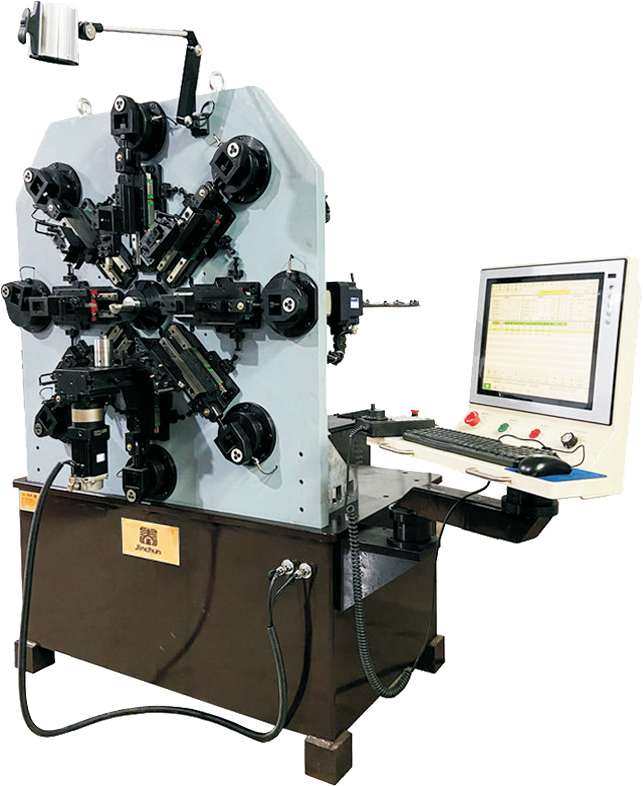
A camless system removes conventional mechanical cam plates from the primary forming logic. Instead, individual forming tools are controlled by programmable axes. Tool position, timing, stroke, and sequence can therefore be adjusted digitally for compatible products.camless spring forming machine
is well suited to manufacturers handling diverse designs, prototype development, recurring batches, and frequent changeovers. Stored programs can simplify repeat-order preparation, although tooling and sample verification remain necessary.
3. Part Complexity and Tool Access
Complexity should be judged by the complete forming path, not by the number of bends visible in a drawing. A part may contain a coil, two legs, a hook, a return bend, and features on different planes. Each operation needs tool access without collision or interference.
Cam-driven machines can be highly effective when the required sequence is known and stable. Wire rotation can expand access for multi-angle forming. Camless machines provide digital freedom to coordinate several tool movements and are especially useful when different products require substantially different sequences.
Before selecting either architecture, map the part step by step: feed length, coil creation, bend direction, hook or leg forming, wire rotation if needed, cutting, and part release. This exposes the movements that the machine must actually perform.
4. Tooling Cost and Changeover
Tooling economics differ between the two architectures. A cam-driven project may require cam design, cam manufacture, forming tools, and mechanical adjustment. Once established, this can be efficient for stable repeat production. However, a major product change may require different cams or more mechanical setup.
Camless machines shift more adjustment into the CNC program. This can reduce dependence on new mechanical cam profiles when changing compatible products, but it does not eliminate tooling cost. Guides, cutters, forming tools, mandrels, and application-specific components still need to match the wire and part.
Evaluate changeover time as a complete production event: remove and install tooling, load the program, adjust positions, run samples, measure critical dimensions, compensate for springback, and approve the process.
5. Repeat Orders vs High-Mix Production
For a stable high-volume product that runs repeatedly with few design changes, a cam-driven solution can be attractive because the mechanical sequence is already proven and repeatable. The investment in cams and setup is spread over a large quantity of parts.
For high-mix production with many SKUs, smaller batches, prototype work, or frequent specification changes, camless multi-axis control often provides greater operational flexibility. Digital programs can be stored for recurring jobs and adjusted for compatible variations.
The decision should be based on the expected order pattern over several years, not only on the first sample. A machine purchased for one product may later need to support a wider product family.
6. Programming and Operator Requirements
Cam-driven setup relies heavily on understanding mechanical timing, cam relationships, tooling positions, and wire behavior. Skilled operators can make this approach very stable, but knowledge of the physical forming mechanism is important.
Camless operation places more emphasis on CNC programming, axis coordination, parameter management, and systematic sample adjustment. Digital control can make changes more transparent, but complex parts still require forming experience. Neither machine architecture eliminates the need to understand springback, tool contact, material behavior, and cutting.
7. Quality and Sample-Trial Checklist
Quality approval should use a sequence of consecutive samples. Inspect coil diameter, leg length, hook geometry, bend angles, overall dimensions, end position, and any critical relationship between features. For multi-plane parts, also verify orientation and three-dimensional geometry.
Check for scratches, tool marks, unstable cutting, deformation, and variation caused by material springback. If the component has a functional requirement, perform the relevant assembly or load test. Sample trials should represent the real material and wire condition whenever possible.
8. Selection Checklist
Choose the architecture by product family, annual volume, batch size, number of SKUs, changeover frequency, geometric complexity, wire material, tolerance level, operator capability, and future expansion plans. A stable recurring part may favor a proven cam-driven setup; a diverse production environment may gain more from independently programmable camless axes.
Review the broader range of spring making machines
only after the forming requirements have been defined. The category name is less important than whether the selected machine can execute the required movements with suitable tooling and repeatability.
Conclusion
Cam-driven and camless machines are not simply old versus new technologies. They are different ways of controlling forming motion. Cam-driven equipment can be highly effective for stable repeat production, while camless multi-axis equipment can reduce mechanical changeover dependence and support a wider mix of compatible products. The correct choice is determined by product stability and changeover frequency as much as by part complexity.
Send your drawings, wire specifications, target output, product range, and changeover expectations to contact Jinchun
for a configuration and tooling review.
Table of Contents
- Introduction
- 1. How Cam-Driven Forming Works
- 2. How Camless Multi-Axis Forming Works
- 3. Part Complexity and Tool Access
- 4. Tooling Cost and Changeover
- 5. Repeat Orders vs High-Mix Production
- 6. Programming and Operator Requirements
- 7. Quality and Sample-Trial Checklist
- 8. Selection Checklist
- Conclusion