 EN
EN


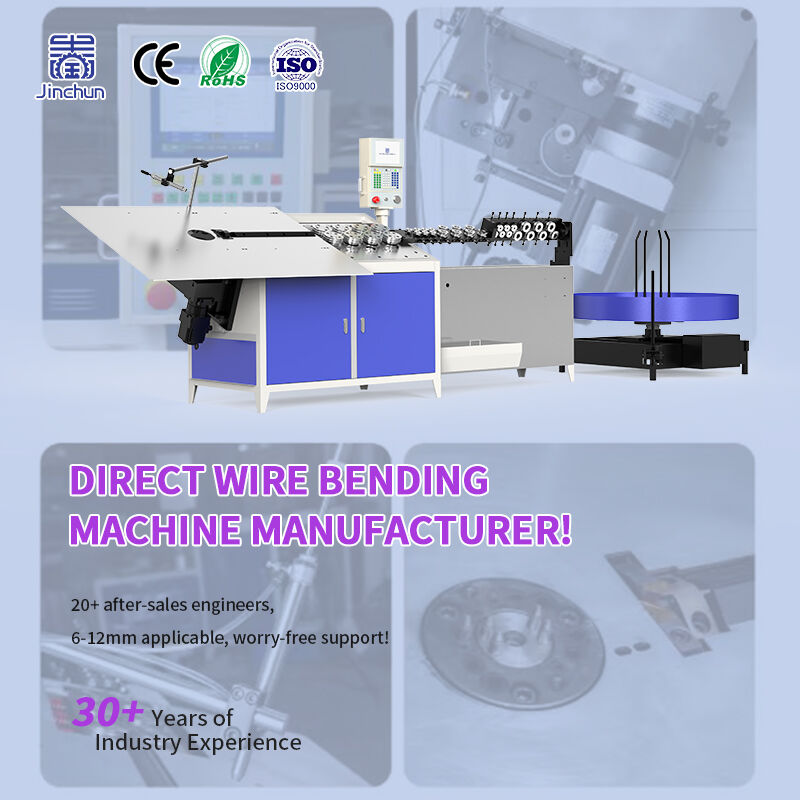
The commercial food service and hotel hardware sectors demand an exceptional level of structural durability and hygiene for their wire components. Fry baskets and draining racks are continuously subjected to extreme thermal cycles, corrosive food acids, and heavy mechanical loads during daily operations. Traditional general-purpose joining methods often fail to deliver the smooth, flawless, and ultra-high-strength joints required to withstand these demanding conditions. To overcome these production challenges, foodware manufacturers are transitioning toward a specialized Custom Welding Machine tailored precisely for commercial wire mesh and structural frame processing.
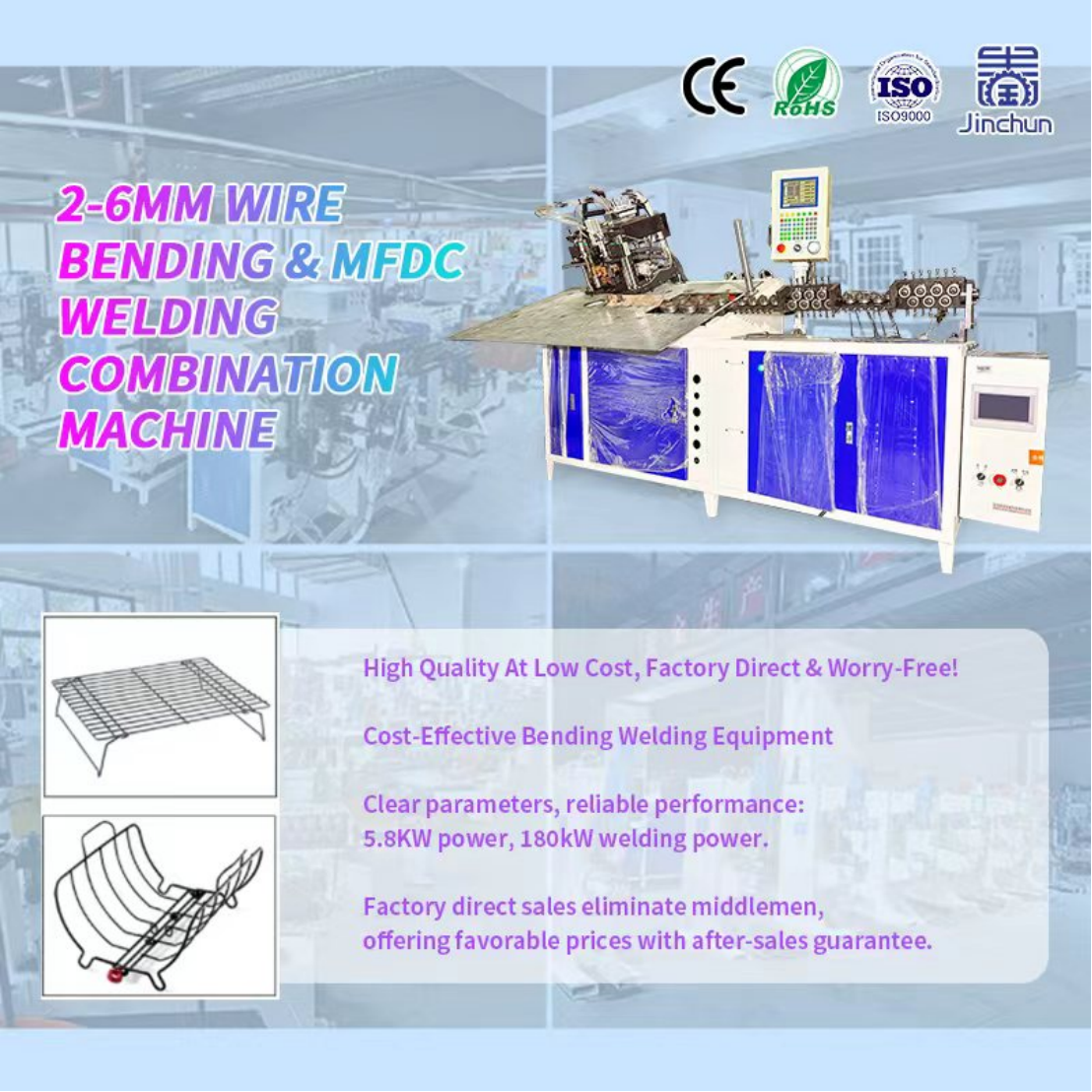
By integrating automated pressure mechanics with advanced digital power control, these custom wire processing setups optimize both production efficiency and structural integrity. Implementing a robust Custom Welding Machine enables factories to execute high-speed, repeatable bonding sequences without compromising the structural alignment of intricate grid patterns. Whether your factory is manufacturing fine-mesh deep fryer baskets or heavy-duty commercial draining racks, upgrading to an optimized Custom Welding Machine ensures that every joint meets the strict safety and longevity standards of the modern food service industry.
High-Precision Control Architecture for Superior Wire Joints
Achieving uniform weld penetration across diverse wire matrices requires an incredibly precise power delivery system. Modern specialized hardware integrates comprehensive multi-functional microcomputer control systems capable of managing constant voltage, constant current, multi-stage discharge, current ramping, and cluster control. This advanced digital regulation ensures that the energy input is adapted precisely to the wire gauge, preventing common manufacturing flaws such as burn-through, localized weakening, or incomplete fusion. The microcomputer controller allows production engineers to calibrate separate heating and holding intervals, delivering flawless metallurgical bonds regardless of the grid pattern's complexity.
Beyond standard digital parameters, this equipment features a unique current ramp-up control function that is critical for handling specialized metal alloys. This unique technology regulates the initial energy curve, allowing for the seamless welding of wire profiles, sheet metals, and tubing structures across a broad range of ferrous and non-ferrous materials, including low carbon steel, stainless steel, and coated steel. For kitchenware applications like fry baskets, this precise control prevents the destruction of protective anti-corrosive outer layers during the joining cycle, guaranteeing that the finished product remains rust-resistant throughout its service life.
Heavy-Duty Engineering and Thermal Management
Sustaining high-volume manufacturing lines requires internal components engineered to withstand continuous electrical and thermal stress. The core of this industrial machinery utilizes a high-magnetic-permeability silicon steel sheet transformer, which maximizes electrical efficiency and delivers an exceptionally powerful, stable output current. To maintain operational stability during rapid, back-to-back production cycles, the system is equipped with an advanced multi-channel intensive water cooling system. This extensive thermal management layout continuously removes heat from the transformer and secondary welding jaws, preventing thermal degradation and drastically extending the overall machine lifespan.
The physical architecture of the machine is designed around exceptional production flexibility, ensuring a highly versatile processing layout. By utilizing quick-change modular clamping systems, the machine can be fitted with different specialized fixtures to weld entirely different products on the same station. A single heavy-duty machine frame can easily transition from processing tightly woven wire grids to fusing heavy perimeter frames, maximizing factory floor space and reducing capital expenditures.
Furthermore, this machinery offers outstanding manufacturing adaptability, functioning efficiently either as a standalone production unit or seamlessly integrated inline with 2D or 3D wire bending machines and CNC spring forming equipment. When linked directly to a continuous wire forming line, the system receives pre-shaped frames or grid components automatically, executing precision welds instantly without requiring manual human transferring or intermediate stacking. This automated synchronicity minimizes part handling, eliminates secondary alignment errors, and creates a highly streamlined manufacturing workflow for high-volume draining rack and kitchenware production.
Comprehensive Comparison of Specialized Industrial Welding Technologies
Selecting the ideal configuration for commercial kitchenware production depends heavily on the specific wire geometry, production volume, and aesthetic requirements of the target application. The technical index below outlines the distinct operating characteristics and practical manufacturing roles of various specialized wire-joining technologies.
Welding Technology Type |
Core Mechanical & Electrical Mechanism |
Primary Application in Kitchenware Production |
|
Butt Welding Machine
|
Axial pressure combined with electric resistance across the wire joint interface. |
Perfect for creating continuous linear extensions or sealing large outer perimeter frames. |
|
Pneumatic Flash Butt Welder
|
Pneumatic forging pressure with high-voltage arcing to burn off impurities before fusion. |
Ideal for heavy-duty, large-diameter structural frames requiring maximum tensile strength. |
|
Resistance Spot Welder
|
Concentrated localized heat and mechanical force applied via upper and lower electrodes. |
Rapidly fuses intersecting wire intersections, cross-wire grids, and reinforcing mesh panels. |
|
Ball-Node Butt Welder
|
Precision localized heating designed to form spherical or rounded smooth joint profiles. |
Used for high-end decorative hardware and smooth handle attachments to eliminate sharp edges. |
|
Argon Arc Welding Machine
|
Inert gas shielded tungsten arc (TIG) providing localized manual or automated fusion. |
Excellent for complex three-dimensional corner joints and premium visible exterior welds. |
|
Pneumatic Welder
|
Heavy-duty pneumatic cylinders ensuring constant, high-pressure electrode clamping force. |
Guarantees absolute structural uniformity across high-volume production runs of heavy racks. |
|
Automatic Spot Welder
|
Programmable multi-axis servo movement executing high-speed sequential spot welds. |
Best suited for fully automated mass production of grid patterns and multi-tier draining baskets. |
Frequently Asked Questions Regarding Wire Product Assembly
Q1: How does the multi-channel water cooling system affect the daily duty cycle of the machine?
A1: The multi-channel intensive water cooling system ensures that high-heat components like the silicon steel transformer and clamping electrodes maintain a stable operating temperature. This effective heat dissipation allows the machine to run continuously at a 100% duty cycle during high-volume production shifts without overheating or suffering current drops.
Q2: Can this machinery join different wire profiles, such as flat ribbon wires to heavy round perimeter frames?
A2: Yes, the machine is highly versatile and accommodates flat, round, or square wire profiles. By adjusting the multi-stage discharge presets and equipping different specialized fixtures, operators can easily secure thin flat wire grids onto heavy structural round wire frames without damaging either component.
Q3: What makes this equipment more suitable for food-grade stainless steel than standard generic welders?
A3: Food-grade stainless steel requires precise thermal management to prevent carbide precipitation, which compromises corrosion resistance. The microcomputer control system features advanced current ramp-up control and multi-stage discharge, allowing engineers to apply heat gradually and precisely to protect the alloy's anti-corrosive properties and maintain a clean, hygienic finish.
Q4: Is it difficult to configure the machine when transitioning production from fry baskets to draining racks?
A4: Not at all. The equipment is engineered with highly versatile, adaptable interfaces that accommodate rapid retooling. Transitioning between completely different product styles simply requires swapping out the modular clamping fixtures and selecting the corresponding pre-saved microcomputer control preset on the digital operator panel.