 EN
EN


Introduction
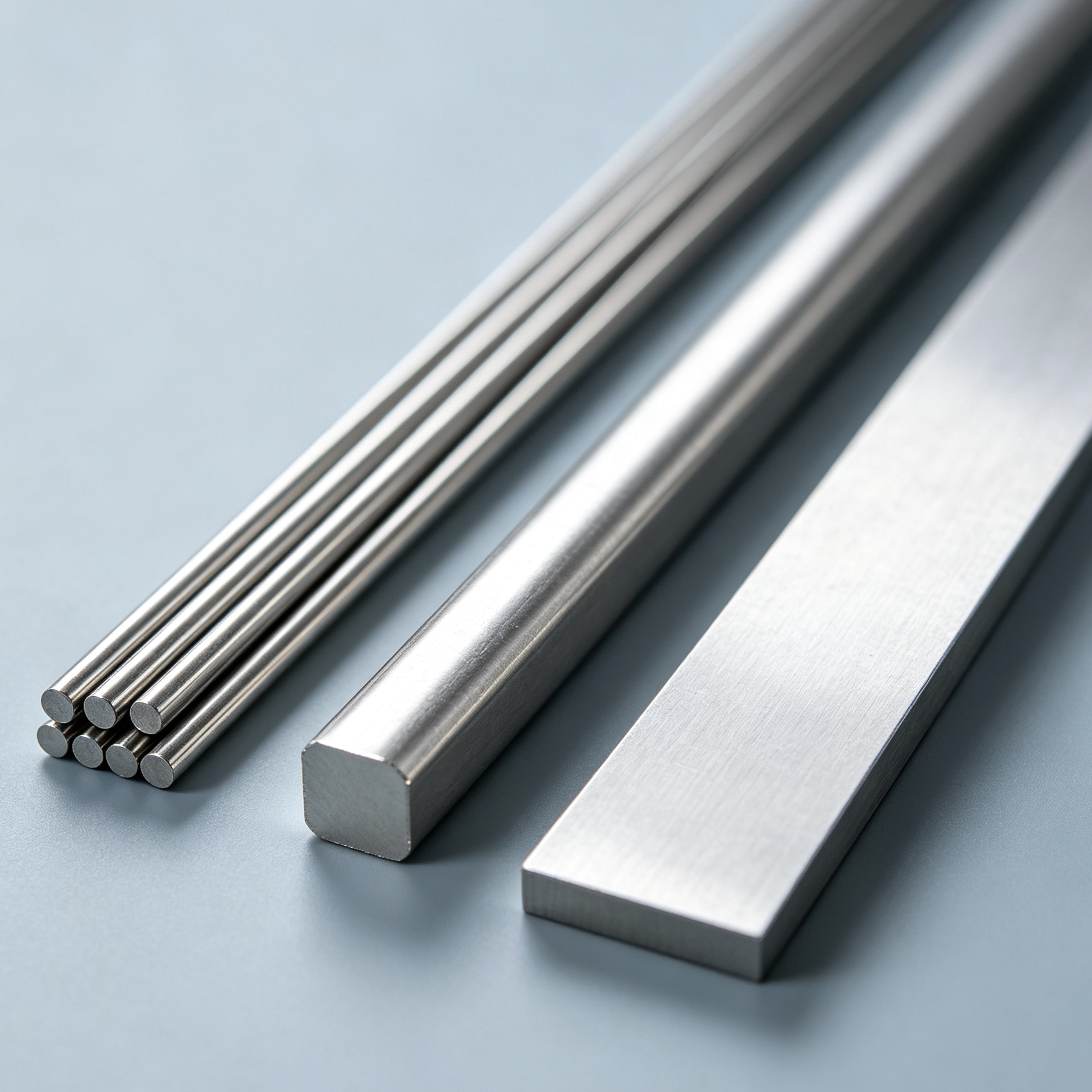
Material cross-section changes the way a wire straightening machine must support, correct and cut the workpiece. Round wire is rotationally symmetric, while square wire has four faces and vulnerable corners, and flat bar has a width-to-thickness ratio that makes edgewise bending and twisting more important. Therefore, “wire size” is not enough information for shaped material. The cross-section, orientation and finished tolerance should be confirmed first.
1. Round Wire Straightening
Round wire is generally the easiest cross-section to guide because its geometry is the same in every rotational direction. The main challenge is removing coil curvature without introducing new waves or surface marks. Important inputs include diameter, material strength, coil condition, surface finish, finished length and straightness. Typical applications include wire frames, racks, baskets, hardware parts and components that will later be bent or welded.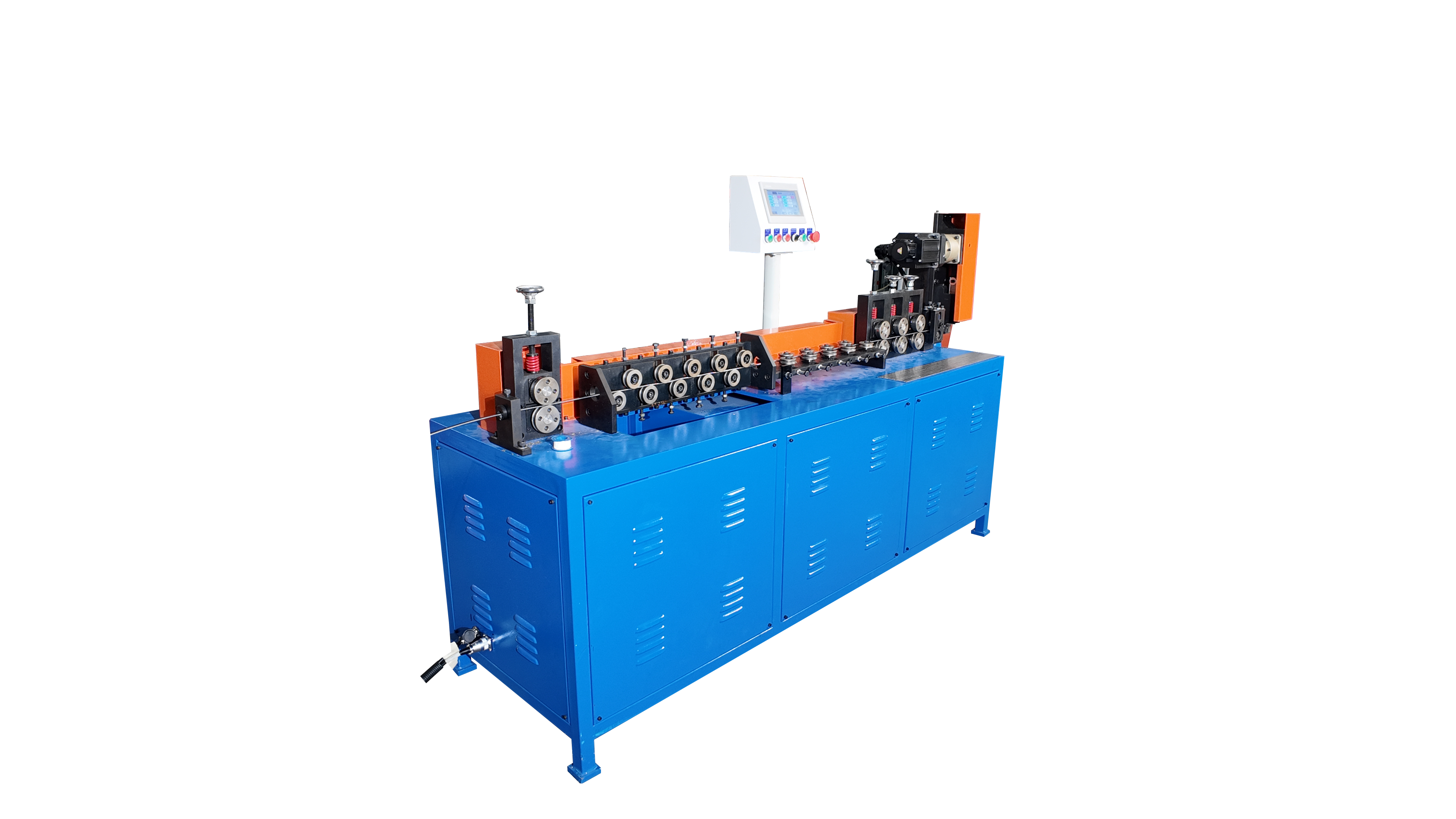
2. Square Wire Straightening
A square wire straightener must control both straightness and rotation. Because the material has four flat faces and four corners, the wire should enter the correction system with a stable orientation. Excessive pressure can mark the faces or damage the edges, while poor guidance can allow the section to rotate and create twist along the finished length. For precision jobs, define not only side dimension but also allowable torsion and corner condition.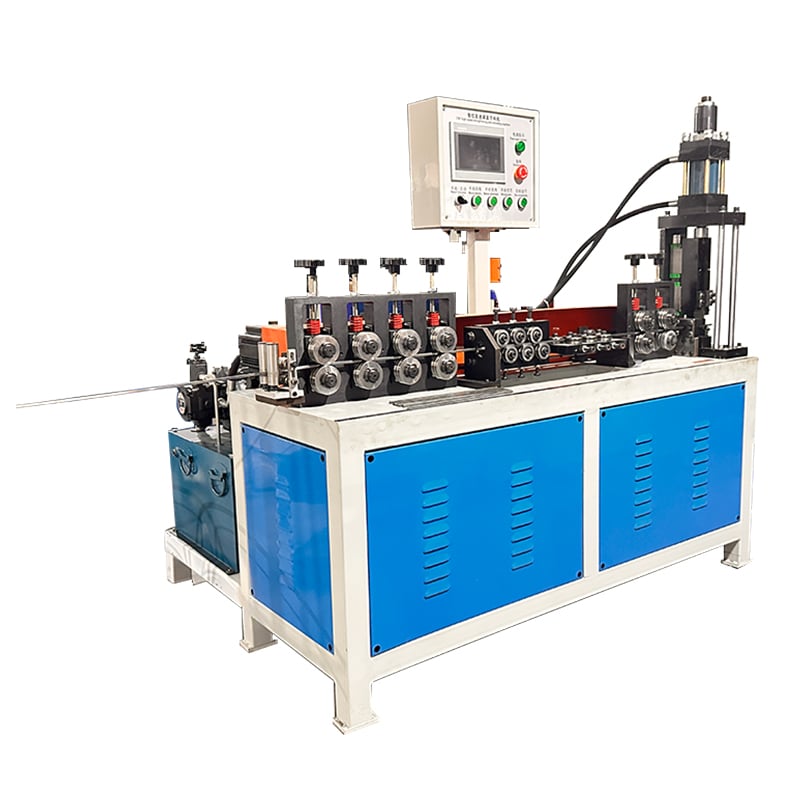
3. Flat Bar Straightening
Flat bar can show several different defects at the same time: bow along the wide face, edgewise curvature, twist and local waviness. Width and thickness must therefore be provided separately. A flat bar straightening and cutting machine should support the material in the correct planes and use a cutting method suitable for the section and strength. The machine must also provide enough working space and guidance to prevent the strip from turning during feeding.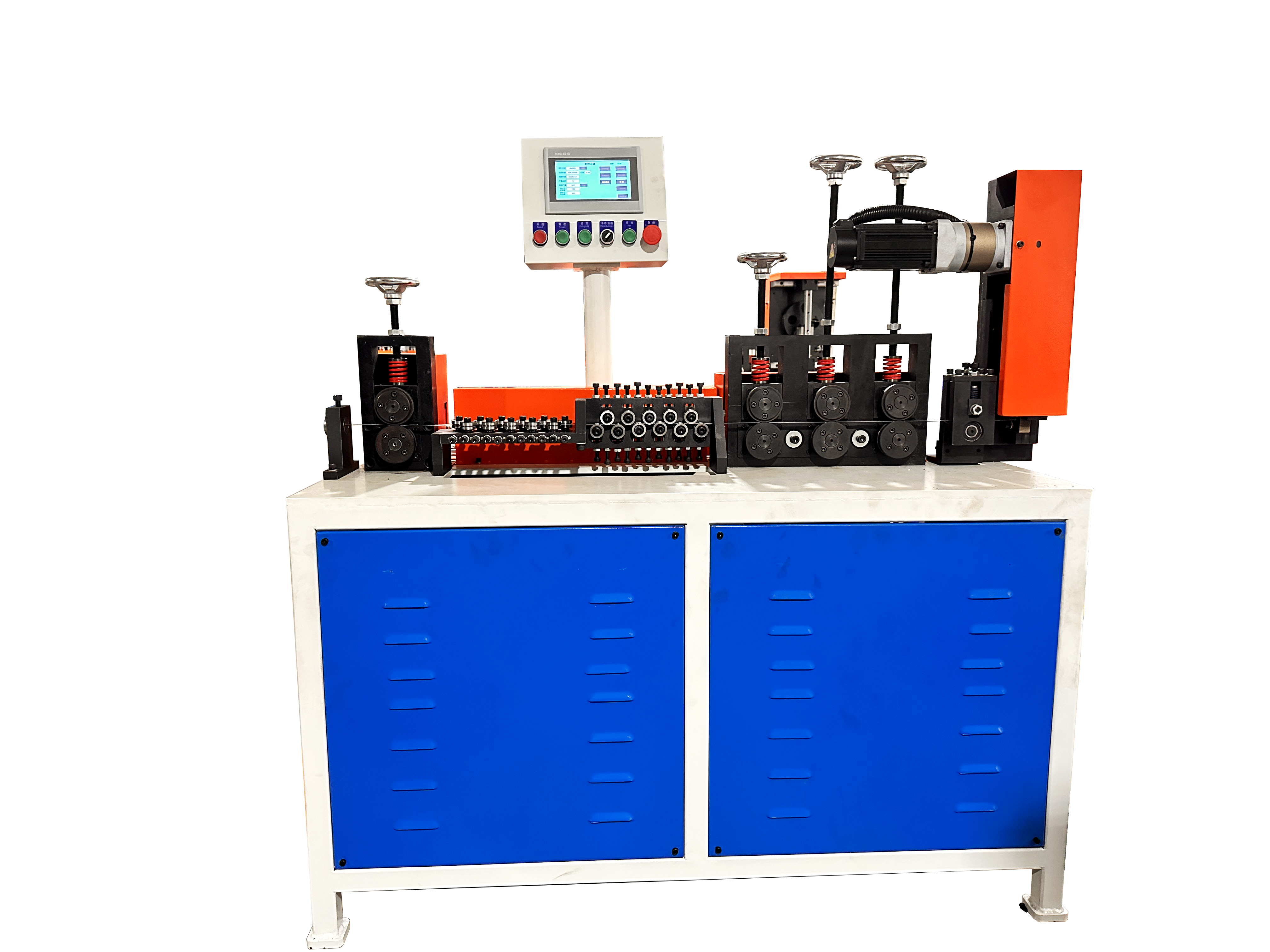
4. Roller Contact and Machine Structure
Different cross-sections need different contact strategies. Round wire can be corrected from multiple directions with conventional roller arrangements. Square wire needs stable face contact and orientation control. Flat bar often requires correction in more than one plane because the wide and narrow directions have different stiffness. Roller profile, spacing, support points and guide design should therefore be matched to the actual section rather than treated as interchangeable tooling.
5. Surface Finish and Coating Requirements
Stainless steel, galvanized wire, copper, aluminum and polished materials may require additional surface protection. Clean roller surfaces, smooth guides and controlled pressure are essential. Material strength also changes how much correction force is needed; for example, high carbon steel wire straightening normally requires a different setup from soft low-carbon wire of the same nominal size. Tell the supplier if visible roller marks, coating damage or corner deformation are unacceptable.
6. Comparison Table
The table below summarizes the main differences that should be considered before machine selection.
Cross-section |
Key data |
Common defects |
Machine focus |
Typical applications |
Round wire |
Diameter, strength, coil condition |
Residual curve, waves, scratches |
Multi-direction correction and stable feeding |
Frames, racks, hardware |
Square wire |
Side length, orientation, twist tolerance |
Twist, corner damage, face marks |
Orientation control and face protection |
Racks, shaped-wire parts |
Flat bar |
Width × thickness, edgewise tolerance |
Bow, side bend, twist, waviness |
Multi-plane support and section-matched cutting |
Flat steel frames, brackets, racks |
7. What to Send for Machine Selection
For round wire, provide diameter. For square wire, provide side length and allowable twist. For flat bar, provide both width and thickness. For all three, also send material grade, strength if known, surface or coating, coil or straight-bar feeding condition, finished length, tolerance, target output and a product drawing or sample photo. This information is more useful than asking for a machine based only on “3 mm wire” or “8 mm steel.”
Conclusion
Start with the cross-section and finished-part tolerance, then compare speed, automation and price. Correct machine selection is easier when the supplier can see the actual material and product. Jinchun’s straightening-machine range includes solutions for round wire, square wire and flat bar, allowing the correction and cutting system to be matched to the real application.