 EN
EN


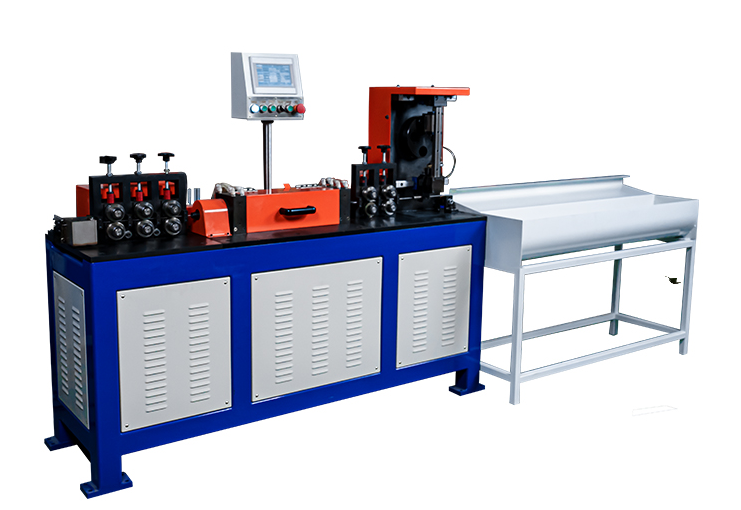
Introduction
High-carbon steel wire is widely used when manufacturers need strength, resilience and stable mechanical performance. However, the same material properties that make high-carbon wire useful can also make it more demanding to straighten and cut. Compared with ordinary low-carbon wire, high-carbon and spring-type wire can place greater demands on roller adjustment, feeding stability and cutting control.
When the process is not matched to the material, manufacturers may see scratches on the wire surface, residual torsion, unstable straightness or inconsistent finished lengths. These problems can then affect bending, welding, assembly and other downstream operations.
For this reason, selecting a wire straightening machine should not be based on wire diameter alone. Material grade, tensile strength, surface condition, coil condition, finished length and tolerance should all be considered before the machine configuration is confirmed.
1. Confirm the Material Before Selecting a Machine
Start with the material itself. Before choosing a high carbon steel straightener, provide the material grade whenever possible, together with tensile strength, wire diameter, surface condition and the way the wire is supplied.
A 6 mm wire is not automatically processed in the same way just because another 6 mm wire has the same diameter. High-carbon steel, spring steel and other high-strength materials can respond differently to roller pressure and feeding force. The coil condition also matters because residual curvature and internal stress can influence the amount of correction required.
The more complete the material information is, the easier it is to select the appropriate straightening structure, roller arrangement and cutting configuration. A practical machine-selection request should therefore include material grade, diameter range, coil or straight-bar condition, surface requirements and finished product dimensions.
2. Why Scratches, Torsion and Length Errors Occur
Surface scratches can come from several points in the feeding and straightening path. Contamination on the rollers or guides, damaged roller surfaces, excessive contact pressure and unsuitable guide materials can all create marks. Scratches may also become more visible when high-strength wire is processed with excessive correction force.
Torsion is another common issue. If the wire does not enter the straightening section in a stable orientation, or if the correction is unbalanced, the finished piece may be straight in one direction but still carry rotational deformation. Roller alignment, guide positioning and progressive adjustment are therefore important.
Length errors can originate from feeding, measurement and cutting. If the feeding system slips, if the encoder measurement is unstable, or if the cutting method is not appropriate for the required production speed, finished lengths may vary. The cutting system should therefore be selected together with the required length, tolerance and production output rather than treated as an isolated component.
3. Roller and Guide Setup for High-Carbon Steel Wire
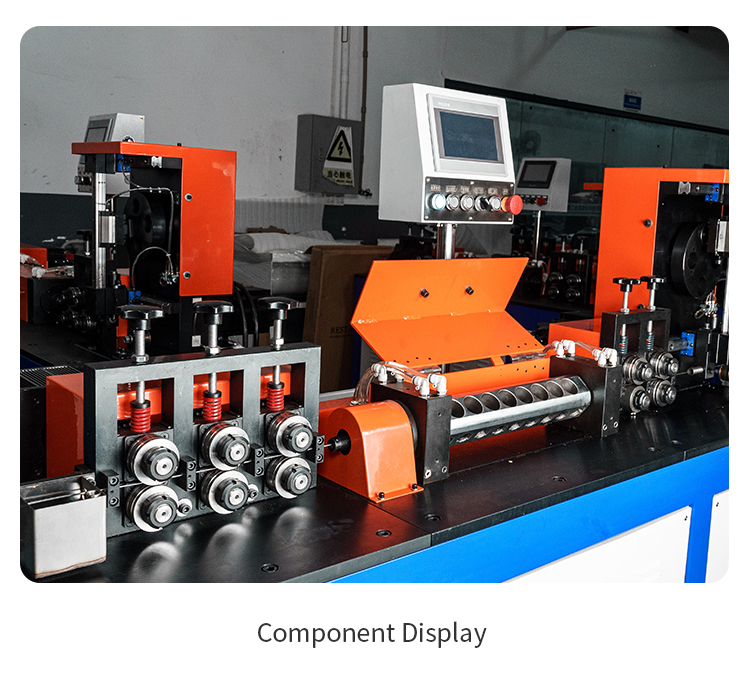
High-carbon wire should generally be corrected progressively rather than by applying excessive roller pressure at the beginning. The purpose of the first stage is to guide and begin correction; subsequent stages can continue the straightening process until the required straightness is reached.
Before production, check whether the wire runs through the guides smoothly and whether the rollers are aligned. Excessive pressure can leave marks or create unnecessary deformation, while insufficient correction can leave residual curvature.
A useful setup process is to begin with a conservative adjustment, run a short sample, inspect straightness and surface condition, and then make small adjustments. This approach makes it easier to identify whether a defect comes from feeding, guide alignment or roller pressure.
4. How to Protect the Wire Surface
Surface protection starts with cleanliness. Rollers and guides should be kept free from metal particles, dust and other contamination that could become trapped between the wire and contact surface.
Roller surface condition is also important. Damaged or unsuitable contact surfaces can transfer marks to the finished wire. Guide materials should be selected with the product surface requirement in mind, especially when the customer requires a clean appearance or the wire will receive further coating or forming.
Lubrication should also be considered according to the actual material and process. Too little lubrication can increase friction, while an unsuitable lubricant can create contamination or interfere with later processing. The final choice should be verified during a sample trial rather than assumed only from the wire diameter.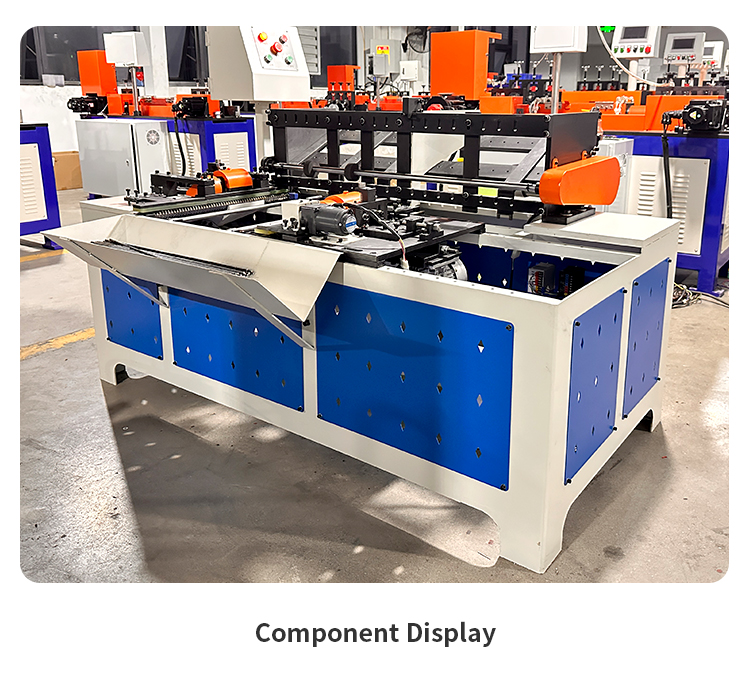
5. Cutting Method and Length Accuracy
After straightening, the cutting method becomes an important part of the production process. Fixed cut, flying shear and tracking shear each have different operating principles and application boundaries.
A fixed-cut system can be suitable when production speed is moderate and the process can tolerate a stop or pause for each cut. For high-volume continuous production, a flying shear can cut while the wire continues moving, reducing repeated stoppage. A tracking shear follows the moving wire during cutting and can provide another option when continuous feeding and cutting efficiency are required.
The correct choice depends on wire material, diameter, finished length, tolerance and target output. Jinchun's existing straightening range includes fixed-cut, flying-shear and tracking-shear configurations, so these requirements can be evaluated together with the customer's application.
6. How to Run a Useful Sample Trial
A sample trial should not be limited to producing one or two pieces. For high-carbon wire, run a continuous group of samples so that feeding, straightening and cutting stability can be observed under repeated operation.
Measure the finished length with the same measuring method that will be used for acceptance. Check straightness, residual torsion, surface scratches and cut quality. Record the material specification, roller adjustment, feeding condition, cutting method and measured results.
The trial should answer practical questions: Can the required length tolerance be maintained? Does the wire surface remain acceptable? Does the machine remain stable during continuous production? Can the required output be achieved without creating downstream quality problems? These observations are more useful for machine selection than a single speed number.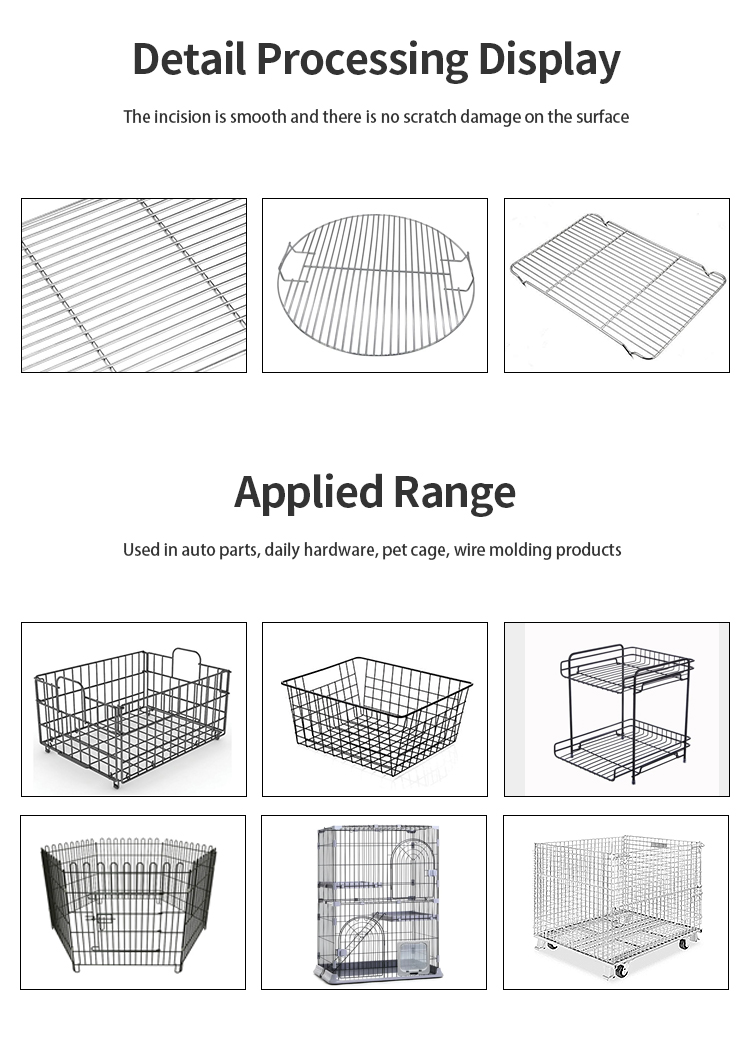
7. Information to Send Before Requesting a Quote
Before requesting a quotation, prepare the following information:
• Material grade and surface condition
• Exact wire diameter or diameter range
• Coil or straight-bar condition
• Finished wire length and length range
• Required length tolerance
• Straightness and torsion requirements
• Target production per hour or per day
• Product drawings or sample photos
• Downstream application, such as bending, welding, shelving, cages or other wire products
With these details, the supplier can evaluate the straightening and cutting process as a complete application instead of quoting only by diameter.
Conclusion
High-carbon steel wire should not be treated as ordinary wire simply because the diameter is known. Material strength, surface requirements, roller adjustment, feeding stability and cutting method all influence the final result.
For manufacturers buying a wire straightening and cutting machine, the most useful approach is to define the material and finished-product requirements first, then evaluate the machine configuration through a sample trial. This helps reduce the risk of scratches, torsion and length errors while creating a clearer engineering basis for the final equipment selection.
Table of Contents
- Introduction
- 1. Confirm the Material Before Selecting a Machine
- 2. Why Scratches, Torsion and Length Errors Occur
- 3. Roller and Guide Setup for High-Carbon Steel Wire
- 4. How to Protect the Wire Surface
- 5. Cutting Method and Length Accuracy
- 6. How to Run a Useful Sample Trial
- 7. Information to Send Before Requesting a Quote
- Conclusion