 EN
EN


Precision in wire forming and metal processing depends fundamentally on the reliability of your equipment. When bending machines operate at peak performance, they transform raw material into perfectly straightened and accurately cut components that meet exacting industrial standards. The difference between acceptable and exceptional output often hinges on whether your bending machines can maintain consistency across thousands of production cycles. Understanding how bending machines ensure perfect cuts reveals why investment in quality straightening and shearing technology pays measurable dividends in product quality and operational efficiency.
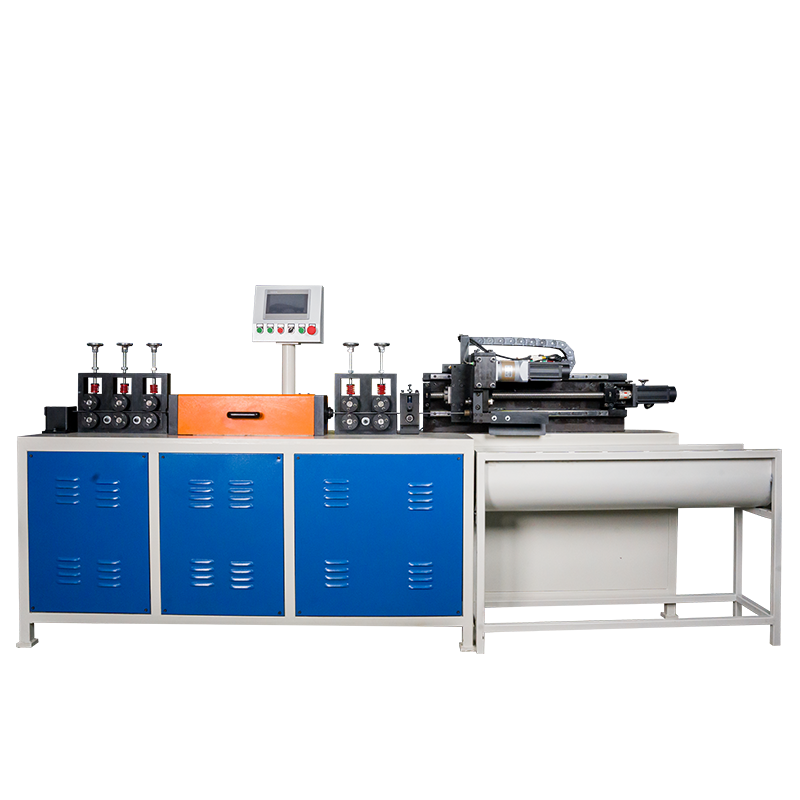
Modern bending machines represent a convergence of mechanical precision, material science, and operator expertise. These systems perform dual functions—straightening wire to eliminate curvature and irregularities while simultaneously shearing material to exact lengths. The integration of these capabilities within a single bending machine platform reduces handling time, minimizes damage to material, and eliminates the need for separate equipment stages. When bending machines work correctly, they produce output that requires minimal secondary processing, directly reducing labor costs and waste throughout your manufacturing workflow.
How Bending Machines Deliver Straightening Precision
Mechanical Straightening Through Roller Systems
Bending machines employ precision roller configurations that progressively straighten coiled or bent wire through a carefully calibrated series of contact points. Each roller pair applies controlled opposing force, gradually reducing the internal stress and curvature that develops during wire manufacturing or storage. Advanced bending machines feature adjustable roller spacing and tension settings, allowing operators to fine-tune the straightening action for different wire diameters and material compositions. The rollers themselves are precision-ground to eliminate surface irregularities that could mark or deform the wire as it passes through. When your bending machines maintain proper roller alignment and surface finish, the straightened output emerges consistently straight, without twists, kinks, or residual deformation.
Tracking Systems That Prevent Deviation
True precision in bending machines comes from tracking systems that detect and correct wire misalignment before it reaches the cutting blade. These systems use sensor feedback to monitor wire position as material moves through the straightening section, automatically adjusting guide surfaces to keep the wire centered along the feed path. Superior bending machines incorporate dual tracking capabilities—one set of sensors monitors horizontal deviation while another tracks vertical alignment. This dual-axis correction ensures that wire enters the shearing mechanism perfectly centered and perpendicular to the cutting blade. Bending machines equipped with responsive tracking systems prevent the skewed cuts and material waste that occur when wire arrives at the cutter misaligned or off-center.
The Cutting Mechanism: Where Straightening Precision Meets Shear Accuracy
Blade Geometry and Material Specifications
The cutting stage in bending machines depends entirely on blade condition and geometric precision. High-quality bending machines use hardened tool steel blades with precise edge geometry—typically ground to maintain specific bevel angles that optimize cut quality for the target material types. Dull or improperly angled blades in bending machines produce ragged cuts, material deformation, and increased scrap rates. Professional bending machines incorporate easily replaceable blade cartridges with quick-change mechanisms, allowing operators to maintain peak cutting performance without extended downtime. The blade gap in bending machines must remain consistent throughout the cut; even slight variations cause the material to tear rather than cleanly shear, compromising the quality of every piece produced.
Pressure Control and Timing Synchronization
Precision cutting in bending machines requires exact synchronization between straightening completion and shear blade closure. Advanced bending machines feature programmable cut timers that ensure the blade engages only when the material has fully seated in the cutting chamber and the straightening section has completed its work. Hydraulic or pneumatic pressure control in bending machines allows operators to adjust cutting force for different wire gauges and material hardness levels without changing physical equipment. Insufficient pressure produces incomplete cuts; excessive pressure causes material deformation or blade breakage. The integration of pressure sensors and feedback loops in modern bending machines enables real-time adjustment, maintaining consistent cut quality across extended production runs.
Integration of Operator Control and Repeatability
Intuitive Setup and Quick Changeover
Bending machines that prioritize operator accessibility achieve higher precision consistency because setup errors decrease when controls remain simple and intuitive. Educational programs demonstrate that operators master straightening machine techniques in approximately thirty minutes when the interface design supports quick learning. Professional bending machines feature color-coded adjustment points, clearly labeled dial settings, and straightforward menu navigation on control panels. This design philosophy reduces the likelihood of incorrect parameter entry, which remains one of the primary causes of precision drift during production. When bending machines combine mechanical precision with user-friendly controls, operators maintain confidence in their setup procedures and catch potential issues before they compromise output quality.
Repeatability Through Programmable Presets
Modern bending machines store complete production profiles for specific material types, diameters, and cut lengths, allowing operators to recall perfect settings instantly. This preset functionality in bending machines eliminates manual recalibration between similar production runs, maintaining dimensional accuracy and straightness standards across multiple job batches. Digital readout displays on quality bending machines show actual roller pressure, feed speed, and blade position in real-time, confirming that parameters match the stored program. The repeatability advantage of bending machines with memory-based settings becomes especially valuable in job shops where different projects cycle through production several times per month. Consistency across repeated production cycles directly translates to reduced scrap, lower rework costs, and improved customer satisfaction.
FAQ
What determines whether bending machines maintain accuracy over long production runs?
Bending machines maintain accuracy through proper maintenance of straightening rollers, tracking sensor calibration, and blade replacement before wear becomes excessive. Preventive maintenance schedules should include weekly visual inspection of rollers for flatness, monthly sensor cleaning to ensure tracking precision, and blade replacement when cutting force requirements begin to increase noticeably. The bending machines that perform best come from manufacturers who provide detailed maintenance protocols and make replacement parts readily available at reasonable cost. Operators who follow disciplined maintenance routines with their bending machines experience minimal precision drift and can confidently produce thousands of parts between major recalibrations.
Can bending machines handle different wire materials and still deliver precision cuts?
Quality bending machines accommodate diverse materials—from soft copper to stainless steel to hardened carbon wire—by providing adjustable straightening pressure, variable cutting force, and material-specific blade options. Each material requires different approach angles, pressure profiles, and blade composition; superior bending machines allow operators to program these variations without physical reconfiguration. Stainless steel demands different straightening pressure than copper because of hardness variations; bending machines must sense these differences and respond automatically or allow quick manual adjustment. The flexibility of modern bending machines to handle multiple material types makes them valuable across diverse manufacturing environments where production portfolios include various wire compositions and specifications.
How does tracking shear technology in bending machines prevent wasted material?
Bending machines with integrated tracking and shear systems eliminate the misaligned cuts that occur when wire reaches the blade off-center or at an angle. Each misaligned cut in conventional equipment creates a scrap piece; bending machines with active tracking reduce these alignment-related defects to near zero. When thousands of components flow through bending machines daily, even a small percentage reduction in scrap translates to significant material cost recovery and reduced environmental waste. Operators managing bending machines with advanced tracking systems quickly recognize that the initial equipment investment pays back through material savings alone, before considering labor efficiency gains and improved product consistency.