 EN
EN


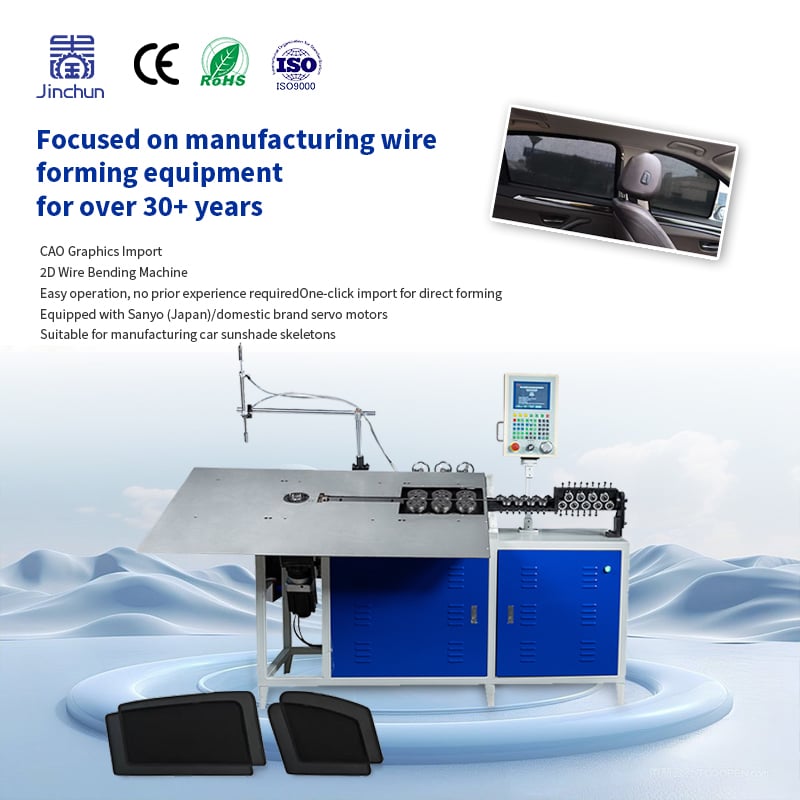
In the competitive world of metal fabrication in 2026, the difference between a profitable workshop and one that struggles with overhead lies in the strategic selection of machinery. As wire-based products become more intricate—ranging from automotive seat frames to designer kitchenware—the question for shop owners is no longer just "Can we bend wire?" but "Which specific bending technology will optimize our output while minimizing waste?"
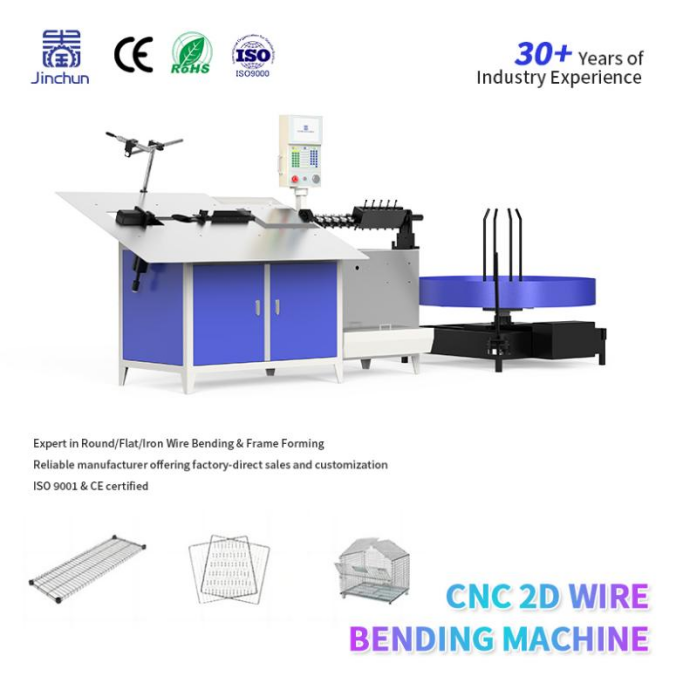
Choosing between a 2D wire bending machine and a 3D wire forming center involves understanding the geometric requirements of your products, the material constraints of your wire, and the long-term scalability of your shop. This guide breaks down the essential factors for choosing the right bending equipment to fit your fabrication needs and budget.
1. Defining Your Production Geometry: 2D vs. 3D
The first step in your selection process is determining the spatial complexity of your parts. Not every shop needs a high-end 3D system, and using a 3D machine for 2D tasks can often be an inefficient use of capital.
The Role of 2D Wire Bending Machines
A 2D wire bending machine is designed for flat-plane forming. These machines are the workhorses for high-volume, standardized parts that do not require depth.
Key Applications: Think of items like stainless steel hangers, S-hooks, curtain buckles, carabiners, and D-rings.
Industry Focus: 2D machines are essential for the production of refrigerator brackets, kitchen shelving, fan guards, and pet cage accessories.
Material Capability: They are exceptionally versatile, handling round, square (iron, steel, stainless steel, and non-ferrous metals). If your shop focuses on "flat" hardware or wire industrial goods, a 2D CNC wire bender offers the fastest return on investment.
The Power of 3D Wire Forming Centers
When your product enters the third dimension—requiring bends across multiple planes—a 3D wire bending machine becomes necessary.
Technical Advantage: In 2026, the industry standard for high-end 3D forming is the Turn-Head Machine. By rotating the bending head while keeping the wire stationary, these machines eliminate the "whipping" effect of long wires, ensuring a "turn-head, no-turn-wire" stability that is critical for large, complex parts.
Key Applications: These are indispensable for automotive seat wire forming, complex furniture frames, and intricate 3D crafts.
2. Industry-Specific Machine Matching
Your industry dictates your machine's required precision and axis count. Below is a breakdown of which bending technology suits specific fabrication sectors:
Automotive and Transportation
The automotive sector demands extreme repeatability. For automotive seat steel wire and accessory forming, a 3D Turn-Head machine is the gold standard. The lightweight head structure allows for rapid, multi-angle forming of seat frames without the errors caused by wire inertia.
Kitchen, Bath, and Home Decor
This sector often straddles the line between 2D and 3D.
2D Solutions: Ideal for dish racks, sink strainers, and simple wall hooks.
3D Solutions: Necessary for complex furniture wire bending and designer pull-out baskets.
Sub-sectors: If you are in the wine rack or lighting industry, a machine capable of handling 2mm to 8mm wire with a "simple-to-start" interface is a high priority.
3. Technical Specifications to Prioritize
When evaluating a machine’s data sheet, don't just look at the price. Look at the mechanical "soul" of the equipment.
Wire Diameter Compatibility
Most fabrication shops operate in the 2mm to 8mm range for general consumer goods, while heavy-duty shops might require capacity up to 16mm.
Entry-Level: 2–6mm CNC bending machines are perfect for stationary and small hardware.
Industrial-Grade: 3–8mm or 10–16mm machines are required for furniture frames and automotive components. Ensure your machine can handle round, square types with a simple mold change.
Precision and Accuracy
In modern manufacturing, a deviation of even 0.1mm can ruin an assembly line. Look for machines with a positional accuracy of ±0.02mm. High-precision machines ensure that every pet cage accessory or instrument component fits perfectly every time.
The Software Interface: "The Two-Hour Rule"
In 2026, you shouldn't need a PhD to operate a wire bender. The best machines feature an intelligent, multilingual system with a touch screen.
User-Friendly Design: Look for software that allows you to adjust the speed and modify programs during production.
Storage Capacity: Ensure the computer can store at least 10,000 programs, allowing for quick transitions between different SKU orders.
4. Operational Efficiency and Long-Term Value
A fabrication shop lives or dies by its uptime. When choosing a machine, consider the "Total Cost of Ownership" over a 15-year period.
Reliability and Maintenance
A high-quality 3D or 2D bender should have a service life exceeding 15 years with an annual failure rate of less than 2%. Ask your supplier about their after-sales response time—in a competitive market, a response time of under 2 hours is the benchmark for professional support.
Stability in Production
The "Turn-Head" principle is not just a marketing term; it is a functional requirement for stability. By keeping the wire static, the machine reduces wear and tear on the feeding mechanism and ensures that even thin wires are formed without distortion.
5. Decision Checklist: Which Machine Should You Buy?
To simplify your choice, use this quick-reference guide based on your fabrication shop's primary output:
Buy a 2D Bending Machine if: You primarily produce hangers, S-hooks, flat pet cage panels, refrigerator grids, or simple 2D handles. Your wire diameter is consistently under 8mm, and you need high-speed flat-plane output.
Buy a 3D Turn-Head Machine if: You are targeting the automotive sector, high-end furniture, or complex 3D wire crafts. You need to form multi-plane parts with high stability and cannot afford the errors inherent in spinning long wires.
Buy a Multi-Axis (7-13 axis) System if: Your products are extremely intricate, requiring tight-radius bends and complex multi-angle geometry in a small volume.
Conclusion: Investing in the Future of Your Shop
Choosing the right wire bending machine is about matching technology to your specific application. Whether it’s a 2D automatic wire bender for household goods or a 3D Turn-Head machine for precision automotive parts, the goal is the same: stability, precision, and ease of use.
By selecting a machine with a 15-year lifespan, intuitive software, and high-speed stability, you ensure that your fabrication shop remains competitive, versatile, and profitable for years to come.