 EN
EN


Introduction
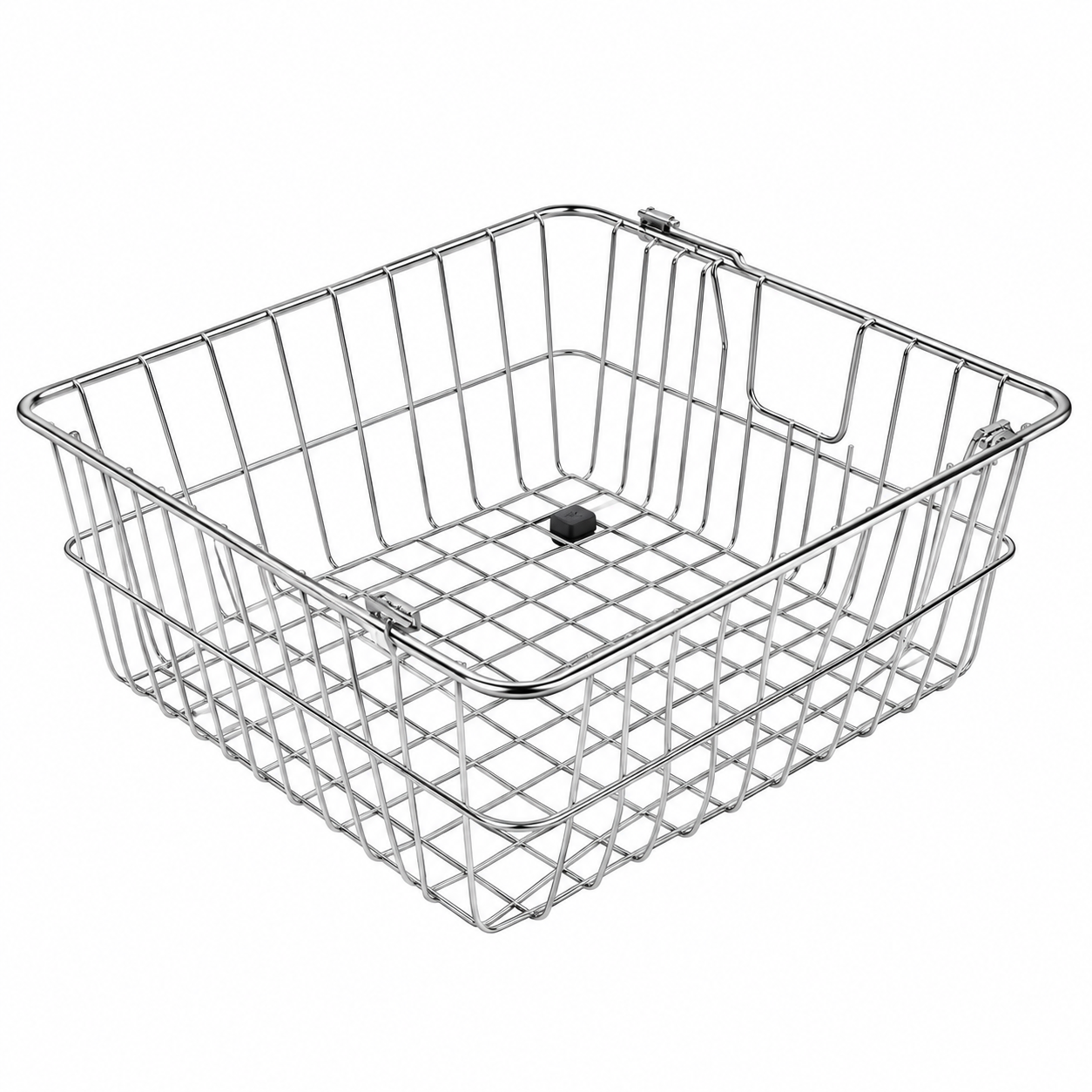
Planning a sterilized cupboard production line should begin with the finished rack, not with a list of machines. A sterilized cupboard rack may look like a simple wire product, but its production can involve straightening and cutting, frame bending, ring or support forming, mesh welding, assembly welding, trimming, correction, and preparation for surface treatment. The correct equipment combination depends on the rack structure, wire material, wire diameter, dimensions, weld layout, required output, number of product models, and desired automation level.
For this reason, the production line should be designed by breaking the finished rack into individual components and processes, then balancing the cycle time between stations. This helps avoid purchasing a very fast machine for one operation while another operation becomes the real bottleneck.
1. Main Rack Components
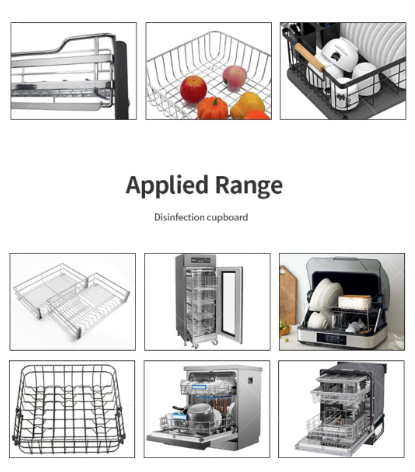
A typical sterilized cupboard rack can include an outer frame, longitudinal and transverse support wires, a bottom mesh or shelf section, reinforcing pieces, and connection points used to assemble the complete rack. Different appliance models may use different frame shapes, mesh spacing, support structures, and loading features.
Before selecting equipment, separate the finished rack into its individual parts. Identify which components are made from straight wire, which require bending or ring forming, which form a mesh, and which need final welding or assembly. This process breakdown determines the actual machine combination.
2. Wire Straightening and Material Preparation
Wire preparation affects every downstream process. The material, wire diameter, surface condition, straightness, and cutting length should be confirmed before bending or welding equipment is selected. If straightened wire has excessive curvature or inconsistent length, the error can appear later as frame distortion, unstable mesh spacing, or poor fixture positioning.
Straightening and cutting capacity should be matched to the required wire range and cut length. Material handling should also protect the wire surface, especially when the finished rack has appearance requirements or will receive plating, coating, or another surface treatment.
3. Frame Bending and Ring Forming
Outer frames and support components can require two-dimensional bending, ring forming, or other wire-forming operations depending on the rack design. A suitable wire bending machine must be selected according to the real component drawing, including wire diameter, bend radius, overall dimensions, number of bends, and required accuracy.
Large frames may require different feeding and support arrangements from small components. If the product includes closed or nearly closed frames, the forming sequence and any subsequent welding operation should be considered together. The objective is not only to create the correct shape, but also to deliver a component that can be located accurately in the next welding fixture.
4. Mesh and Joint Welding
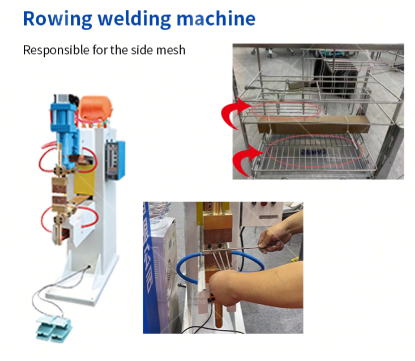
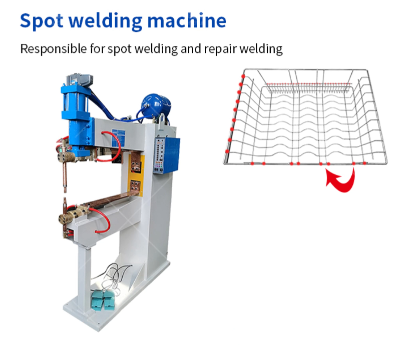
Rack production may involve spot welding, multi-point row welding, XY welding, or fixture-based assembly welding. The appropriate method depends on wire diameter, mesh size, number and distribution of weld points, rack dimensions, production rate, and whether the wires are supplied automatically or manually.
Jinchun’s automatic wire welding machines can be evaluated for different wire-product welding stages. For a regular mesh section, multiple weld points may be processed in a planned sequence. For irregular rack assemblies, a fixture can be more important because it controls component position and keeps the finished geometry stable during welding.
Welding parameters such as current, pressure, weld time, electrode geometry, and cooling should be established with the actual material and wire size. More welding power is not automatically better; the goal is a stable joint with controlled deformation and acceptable surface appearance.
5. Assembly and Secondary Operations
After frame and mesh components are produced, they may need assembly welding, pressing, trimming, edge correction, straightening, or other secondary operations before surface treatment. These steps should be included in the production-line plan from the beginning.
For example, a welded rack may meet the basic dimensions but still require correction for flatness. Excess wire ends may need trimming, and assembly features may need final positioning. If these operations are treated as an afterthought, manual work can become the bottleneck even when the main forming and welding machines are fast.
6. Balancing Output Between Stations
A complete line is only as productive as its slowest necessary station. If the frame-bending station produces components faster than the assembly-welding station can process complete racks, the effective line output will be controlled by the welding station.
Calculate cycle time for wire preparation, bending, mesh welding, assembly, inspection, and material transfer. Then determine the number of operators, machines, fixtures, and buffer quantities required between processes. Small buffers can prevent one short interruption from stopping the entire line, while excessive work-in-process increases handling and floor-space requirements.
Production planning should use the required finished racks per shift or per day, not only the theoretical speed of an individual machine.
7. Quality Control for Appliance Racks
Quality inspection should cover overall length and width, frame geometry, mesh spacing, flatness, weld position, weld appearance, joint strength, and assembly compatibility. Critical dimensions should be taken from the customer’s finished-product drawing.
Consecutive samples should be inspected during machine trials because one acceptable rack does not prove production stability. Fixtures, electrodes, forming tools, and cutting tools should also be checked periodically for wear because gradual wear can cause dimensional drift.
If the rack must fit inside a specific sterilized cupboard model, final assembly or fit testing can be more meaningful than checking isolated dimensions alone.
8. Full-Automatic vs Semi-Automatic Line
The appropriate automation level depends on SKU variety, annual volume, batch size, labor conditions, budget, available floor space, and the stability of the product design. A full-automatic line can reduce manual handling when the product is standardized and production volume is high, but it also requires more integration and more consistent incoming material.
A semi-automatic line may be more practical when the factory produces several rack models, changes specifications frequently, or wants to control initial investment. Operators can handle loading and transfer while key forming and welding processes remain automated.
The best solution is therefore not always the line with the highest automation level. It is the line that reaches the required output and quality with reasonable changeover time and investment.
9. Project Information Checklist
Before a production-line proposal is prepared, provide the finished rack drawing and clear product photos, all component drawings if available, wire material and diameter, rack dimensions, mesh spacing, weld-point layout, surface requirements, dimensional tolerances, and target production volume.
Also provide the number of rack models or SKUs, expected batch size, required automation level, available workshop space, electrical supply, and any existing machines that will remain in the process. If physical samples are available, they can help confirm forming details, fixture positioning, and welding requirements.
A project-level review can then match the individual processes with suitable production line solutions and identify where automation provides the greatest practical value.
Conclusion
A sterilized cupboard rack production line should be configured around the finished rack and the bottleneck processes. Wire preparation, frame forming, mesh welding, assembly, correction, inspection, and material transfer must work as one balanced system. Selecting machines independently by speed can create unnecessary investment or an unbalanced line.
For a production-line recommendation, contact Jinchun with your finished rack drawings, material specifications, product models, target output, and preferred automation level. The equipment combination can then be evaluated according to the actual rack structure and production process.
Table of Contents
- Introduction
- 1. Main Rack Components
- 2. Wire Straightening and Material Preparation
- 3. Frame Bending and Ring Forming
- 4. Mesh and Joint Welding
- 5. Assembly and Secondary Operations
- 6. Balancing Output Between Stations
- 7. Quality Control for Appliance Racks
- 8. Full-Automatic vs Semi-Automatic Line
- 9. Project Information Checklist
- Conclusion