 EN
EN


Introduction
Curtain hooks are small and lightweight, but this does not make them easy to weld consistently. A small positioning error can shift the joint, change the appearance, reduce strength, or create an assembly problem. In batch production, consistency depends on the complete welding process: part feeding, fixture location, clamping, electrode contact, welding current, pressure, heat input, cooling, and unloading.
For manufacturers moving from manual welding to automatic wire welding machines
, the objective should be repeatable positioning and a controlled weld cycle rather than automation for its own sake.
1. Curtain Hook Structure and Welding Points
A curtain hook assembly can include a formed hook body, connecting wire or metal piece, and one or more welded joints. The exact geometry varies by product. Before designing the machine, the weld location, overlap, contact area, wire diameter, material, coating condition, and required finished dimensions should be defined.
The welding point should be accessible to the electrodes while the fixture supports the parts in their correct relationship. If the hook is thin or easily distorted, the fixture must locate it without creating unwanted marks or pre-deformation.
2. How the Automatic Welding Cycle Works
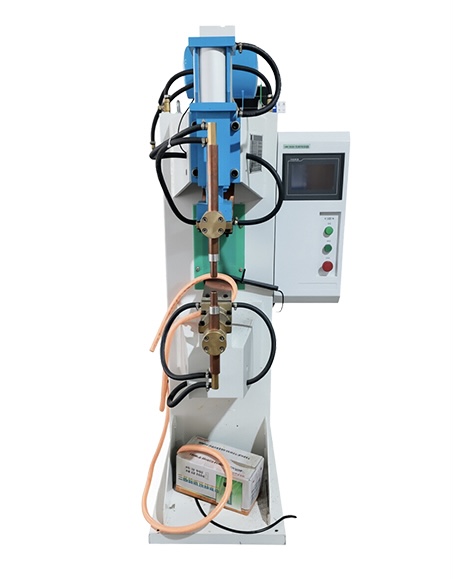
A typical automatic cycle includes loading, positioning, clamping, electrode approach, welding, release, and unloading. Depending on the product and required automation level, some of these actions may be manual while others are automated.curtain hook welder
should be configured around the real hook structure and loading method. The machine is not only a power source; the fixture, electrode path, and sequence determine whether every part reaches the same welding position.
During development, each stage should be observed separately. If the part shifts during clamping, increasing welding current will not solve the root cause. Stable welding begins with stable positioning.
3. Fixture Design and Part Positioning
The fixture establishes the center distance, angle, overlap, and orientation of the parts before welding. Good fixture design also includes mistake-proofing so that an operator cannot easily load a component backwards or into the wrong location.
Repeat positioning surfaces should be simple, durable, and easy to clean. Welding spatter, worn locating pins, or accumulated debris can gradually change the part position. Maintenance access is therefore part of fixture design.
For manually loaded systems, ergonomics matters as well. The operator should be able to place and remove the part quickly without reaching near hazardous moving or hot areas.
4. Electrode, Pressure and Current Controlspot welding machine
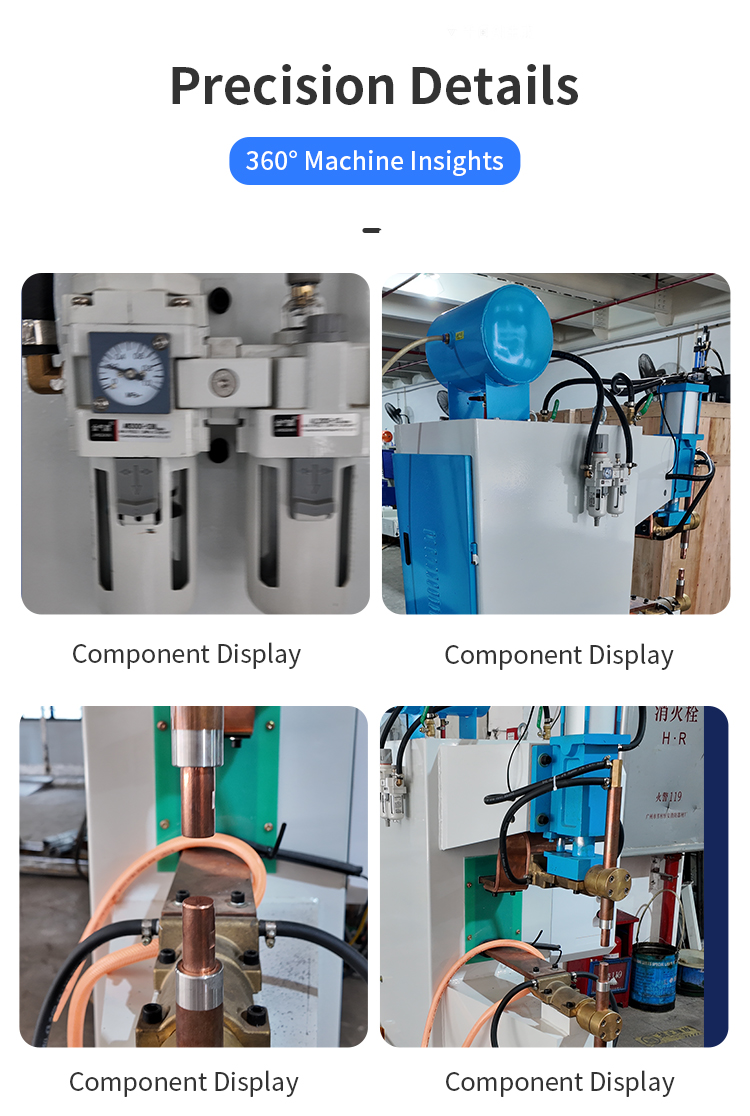
performance depends on the interaction of electrode geometry, electrode condition, pressure, current, weld time, material, wire diameter, and contact area. These variables should be developed together through sample trials.
Insufficient energy or poor contact can create weak joints. Excessive heat can produce burn marks, indentation, deformation, or damage to coatings. Electrode pressure must hold the parts securely and establish consistent electrical contact without crushing the product.
Because different materials and wire sizes respond differently, welding parameters should not be copied blindly from another hook. The approved parameter window should be based on the actual product.
5. Preventing Burn Marks and Deformation
Visible quality is important for curtain hardware. Heat input should be sufficient for a sound joint but controlled to avoid excessive discoloration, melting, or distortion. Electrode contact surfaces should match the joint geometry and remain clean.
Part fit-up is another factor. Large gaps increase instability and can force the process to use more heat than necessary. Consistent upstream forming therefore improves downstream welding. Where the production rate is high, electrode cooling and maintenance intervals should also be considered.
6. Output and Operator Requirements
Output should be calculated from the full cycle time, not only the welding pulse. Loading, positioning, clamping, welding, release, unloading, and occasional inspection all contribute to pieces per hour.
A semi-automatic solution may use manual loading with automatic clamping and welding. This can be appropriate for moderate volumes or products with difficult automatic feeding. Higher automation may be justified when volume is stable, part orientation is suitable for feeding, and labor reduction offsets the additional system complexity.
Operator requirements include safe loading, basic parameter selection, fixture cleaning, electrode inspection, sample checking, and response to alarms.
7. Weld Quality Inspection
Inspection should combine appearance, dimensions, and mechanical verification. Visually check the weld position, burn marks, spatter, indentation, deformation, and overall hook shape. Measure critical distances or angles that could be affected by welding.
Mechanical checks may include pull-off, bend, or application-specific tests. The test method and acceptance level should be agreed according to the customer's product requirement. During machine trials, inspect a sequence of parts to confirm consistency rather than approving a single sample.
8. Information Needed for a Custom Solution
Provide physical samples or detailed drawings of the hook and all components to be welded. State the material, wire diameter or thickness, surface condition, weld-point location, required joint strength, finished dimensional tolerances, and target production volume.
Also explain the preferred loading method, current production process, available operators, required automation level, electrical supply, and any appearance restrictions. If multiple hook models will share one machine, provide the full SKU range so fixture changeover and tooling can be planned from the beginning.
Conclusion
An automatic curtain-hook welding solution must be built around the real product geometry and loading method. Fixture repeatability establishes the joint position, while electrode condition, pressure, current, weld time, and heat management determine weld consistency. Output improves only when these elements are balanced as one process.
For a fixture and welding-process review based on your curtain hook sample or drawing, contact Jinchun
with material details, weld locations, quality requirements, and target capacity.
Table of Contents
- Introduction
- 1. Curtain Hook Structure and Welding Points
- 2. How the Automatic Welding Cycle Works
- 3. Fixture Design and Part Positioning
- 4. Electrode, Pressure and Current Controlspot welding machine
- 5. Preventing Burn Marks and Deformation
- 6. Output and Operator Requirements
- 7. Weld Quality Inspection
- 8. Information Needed for a Custom Solution
- Conclusion