 EN
EN


In the rapidly evolving landscape of metal fabrication in 2026, precision and efficiency are no longer just competitive advantages—they are prerequisites for survival. If you are in the business of automotive parts, furniture manufacturing, or decorative hardware, you’ve likely asked yourself: "How do I balance the high cost of automation with the specific technical needs of my production line?"
Selecting a 3D wire bending machine is a significant capital investment. The wrong choice could lead to a bottleneck in your workshop or a machine that lacks the stability to handle your most complex designs. This guide delves deep into the mechanics of 3D wire forming, contrasting the latest "Turn-Head" and "Turn-Wire" technologies to help you make a data-driven decision that fits your budget.
The Fundamental Dilemma: Turn-Head vs. Turn-Wire Technology
When browsing for a 3D wire bending machine, the technical jargon can be overwhelming. However, the most critical decision you will make concerns the method of rotation. Is it better to rotate the wire or rotate the bending head?
The Precision of the "Turn-Wire" (Wire-Rotating) Machine
The Wire-Rotating 3D bending machine utilizes a high-torque gearbox to synchronously rotate the product during the forming process. This allows for multi-angle bending without moving the primary head assembly.
Best for Small, Intricate Parts: This technology excels in creating small-volume precision products. Think of intricate toy accessories or complex medical instrument components where the wire is light enough to be spun at high speeds without losing center.
Axis Configuration: Often configurable with 7 to 13 axes, these machines provide extreme flexibility for tight-radius bends.
The ROI Factor: For precision 3D parts, the accuracy of 0.01mm ensures that you spend less on quality control and material waste.
The Stability of the "Turn-Head" (Head-Rotating) Machine
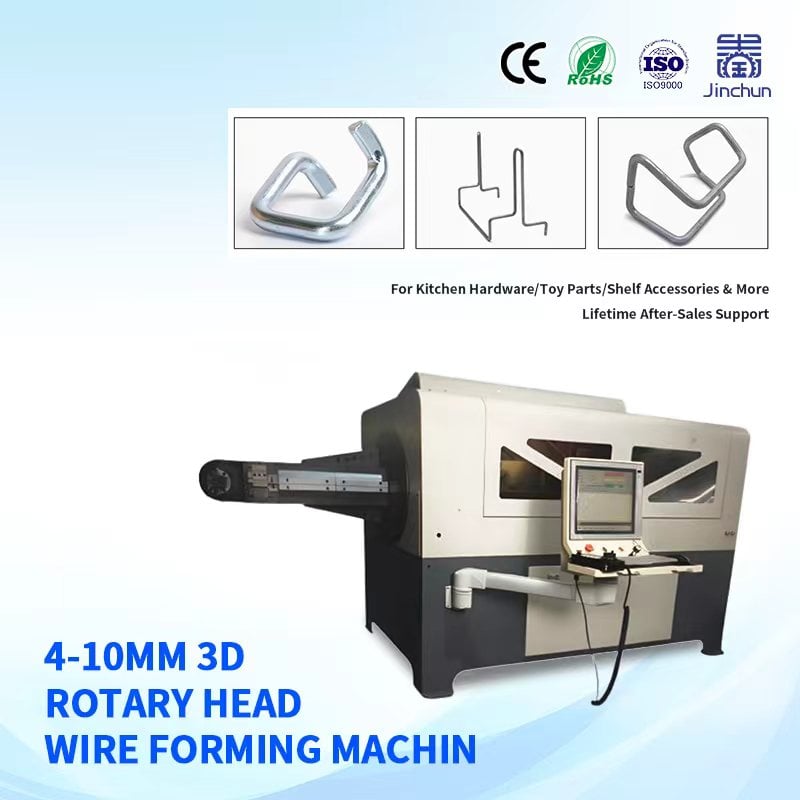
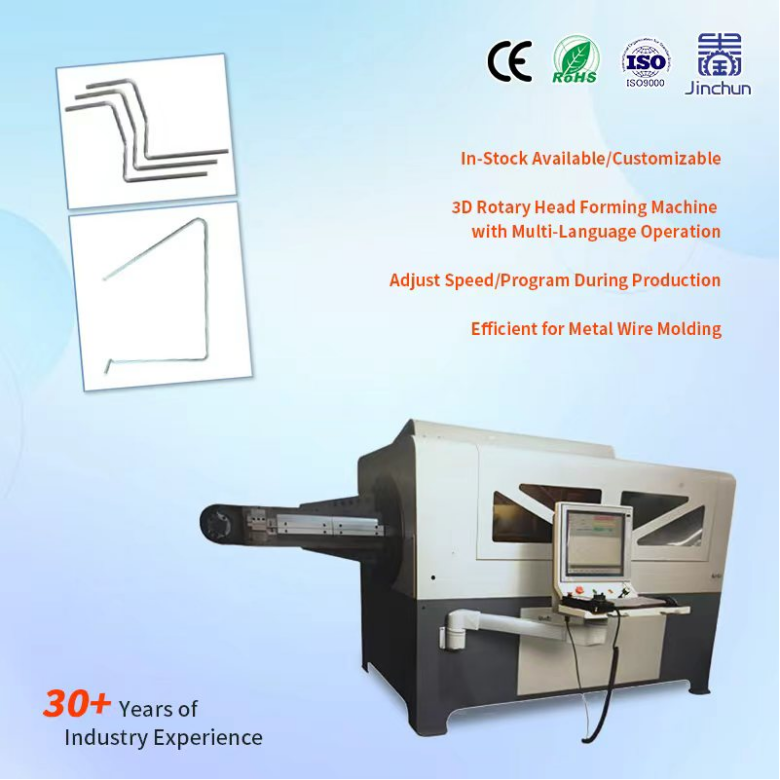
In contrast, the "Head-Rotating" operates on the principle that the wire remains stationary while the bending head rotates around it. This design is a game-changer for stability.
Solving the Centrifugal Error: Why is "head-rotating" so popular for larger items? Because when you spin a long, heavy wire (like a car seat frame), centrifugal force creates wobble and inaccuracy. By keeping the wire fixed, you eliminate these errors, ensuring the production run is both fast and vibration-free.
Optimized for Size: If your products are physically large—such as automotive seat frames or supermarket shelf components—the Turn-Head machine is the industry standard.
Lightweight Head Design: The head structure is specifically engineered to be lightweight, allowing it to whip around the wire with incredible speed while maintaining that crucial 0.01mm accuracy.
Industry Applications: Where Does Your Business Fit?
The "best" machine is the one that directly addresses your output requirements. Based on the technical specifications of modern 3D bending equipment, let's categorize the primary application fields:
1. Automotive and Motorcycle Industry
This is the most demanding sector. Components like car seat wire frames, headrest supports, and motorcycle fasteners require high-tensile wire processing. The Head-Rotating machine is typically the preferred choice here due to the size of the seat frames and the need for rapid, repeatable 15-30 parts per minute cycles.
2. Furniture and Home Decor
The trend toward minimalist metal furniture has increased the demand for 3D wire bending machines in furniture production. Whether it's the frame for a designer chair or a wire-bent table base, these machines handle diameters from 2mm up to 16mm with ease. The ability to work with round bars, flat bars and aluminum by simply changing a mold makes these machines a universal tool for furniture designers.
3. Crafts and Display Solutions
Supermarket shelves, display racks, and intricate wire crafts require a machine that can store a vast library of designs. Top-tier 3D benders now feature internal memory for up to 10,000 programs, allowing craft manufacturers to switch from a "wine rack" program to a "sculpture" program in seconds.
Evaluating the "Hidden" Costs: Beyond the Initial Price Tag
When budgeting for a 3D wire bending machine, the sticker price is only half the story. To ensure the machine is a long-term asset rather than a liability, look for these three performance pillars:
I. The "Two-Hour" Learning Curve
In the past, operating a CNC 3D wire bender required a specialized engineer. Today’s intelligent systems feature multi-lingual interfaces with both physical buttons and touch screens. Can a beginner get started within 2 hours? If the answer is yes, you are saving thousands of dollars in annual labor and training costs. Modern systems also allow you to adjust the speed and modify the program while the machine is in mid-production, preventing costly downtime.
II. Material Versatility and Tooling
A machine that only works with one type of metal is a liability. Ensure your choice is compatible with:
Iron and Carbon Steel
Stainless Steel
Aluminum
Round and Flat bar materials
The best machines in the 2-16mm range require only a mold change to switch between these materials, giving you the flexibility to pivot your business model as market demands change.
III. Longevity and Maintenance Records
In the world of high-speed manufacturing, every hour of downtime is lost profit. Search for equipment with a proven service life exceeding 15 years and a documented annual failure rate of less than 2%.
Warranty Check: Do not settle for less than a 1 or 2-year warranty.
Service Response: In 2026, an average after-sales response time of under 2 hours is the benchmark for professional manufacturers. Ensure your supplier provides a strict Quality Control (QC) inspection report and holds valid CE certification before the machine leaves the factory.
Technical Specifications Checklist
To help your procurement team, here is a quick reference of what a top-performing 3D wire bending machine should offer for a mid-to-high-tier budget:
Feature |
Standard Requirement |
Wire Diameter Range |
2mm – 16mm (supports round/flat bar) |
Production Speed |
15 – 30 parts per minute |
Positional Accuracy |
± 0.01mm |
Axis Configuration |
5 – 13 axes (depending on complexity) |
Software Capacity |
10,000+ stored programs |
Interface |
Multilingual, Touch Screen + Buttons |
Durability |
15+ years service life |
Final Thoughts: Maximizing Your Investment
Choosing the best 3D bending machine requires a balance between the precision of turn-wire technology and the stability of turn-head mechanics.
If you are focusing on larger, high-speed production like automotive frames, prioritize the Turn-Head machine to ensure that "head turns, wire stays" stability. If your catalog consists of smaller, highly intricate precision parts, the Turn-Wire machine with a higher axis count will serve you better.
By focusing on machines with low failure rates, intuitive software, and versatile material compatibility, you ensure that your investment pays for itself through reduced labor costs and near-zero material waste.
Are you currently processing larger frames for automotive use, or are you looking for a high-precision solution for smaller consumer goods? Identifying your primary output volume is the first step toward the right purchase.