 EN


Introduction
Dimensional problems in wire processing can originate well before the wire reaches the forming station. A coil that unwinds unevenly, a feed system that cannot respond quickly enough, or friction along the material path may all influence the final result. Operators may notice inconsistent cut lengths, shifted bending positions or occasional feeding faults, even when the machine program has not changed.
Instead of immediately modifying the bending program, it is more effective to examine how the wire behaves throughout the production line. The following guide explains how to identify potential causes, evaluate operating conditions and determine whether the issue is related to coil handling, feeding equipment, material variation or the processing machine itself.
1. Evaluate the Coil Before Production
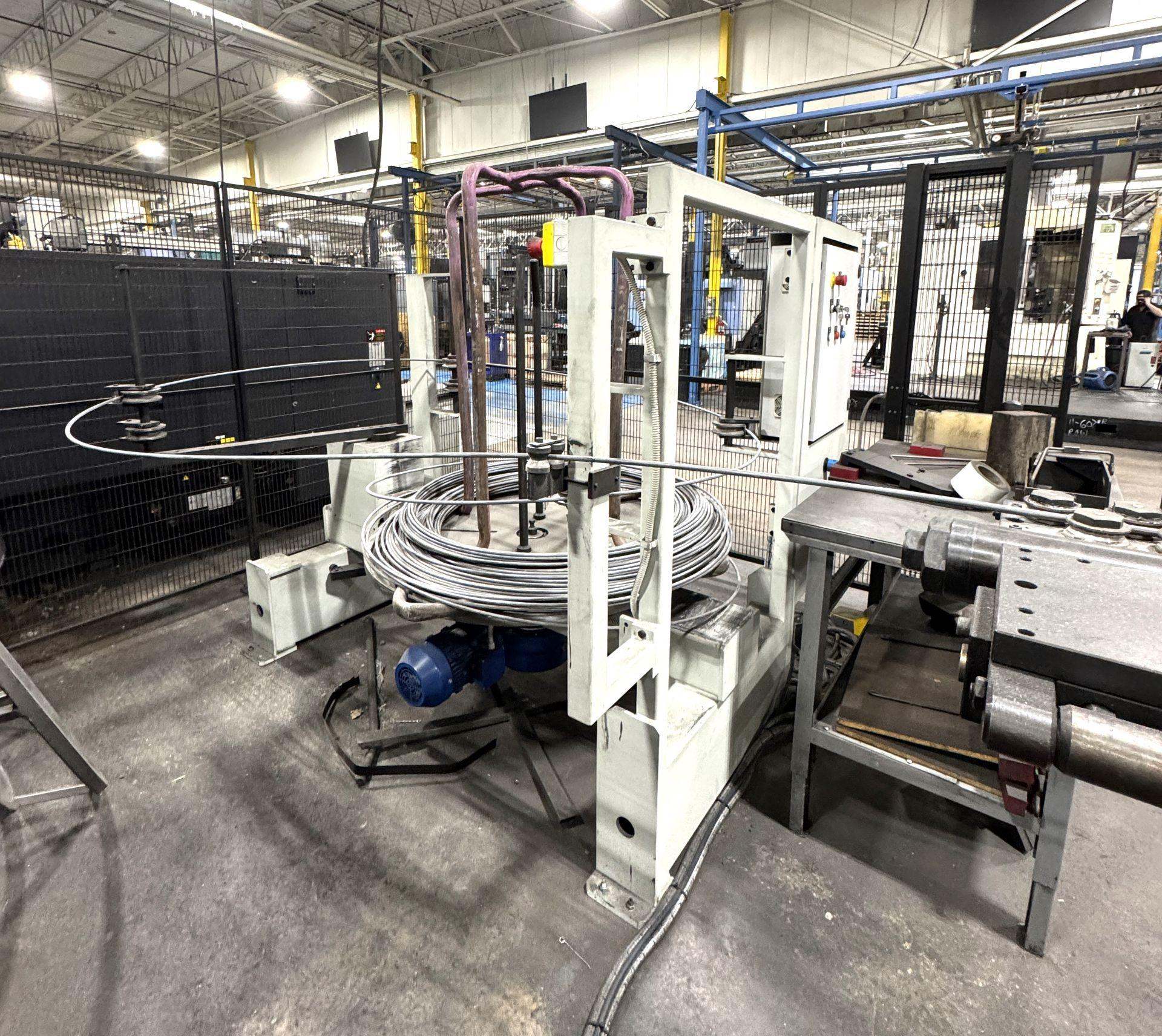
The condition of the incoming wire coil can affect how smoothly material enters the production line. Before operation, record the coil's inner and outer diameters, total weight, packaging condition and mounting method. Also identify whether the coil is designed to unwind freely or requires a dedicated powered payoff system.
Pay attention to tangled turns, deformed wire and packaging that may obstruct unwinding. A coil can appear acceptable at rest but create resistance or sudden releases once feeding begins. These irregularities may place additional demands on the equipment downstream.
For a new installation, photographs of the coil and its mounting arrangement are useful references. They allow the equipment supplier to assess the available space and understand how the material will be delivered to the machine.
2. Observe the Relationship Between Payoff and Feed Speed
A wire bending machine needs a steady material supply that follows its operating cycle. However, the coil and the processing equipment do not always accelerate or stop at the same rate.
When the machine pauses but the coil continues rotating, loose loops may form. If the payoff responds too slowly when production resumes, the wire may become tight or pull unevenly. The severity of these effects depends on coil inertia, equipment design, control response and the frequency of starts and stops.
Observe several operating stages rather than judging the system during continuous running alone. Startup, deceleration, short pauses and restart cycles can reveal problems that remain hidden at a constant speed.
The appropriate payoff arrangement should be selected according to the actual production cycle, material characteristics and machine requirements—not simply the nominal wire diameter.
3. Inspect Contact Points Along the Material Route
The wire's route between the coil and the processing unit can influence both feed resistance and material alignment. Rollers, guides and changes in direction create contact points where wear, misalignment or contamination may interfere with movement.
Trace the wire from beginning to end and check for unnecessary bends, rubbing against nearby structures or contact with damaged components. Confirm that guides are suitable for the specified wire size and that the material passes through them without being squeezed or scratched.
A production line that worked correctly before a layout change deserves particular attention. Moving the payoff stand or rearranging nearby equipment can alter the wire's approach angle and introduce resistance that was not present in the original setup.
Correcting the route may be more appropriate than compensating for the problem through repeated changes to machine parameters.
4. Identify Slippage and Excessive Roller Pressure
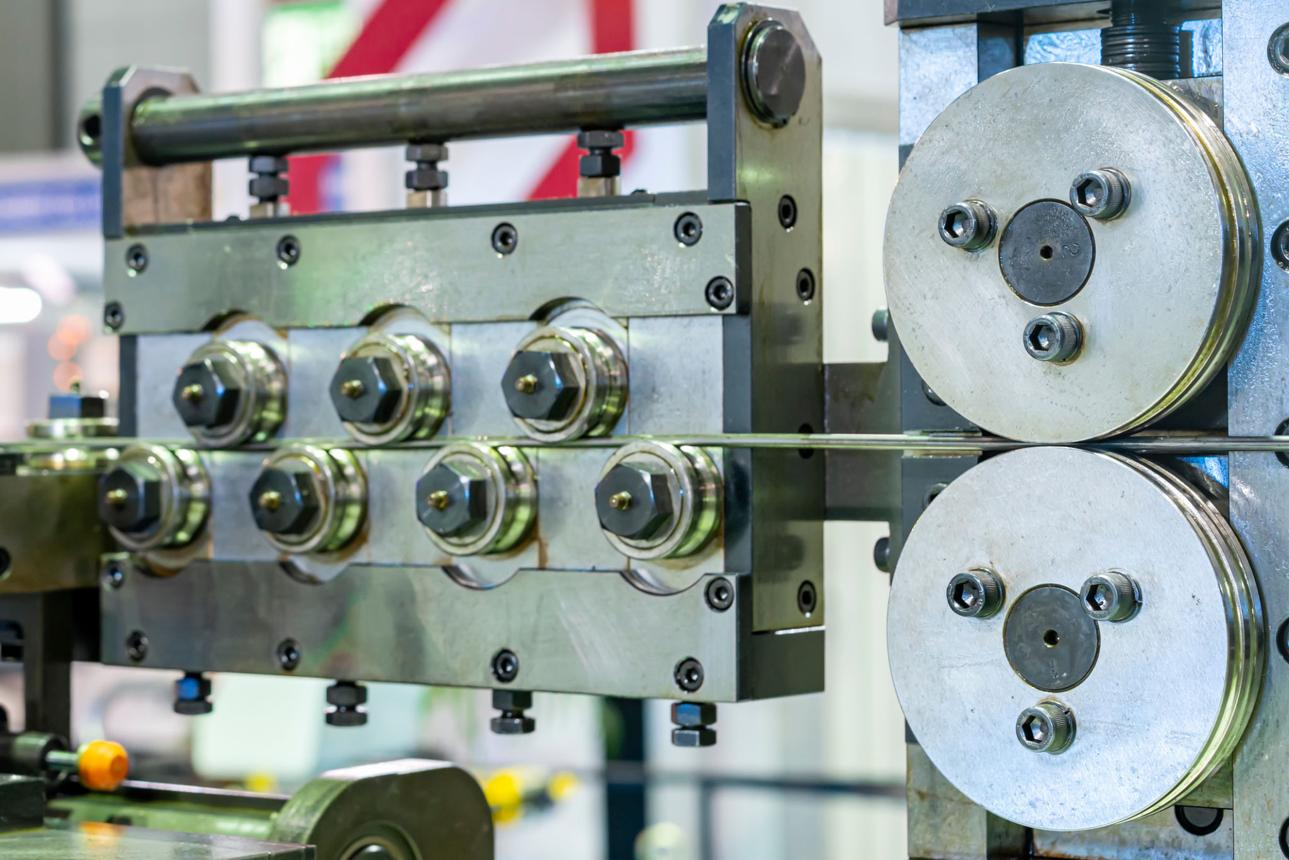
Feed rollers must transfer motion to the wire reliably. If the contact pressure is insufficient, the rollers may slip; if it is excessive, the wire surface may become marked or damaged. Worn grooves, unsuitable roller profiles and incorrect alignment can also reduce feeding consistency.
Begin by inspecting the roller condition and confirming that the installed components match the material and diameter being processed. Follow the machine manufacturer's instructions when checking pressure and alignment, rather than making arbitrary adjustments.
After a change, run a controlled test and compare the actual feed position or finished-part dimensions with the previous results. Record the adjustment and operating conditions so the team can determine whether the change produced a measurable improvement.
If the problem remains, investigate the material path and payoff behavior before assuming that roller pressure is the only cause.
5. Determine Whether the Problem Follows the Material Batch
Not every production variation originates in the machine. Differences between wire batches may affect how the material moves through the equipment or responds during forming. Surface condition, dimensional variation and material characteristics should therefore be considered alongside mechanical settings.
Keep a record of the material grade, nominal diameter, supplier batch and any visible defects. Compare these details with a previously accepted batch, particularly when a problem appears shortly after a coil change.
It is also important to document recent maintenance, tooling replacements and program modifications. When several factors change together, identifying the actual cause becomes difficult.
Where practical, evaluate one factor at a time. If the variation follows a particular batch, investigate the material and its compatibility with the existing setup before making permanent program changes.
6. Use Production Samples to Locate the Source of Variation
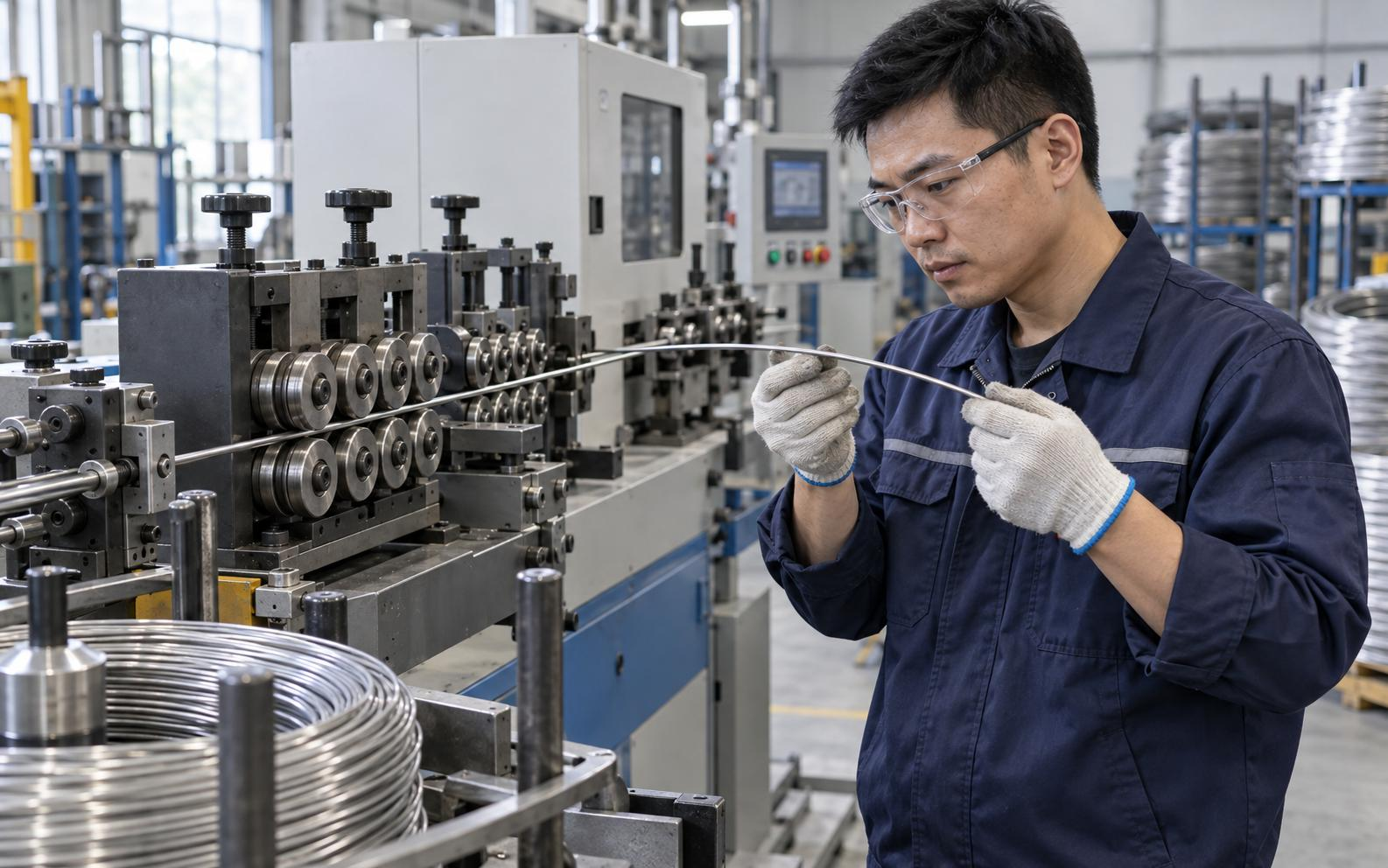
When checking a straightening machine, evaluate the output at different stages of the operating cycle instead of relying on a single measurement.
Collect representative samples during startup, after the equipment reaches stable operation, and following a normal stop-and-restart cycle. Measure cut length and any relevant straightness or finished-part dimensions using the same method for every sample.
The timing of the defect can help narrow the investigation. Variation concentrated at startup may point toward coil movement or the transition between operating states. Problems that persist throughout production may require closer examination of material consistency, feed traction, guides or machine settings.
Compare the results against the required product tolerances. Repeat the test after each corrective action to confirm that the improvement is consistent rather than temporary.
7. Prepare the Right Information for Equipment Matching
A stable wire-processing line depends on the compatibility of the coil, payoff arrangement and downstream equipment. When requesting a system recommendation, provide the supplier with the following information:
Material: steel grade, surface condition and wire diameter.
Coil details: weight, inner and outer diameters, and packaging method.
Production requirements: target output, feed length and operating cycle.
Machine information: existing equipment model and feed requirements.
Installation conditions: available floor space, coil position and material route.
Handling requirements: any restrictions concerning wire surface protection or material contact.
Clarify whether production involves long continuous runs, short repeated cycles or frequent changes in speed. These conditions can influence the payoff and control arrangement needed for reliable operation.
A system should be evaluated as a complete material-handling process. Maximum coil capacity alone does not establish whether the equipment can deliver wire consistently under the intended production conditions.
Conclusion
Consistent wire processing depends on more than the accuracy of the forming program. Coil condition, payoff response, material routing, feed traction and batch consistency all contribute to the result.
A practical troubleshooting process starts with observing the production cycle, recording measurable results and isolating one potential cause at a time. Once a correction has been made, repeat the test under comparable conditions before considering the issue resolved.
To discuss your application, contact Jinchun with your product drawing, material specifications and production requirements. This information will help the team evaluate the wire supply arrangement and identify a suitable processing solution.
Table of Contents
- Introduction
- 1. Evaluate the Coil Before Production
- 2. Observe the Relationship Between Payoff and Feed Speed
- 3. Inspect Contact Points Along the Material Route
- 4. Identify Slippage and Excessive Roller Pressure
- 5. Determine Whether the Problem Follows the Material Batch
- 6. Use Production Samples to Locate the Source of Variation
- 7. Prepare the Right Information for Equipment Matching
- Conclusion