 EN


Introduction
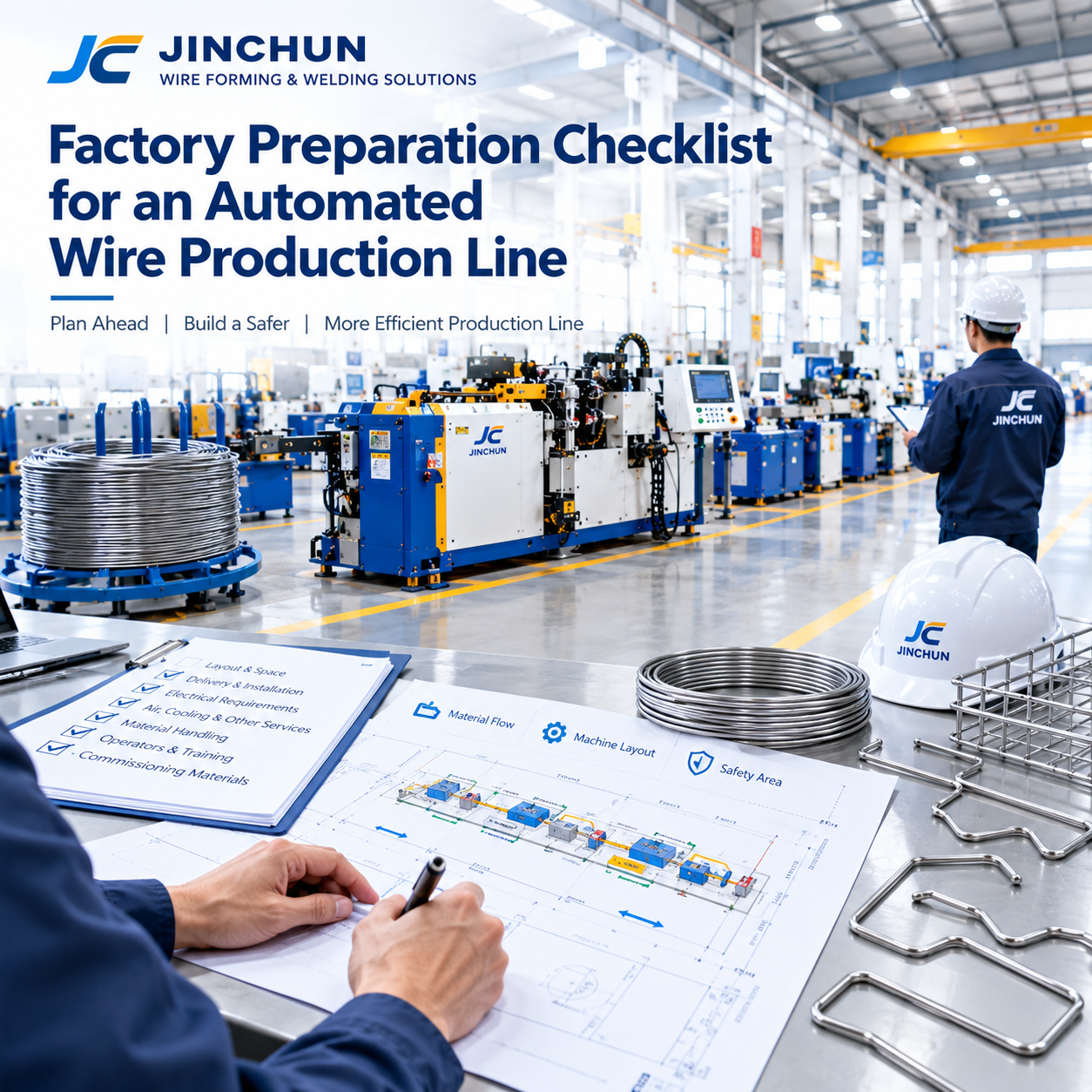
Review production line solutions together with the available floor space, material flow and installation conditions.
Preparing a factory for automated wire production involves more than reserving enough space for the machines. The line also needs workable material routes, safe access for operators and maintenance, suitable utilities and a clear plan for installation and commissioning.
These details are easier to resolve before equipment shipment than after machines arrive. The final preparation checklist should be agreed between the customer and equipment supplier using the selected machine specifications and actual site conditions. A general checklist is useful for planning, but exact electrical, pneumatic, cooling and layout requirements must be confirmed for the chosen configuration.
1. Agree on the Equipment Layout
Start with a layout showing each machine's overall dimensions, operating area, infeed and outfeed direction, control cabinet position and maintenance access. Include payoff units, wire storage, intermediate buffers, inspection stations and finished-part handling where they form part of the line. A machine footprint alone does not show the space required to operate it safely.
Map the intended material flow from incoming coils through straightening, cutting, forming, welding and finishing as applicable. Avoid layouts that force operators to cross material routes repeatedly or move heavy coils through crowded work areas. Confirm the layout against the actual building columns, doors, walkways and other fixed obstacles before finalizing machine positions.
2. Check Delivery and Installation Access
Confirm the route from the unloading point to the final installation location. Check vehicle access, unloading equipment, door width and height, corridor turns, floor transitions and any overhead restrictions. The packaged dimensions may be larger than the bare machine, so use the supplier's shipping information when planning movement into the factory.
Identify the equipment and personnel needed for unloading and positioning, and agree who is responsible for each task. Check that the intended floor area can support the equipment under the specified installation conditions. Keep the route clear before delivery and reserve enough working room for technicians to unpack, position, level and inspect the machines safely.
3. Confirm Electrical Requirements
Confirm the supply requirements for every selected machine from its official specification and the supplier's written confirmation. Items to verify may include voltage, phase, frequency, connected load, protection, grounding and the location of the electrical connection. Do not assume that all machines in a line share the same power requirements simply because they will operate in one factory.
Ask a qualified local electrician to review the factory supply and prepare the necessary connections in accordance with local regulations. Clarify whether separate circuits or other provisions are required by the selected equipment. Keep the confirmed requirements in the installation file and resolve discrepancies before shipment or commissioning, rather than relying on an informal assumption about the site's available power.
4. Confirm Air, Cooling and Other Services
Utility requirements for welding equipment should be confirmed from the selected machine specifications.
Depending on the actual configuration, a line may require compressed air, cooling water or other services in addition to electrical power. Not every machine has the same requirements, so identify the needs equipment by equipment.
Confirm pressure, flow, connection size, water quality or other specified conditions with the supplier where applicable. Plan the locations of service points so hoses and pipes do not obstruct operator access, material movement or maintenance. If cooling or air supply is shared across several machines, check whether the available capacity is adequate for the expected simultaneous demand.
5. Plan Material and Finished-Part Handling
Plan where raw wire coils will be received, identified and stored, and how they will reach each machine. Consider coil dimensions, weight, handling equipment and the route needed to replenish the line. The layout should prevent incoming material from blocking machine access or becoming mixed between grades and diameters.
Also define how semi-finished and finished products will be buffered, inspected, labeled and moved to the next process. Containers, racks and collection points should match the product dimensions and avoid damaging formed parts or welded joints. If production includes several product families, define how work-in-process will be identified so parts and material batches remain traceable.
6. Assign Operators and Training
Identify who will be responsible for loading material, operating each process, checking quality, changing tools, handling finished parts and performing routine maintenance. A line may be automated in some operations but still require people for replenishment, setup, inspection and troubleshooting. Staffing should be based on the actual workflow and expected production pattern.
Arrange training for operators and maintenance personnel before routine production begins. Training should cover normal operation, safe loading and unloading, approved changeover steps, basic checks, alarm response and escalation procedures. Confirm which documents, language versions and training records will be provided. A clear responsibility matrix helps prevent important tasks from being overlooked between shifts or departments.
7. Prepare Commissioning Materials
Before commissioning, prepare the latest product drawings, material specifications, representative raw materials, approved samples and inspection criteria. The trial should use material that reflects the intended production conditions. If several products will run on the line, agree which products will be used to verify each relevant machine function and changeover.
Define acceptance records before the trial, including the dimensions or weld characteristics to inspect, the number of samples and the people responsible for approval. Keep a list of open issues, agreed corrections and retest results. Also confirm the site utilities, installation access and safety provisions before the supplier's technicians arrive. This preparation makes commissioning more structured and gives both parties a shared record of what has been verified.
Conclusion
Please contact Jinchun with your drawing, material specification and production requirements.
A successful automated wire production line depends on coordinated preparation of the layout, utilities, material flow, staffing and commissioning plan. Confirm all interfaces against the selected equipment and actual factory conditions.