 EN
EN


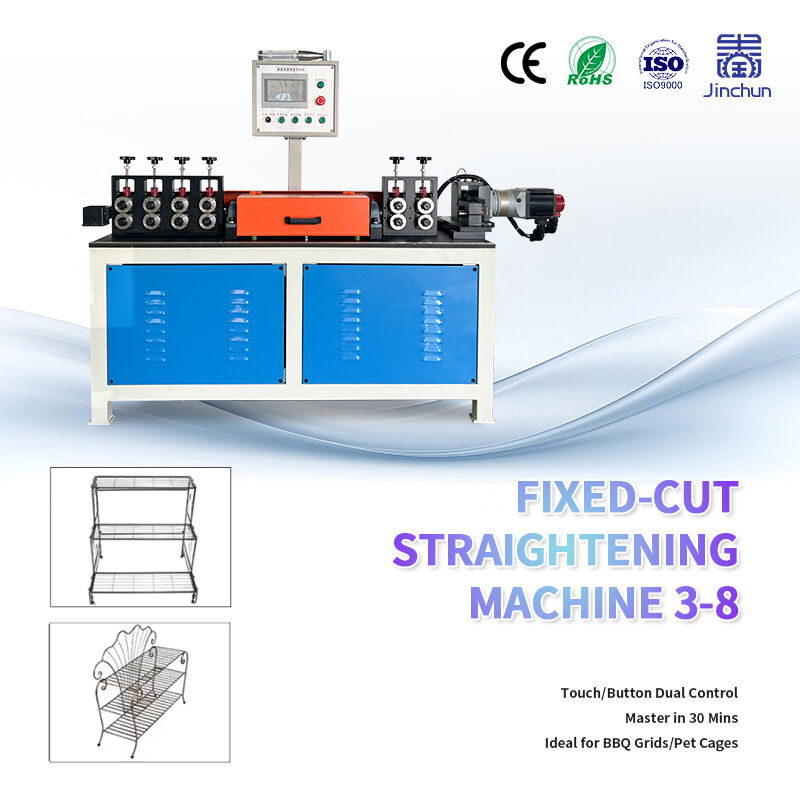
Circle forming machines represent a critical manufacturing technology specifically designed for creating precise circular components in dust filter cage and fan guard production. These specialized machines enable manufacturers to transform flat metal strips, wire, or rod materials into perfectly circular shapes with consistent dimensions, which serve as essential structural elements in industrial filtration and air handling systems. The precision and repeatability offered by circle forming machines directly impact the quality and performance of dust filter cages and fan guards across various industrial applications.
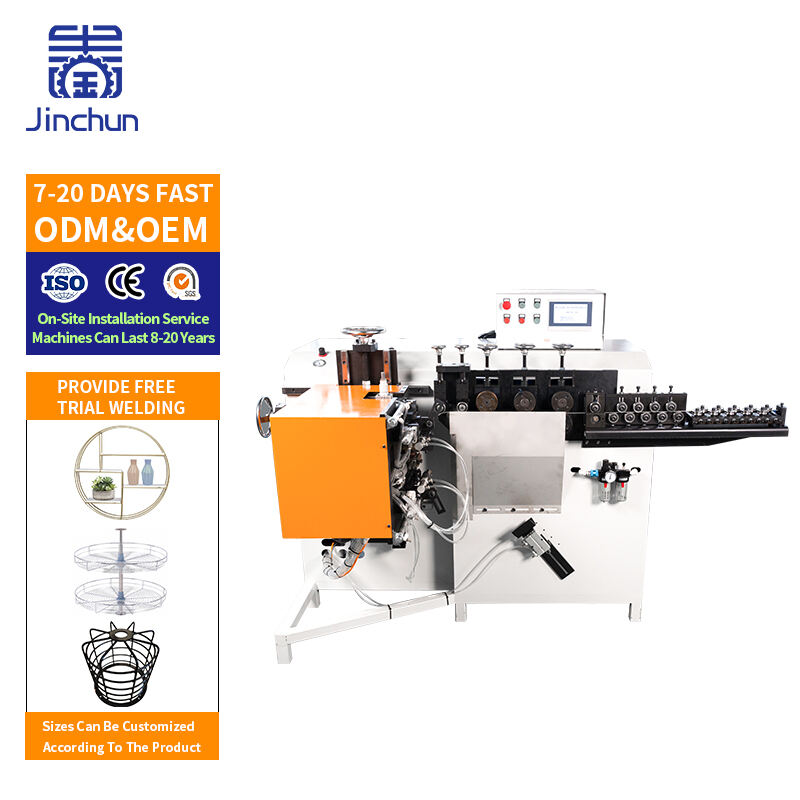
The manufacturing of dust filter cages and fan guards requires precise circular components that maintain structural integrity under operational stress while ensuring optimal airflow characteristics. Circle forming machines address this specific requirement by providing automated forming processes that eliminate manual bending inconsistencies and reduce production time significantly. These machines are particularly valuable in industries where dust collection systems and protective fan guards must meet strict dimensional tolerances and performance standards, including power generation, cement production, steel manufacturing, and chemical processing facilities.
Technical Specifications and Design Features for Filtration Applications
Material Handling Capabilities
Circle forming machines used in dust filter cage manufacturing typically accommodate various wire diameters ranging from 2mm to 8mm, with some specialized models handling up to 12mm diameter materials. The material feed systems incorporate precision rollers and guides that ensure consistent wire positioning throughout the forming process. These machines can process different material grades including galvanized steel, stainless steel grades 304 and 316, and specialized alloy wires designed for high-temperature filtration applications.
The forming mechanism within a circle forming machine utilizes multiple roller configurations to gradually shape the material into circular profiles without causing material stress concentrations or surface damage. Advanced models feature adjustable forming pressure controls that accommodate varying material hardness levels, ensuring optimal forming quality across different wire specifications commonly used in dust filter cage construction.
Dimensional Accuracy and Repeatability
Precision requirements for dust filter cage circles typically demand tolerances within ±0.5mm diameter variation across production batches. Modern circle forming machines achieve this accuracy through computerized control systems that monitor forming pressure, material feed rate, and cutting positions in real-time. These control systems automatically adjust operational parameters to compensate for material property variations and maintain consistent circle dimensions throughout extended production runs.
Quality assurance features integrated into circle forming machines include automatic diameter measurement systems that verify each formed circle against predetermined specifications. Rejection mechanisms automatically remove non-conforming parts from the production line, ensuring that only circles meeting dust filter cage dimensional requirements proceed to subsequent assembly operations.
Production Process Integration and Workflow Optimization
Automated Production Line Configuration
Circle forming machines designed for dust filter cage production integrate seamlessly with upstream material preparation equipment and downstream assembly systems. The typical workflow begins with wire straightening and cleaning processes, followed by precise length cutting before entering the Circle Forming Machine for circular shaping operations. This integration eliminates manual material handling between process steps and reduces overall production cycle time.
Production scheduling systems coordinate circle forming operations with cage assembly requirements, ensuring optimal inventory levels of formed circles while minimizing work-in-process storage needs. Advanced manufacturing execution systems track individual circle batches through the production process, enabling complete traceability for quality control and customer delivery requirements.
Throughput and Efficiency Considerations
High-volume dust filter cage manufacturing facilities require circle forming machines capable of producing 1000 to 2000 circles per hour depending on circle diameter and material specifications. Machine efficiency optimization involves balancing forming speed with dimensional accuracy requirements, as excessive forming rates can compromise circle quality and increase material waste.
Energy efficiency considerations become significant in continuous production environments where circle forming machines operate for extended periods. Modern machines incorporate servo-driven forming mechanisms that consume power only during active forming operations, reducing overall energy costs compared to hydraulic or pneumatic systems that maintain constant pressure.
Application-Specific Requirements in Fan Guard Manufacturing
Protective Function and Structural Design
Fan guard applications require circle forming machines to produce rings with specific structural characteristics that balance protective coverage with airflow optimization. The formed circles must maintain sufficient structural strength to prevent deformation under impact loads while incorporating design features that minimize air turbulence and pressure drop across the guard assembly.
Circle forming machines used for fan guard production often incorporate additional forming stations that create mounting tabs, connection points, or reinforcement features directly during the circle forming process. These integrated forming capabilities reduce secondary operations and improve overall production efficiency for complete fan guard assemblies.
Environmental Resistance and Durability
Fan guard circles formed using specialized machines must withstand various environmental conditions including moisture exposure, chemical vapors, and temperature fluctuations common in industrial settings. The forming process parameters within circle forming machines are optimized to minimize residual stresses that could contribute to premature failure or corrosion susceptibility in service environments.
Surface finish quality achieved during circle forming operations directly impacts the long-term durability of fan guard components. Machines equipped with precision forming rollers and controlled pressure systems produce smooth surface finishes that resist contamination accumulation and facilitate cleaning maintenance procedures.
Quality Control and Manufacturing Standards
Inspection and Testing Protocols
Quality control procedures for circle forming machines in dust filter cage production incorporate both in-process monitoring and final inspection protocols. Real-time monitoring systems track forming parameters including material feed rate, forming pressure, and circle diameter measurements to detect process variations before they affect product quality. Statistical process control methods analyze these parameters to identify trends that might indicate machine maintenance needs or adjustment requirements.
Final inspection protocols for formed circles include dimensional verification using precision measuring equipment, visual inspection for surface defects, and mechanical testing of joint integrity where applicable. These inspection procedures ensure that circles meet both internal quality standards and customer specifications before integration into dust filter cage assemblies.
Compliance and Certification Requirements
Manufacturing facilities using circle forming machines for dust filter cage production must comply with various industry standards and regulatory requirements depending on end-use applications. These standards often specify material traceability, dimensional tolerances, and mechanical property requirements that directly influence circle forming machine operation and quality control procedures.
Documentation requirements for regulated industries necessitate comprehensive record-keeping of circle forming machine operation parameters, material certifications, and inspection results. Modern machines incorporate data logging capabilities that automatically generate production records suitable for audit and certification purposes.
Economic Considerations and Return on Investment
Cost Analysis and Productivity Benefits
Investment analysis for circle forming machines in dust filter cage manufacturing considers multiple cost factors including initial equipment cost, installation requirements, operator training, and ongoing maintenance expenses. Productivity benefits from automated circle forming typically justify equipment investment through reduced labor costs, improved product consistency, and increased production capacity compared to manual forming methods.
Material utilization efficiency represents a significant cost consideration where circle forming machines optimize material usage through precise cutting and forming operations. Waste reduction achieved through consistent forming processes can result in substantial material cost savings over the equipment lifecycle, particularly when processing expensive specialty alloys used in high-temperature filtration applications.
Maintenance and Operating Costs
Ongoing operating costs for circle forming machines include routine maintenance, replacement of wear components, and periodic calibration procedures. Preventive maintenance programs optimize machine availability and extend equipment lifecycle while minimizing unexpected downtime that could disrupt dust filter cage production schedules.
Energy consumption represents an ongoing operational cost that varies with machine design and utilization patterns. Modern circle forming machines incorporate energy-efficient drive systems and optimized control algorithms that minimize power consumption while maintaining production quality and throughput requirements.
FAQ
What wire diameters can circle forming machines handle for dust filter cage production?
Most circle forming machines designed for dust filter cage manufacturing can accommodate wire diameters ranging from 2mm to 8mm, with specialized heavy-duty models capable of handling up to 12mm diameter materials. The specific diameter range depends on the machine design and intended application requirements.
How do circle forming machines maintain dimensional accuracy across production batches?
Circle forming machines maintain dimensional accuracy through computerized control systems that monitor forming pressure, material feed rate, and cutting positions in real-time. These systems automatically adjust operational parameters to compensate for material variations and ensure consistent circle dimensions within ±0.5mm tolerance requirements.
What materials are commonly processed by circle forming machines in filtration applications?
Circle forming machines typically process galvanized steel, stainless steel grades 304 and 316, and specialized high-temperature alloy wires. The choice of material depends on the specific filtration application requirements including temperature resistance, chemical compatibility, and structural strength needs.
How do circle forming machines integrate with existing dust filter cage production lines?
Circle forming machines integrate seamlessly with upstream material preparation equipment and downstream assembly systems through automated material handling and computerized production control systems. This integration eliminates manual material handling between process steps and enables continuous production flow from raw material to finished filter cage assemblies.
Table of Contents
- Technical Specifications and Design Features for Filtration Applications
- Production Process Integration and Workflow Optimization
- Application-Specific Requirements in Fan Guard Manufacturing
- Quality Control and Manufacturing Standards
- Economic Considerations and Return on Investment
-
FAQ
- What wire diameters can circle forming machines handle for dust filter cage production?
- How do circle forming machines maintain dimensional accuracy across production batches?
- What materials are commonly processed by circle forming machines in filtration applications?
- How do circle forming machines integrate with existing dust filter cage production lines?