 EN
EN


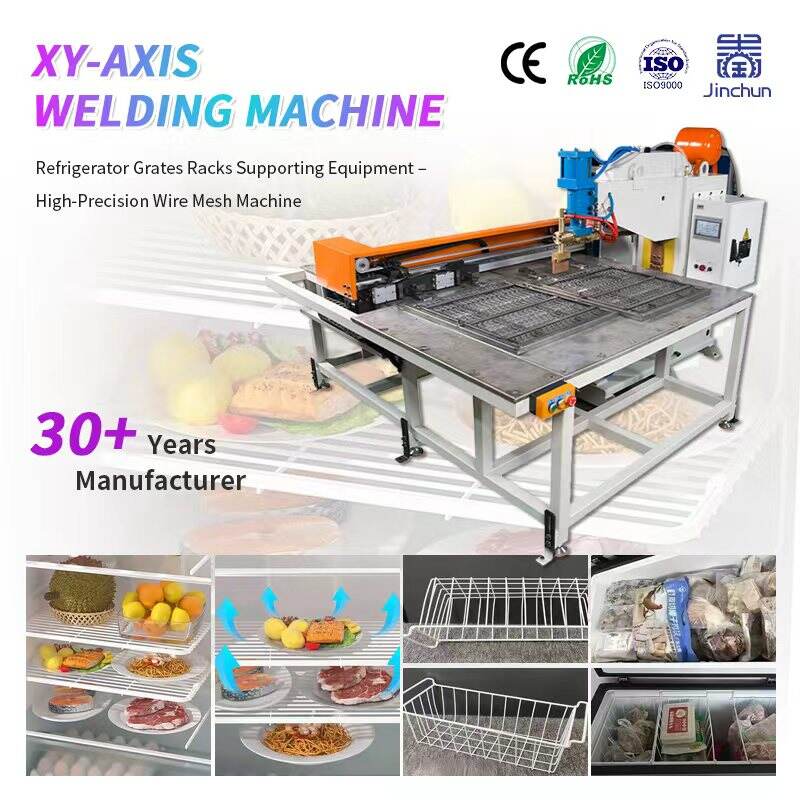
Manufacturing industries are increasingly turning to automated welding solutions to meet rising production demands while maintaining consistent quality standards. The Double-Layer XY Axis Welding Machine represents a significant advancement in mesh welding automation, offering manufacturers the capability to produce complex wire mesh structures with unprecedented precision and speed. This sophisticated equipment combines computer-controlled positioning systems with advanced welding technology to deliver reliable, repeatable results across diverse industrial applications.
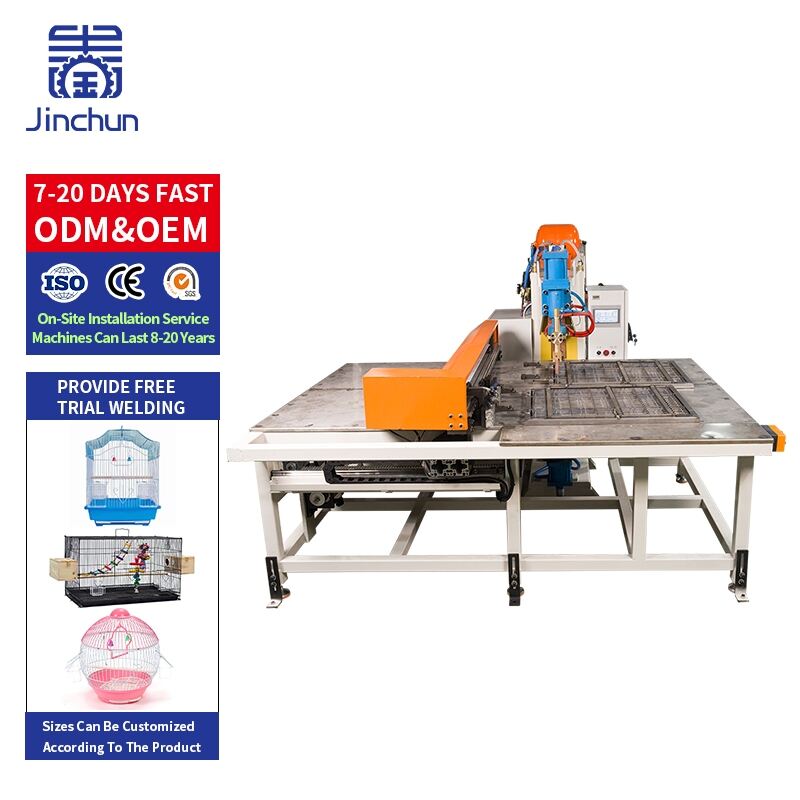
The integration of automation in mesh welding processes has transformed traditional manufacturing workflows, eliminating manual positioning errors and dramatically reducing production cycle times. Double-Layer XY Axis Welding Machine technology enables manufacturers to achieve consistent weld quality across thousands of intersection points while simultaneously processing multiple mesh layers. This automation capability addresses critical industry challenges including labor shortages, quality consistency requirements, and the need for higher production throughput in competitive markets.
Understanding Double-Layer XY Axis Welding Technology
Core Technology Components
The Double-Layer XY Axis Welding Machine incorporates precision servo motors and ball screw drive systems to control electrode positioning along both horizontal axes. Advanced control algorithms coordinate the movement of welding electrodes across multiple wire intersection points, ensuring accurate positioning and consistent pressure application during each weld cycle. The dual-layer capability allows simultaneous processing of two mesh panels, effectively doubling production capacity compared to single-layer systems.
Programmable logic controllers manage welding parameters including current intensity, weld time, and electrode pressure for each intersection point. The system maintains welding parameter databases for different wire materials, diameters, and mesh specifications, enabling rapid changeover between product configurations. Real-time feedback sensors monitor weld quality and automatically adjust parameters to compensate for material variations or wear-related changes in electrode performance.
Automated Positioning Systems
The XY axis positioning system utilizes high-precision linear guides and encoder feedback to achieve positioning accuracy within 0.1mm tolerances. This precision ensures that welding electrodes align perfectly with wire intersection points, regardless of mesh complexity or wire spacing variations. The automated positioning eliminates human error associated with manual mesh welding operations while enabling processing of intricate mesh patterns that would be difficult or impossible to achieve manually.
Advanced path planning algorithms optimize electrode movement patterns to minimize cycle time while maintaining weld quality standards. The system can process irregular mesh configurations, varying wire spacing, and complex geometric patterns by following pre-programmed welding sequences. This flexibility allows manufacturers to produce customized mesh products without requiring specialized tooling or extensive setup modifications.
Implementation Process for Mesh Welding Automation
System Integration Planning
Successful implementation of Double-Layer XY Axis Welding Machine technology begins with comprehensive analysis of existing production workflows and quality requirements. Manufacturing engineers must evaluate current mesh specifications, production volumes, and quality standards to determine optimal machine configuration and integration approaches. The planning phase includes assessment of facility infrastructure requirements, including electrical power capacity, compressed air systems, and floor space allocation for the automated equipment.
Integration planning also involves developing material handling workflows that support continuous operation of the automated welding system. This includes designing wire feeding mechanisms, mesh positioning fixtures, and finished product removal systems that coordinate with the welding machine's cycle time. Proper integration ensures that the Double-Layer XY Axis Welding Machine operates at maximum efficiency while maintaining seamless integration with upstream and downstream production processes.
Programming and Setup Procedures
The programming phase involves creating welding sequences that define electrode movement patterns, welding parameters, and quality control checkpoints for each mesh configuration. Operators input mesh specifications including wire spacing, material properties, and dimensional requirements into the control system. The machine's software automatically generates optimized welding paths that minimize cycle time while ensuring complete coverage of all wire intersection points.
Setup procedures include calibration of welding electrodes, verification of positioning accuracy, and establishment of quality monitoring parameters. Technicians configure pressure sensors, current monitoring systems, and positioning feedback devices to ensure consistent performance across production runs. The setup process also involves creating backup programs for different mesh configurations, enabling rapid changeover between product types without extensive reprogramming requirements.
Production Benefits and Performance Improvements
Quality Enhancement Capabilities
Double-Layer XY Axis Welding Machine technology delivers superior weld consistency compared to manual welding operations through precise control of welding parameters and electrode positioning. Automated systems maintain constant pressure, current, and timing for every weld, eliminating variations caused by operator fatigue or skill differences. This consistency results in stronger, more reliable mesh products with uniform mechanical properties across all wire intersections.
Advanced quality monitoring systems provide real-time feedback on weld formation and can detect defects immediately upon occurrence. The system maintains detailed records of welding parameters for each mesh panel, enabling traceability and quality analysis for continuous improvement initiatives. Statistical process control capabilities allow operators to identify trends in weld quality and make proactive adjustments to maintain optimal performance standards.
Productivity and Efficiency Gains
Automation with Double-Layer XY Axis Welding Machine technology typically increases production throughput by 300-500% compared to manual welding operations. The dual-layer processing capability allows simultaneous production of two mesh panels, while automated positioning eliminates time spent on manual electrode alignment and mesh positioning. Continuous operation capability enables 24-hour production schedules with minimal operator intervention, maximizing equipment utilization and reducing per-unit production costs.
The automated system reduces material waste through precise control of welding parameters and elimination of operator errors that can damage wire materials. Consistent weld quality reduces rejection rates and rework requirements, further improving overall production efficiency. Energy efficiency improvements result from optimized welding cycles and reduced idle time between welding operations, contributing to lower operating costs and improved environmental performance.
Applications and Industry Implementation
Construction and Infrastructure Applications
Construction industry applications for Double-Layer XY Axis Welding Machine technology include production of reinforcement mesh for concrete structures, security fencing systems, and architectural mesh panels. The precision and consistency offered by automated welding systems meet stringent building codes and structural requirements while enabling high-volume production to support large construction projects. Automated mesh production ensures compliance with engineering specifications for wire spacing, weld strength, and dimensional accuracy.
Infrastructure projects benefit from the ability to produce customized mesh configurations that match specific application requirements. Bridge deck reinforcement, tunnel lining mesh, and retaining wall reinforcement all require precise mesh specifications that automated welding systems can reliably deliver. The dual-layer production capability supports rapid completion of large infrastructure projects where mesh requirements may involve thousands of panels with consistent quality standards.
Agricultural and Industrial Applications
Agricultural applications include production of livestock enclosures, crop protection barriers, and storage facility mesh panels. Double-Layer XY Axis Welding Machine technology enables production of galvanized mesh products with consistent zinc coating protection, ensuring long-term durability in outdoor agricultural environments. The system can accommodate varying wire gauges and spacing requirements for different livestock types or crop protection applications.
Industrial applications encompass filtration systems, machine guards, and material handling equipment that require precise mesh specifications for optimal performance. Automated welding ensures consistent aperture sizes for filtration applications while maintaining structural integrity for safety applications. The flexibility of programmable welding sequences allows production of specialized mesh configurations for unique industrial requirements without tooling modifications or extensive setup changes.
FAQ
What wire diameters can Double-Layer XY Axis Welding Machine systems accommodate?
Most Double-Layer XY Axis Welding Machine systems can process wire diameters ranging from 2mm to 12mm, with some specialized configurations handling up to 16mm diameter wires. The welding parameters automatically adjust based on wire material and diameter specifications programmed into the control system, ensuring optimal weld formation across the entire range of supported wire sizes.
How long does it take to change between different mesh specifications?
Changeover time for different mesh configurations typically ranges from 15 to 30 minutes, depending on the complexity of the setup changes required. Most parameter changes involve software programming adjustments that can be completed in under 10 minutes, while physical adjustments such as wire spacing modifications may require additional setup time. Pre-programmed configurations enable rapid switching between commonly produced mesh types.
What maintenance requirements exist for automated mesh welding systems?
Routine maintenance for Double-Layer XY Axis Welding Machine systems includes daily cleaning of welding electrodes, weekly lubrication of linear guides and ball screws, and monthly calibration verification of positioning systems. Electrode replacement typically occurs every 50,000 to 100,000 welds depending on wire material and welding parameters. Preventive maintenance schedules help ensure consistent performance and minimize unplanned downtime.
Can the system handle different wire materials beyond standard steel?
Yes, Double-Layer XY Axis Welding Machine technology can process various wire materials including stainless steel, galvanized steel, aluminum, and specialized alloys. Each material requires specific welding parameter settings for current, pressure, and timing that are programmed into the control system. Material-specific electrode configurations may be required for optimal weld formation with certain specialty alloys or coated wire products.