 EN
EN


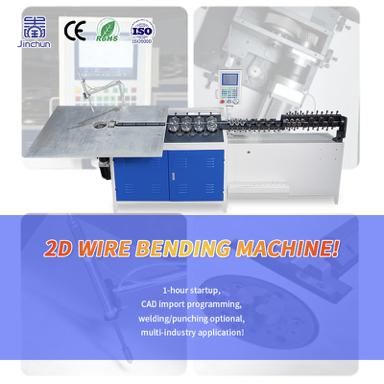
In the manufacturing of wire-based storage and shelving systems, precision, efficiency, and versatility are paramount. This is where 2D bending machines, also known as 2D wire forming machines , become indispensable. These specialized machines are engineered to transform various types of metal wire into precise, complex two-dimensional shapes with remarkable consistency. Their application is particularly transformative in the production of wire shelves, racks, baskets, and organizational solutions found across numerous industries.This article explores how 2D bending technology is specifically applied to create the essential components for modern storage and shelving systems.
Core Applications in Storage & Shelving Manufacturing
The primary strength of 2D bending machines lies in their ability to mass-produce standardized, high-tolerance wire forms that serve as the building blocks for larger assemblies.
Wire Shelving and Rack Systems represent a core application area. 2D bending machines efficiently produce side frames, support brackets, and closet grid storage components for shelving units used in commercial, industrial, and residential settings.
Closet Shelving & Wardrobe Systems: Using highprecision 2D bending machines, standardized metal components such as vertical posts, horizontal braces, and shelf fronts can be produced. These parts are designed for flexible assembly into modular closet systems, creating a stable and customizable storage framework.
Refrigerator Shelves and Brackets: As mentioned, these machines are crucial for creating the internal wire racks and supportive brackets found in refrigerators and freezers, known for their need for strength and precise fit.
Oven and Dishwasher Racks: Similar to fridge components, these require heat-resistant materials like stainless steel and precise bending to ensure smooth glide and proper spacing.
Supermarket Display Shelving & Storage Racks: The machines produce the perimeter frames and grid wires for heavy-duty retail display units and back-storage shelving, prioritizing load capacity and durability.
Kitchen and Bathroom Organizational Solutions: The versatility of 2D bending shines in the creation of diverse home organization products.
Pot Racks and Utensil Holders: The machines bend wires to form hanging loops, S-hooks, grid panels, and decorative scrolls for stylish and functional kitchen storage.
Sink Grids and Drainer Baskets: These are typically made from coated or stainless steel wire, bent into a protective grid pattern that fits perfectly inside sinks.
Shower Caddies and Bathroom Shelves: From simple corner shelves to multi-tiered caddies, 2D benders create the arms, baskets, and supporting frames that hold toiletries.
Towel Racks and Toilet Paper Holders: The machines form the mounting arms, rolls, and decorative end caps that comprise these common bathroom fixtures.
Commercial and Industrial Storage Components: Beyond the home, these machines support larger-scale storage needs.
Wire Decking for Pallet Racks: They manufacture the cross wires and border frames that create secure wire mesh decks for industrial pallet racking systems.
Baking and Display Racks: For bakeries and restaurants, 2D benders produce the trays, cooling racks, and mobile cart frames used for storage and display.
Why 2D Bending Machines Are Ideal for This Sector
High Precision & Consistency: CNC-controlled bending ensures every wire component—every bracket, every support leg, every connector—is identical. This is critical for the easy, tool-free assembly of modular storage systems and for ensuring structural integrity.
Complex Shape Capability: These machines can create not just simple angles but also intricate forms like circles, ovals, U-shapes, and custom profiles (e.g., specialized hooks, clasps, or decorative elements) without the need for multiple machines or secondary operations.
Material Versatility: They process the exact materials needed for storage solutions: from economical low-carbon steel wire for general shelving to corrosion-resistant stainless steel for kitchen/bath applications and outdoor use, and even aluminum or coated wires for lighter-duty or decorative pieces. They handle round, square, and flat wire profiles.
Speed and Efficiency: Once programmed, a 2D bending machine can produce hundreds or thousands of parts per hour with minimal operator intervention, dramatically reducing unit cost and enabling scalable production.
Design Flexibility: Engineers can quickly prototype and adjust wire forms digitally. Changing a bend angle or loop size in the software allows for rapid iteration of shelf designs, bracket styles, or hook shapes to meet evolving market trends.
Technical Scope for Storage Solutions
For the wire shelf and storage industry, the most commonly utilized 2D bending machines are often in the 2mm to 8mm wire diameter range. A 3-8mm capacity machine is exceptionally versatile, capable of producing everything from thin hooks and clips (3mm) to the robust structural frames for heavy-duty shelving (6-8mm). Their operation is streamlined for producing the "flat" forms required for shelving components—frames, grids, and brackets that are essentially two-dimensional profiles, even if they include overlapping wires.
Conclusion
2D bending machines are the silent workhorses behind the vast array of wire-based storage and shelving products that organize our spaces, from the kitchen pantry to the industrial warehouse. By offering unparalleled precision, speed, and flexibility in forming wire, they enable manufacturers to produce strong, lightweight, and cost-effective storage solutions that meet exacting design and functional requirements. For any business involved in manufacturing wire shelves, racks, baskets, or organizational products, investing in 2D bending technology is not just an operational upgrade—it's a direct enhancement of product capability and market competitiveness.