 EN
EN


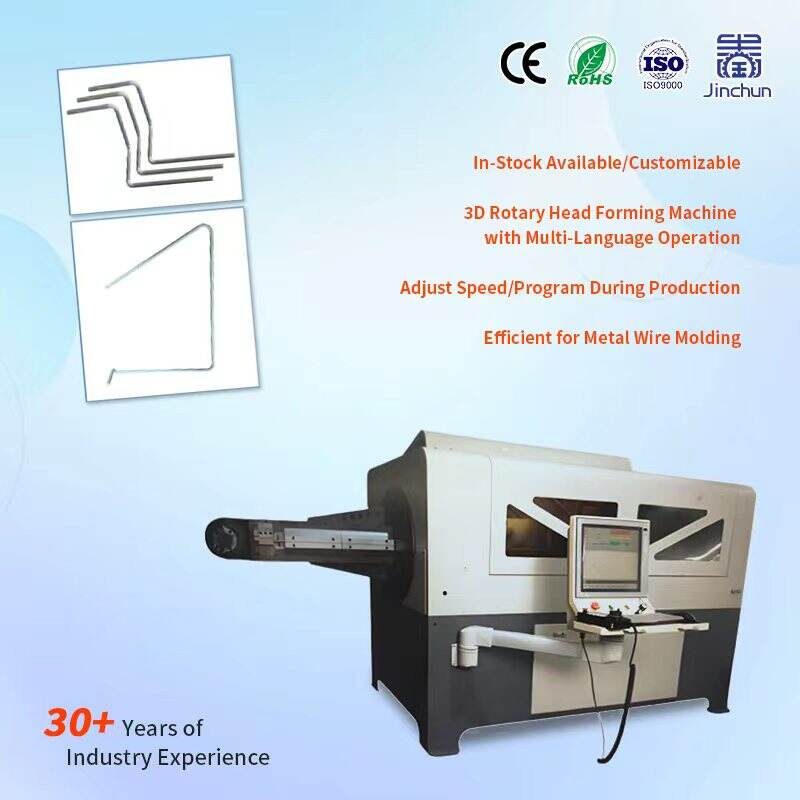
Selecting between 3D and 2D bending technologies represents a critical decision point that directly impacts manufacturing efficiency, product quality, and production costs. The choice between these two approaches depends on specific application requirements, part complexity, production volume, and operational constraints that vary significantly across industries and manufacturing environments.
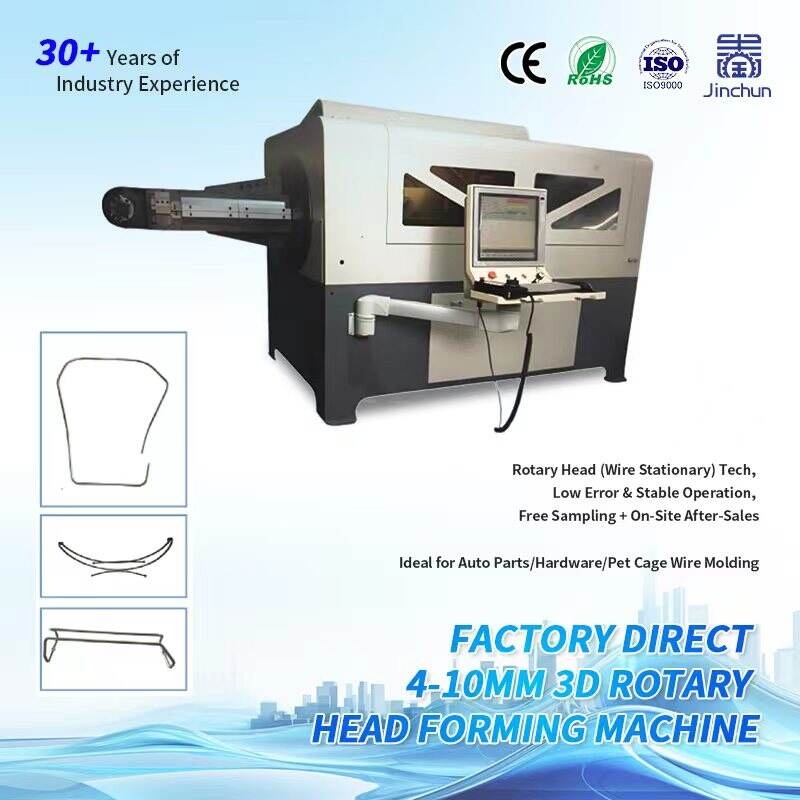
Understanding the fundamental differences between these technologies enables manufacturers to make informed decisions that optimize their production capabilities. A 3D bending machine offers multi-axis control and complex geometry capabilities, while 2D bending systems provide precision and speed for simpler applications. This analysis explores the key factors that determine which technology best serves specific manufacturing requirements.
Understanding Bending Technology Fundamentals
3D Bending Machine Capabilities and Design
A 3D bending machine operates through multiple synchronized axes that enable complex three-dimensional wire and tube forming operations. These systems typically incorporate servo-controlled feed mechanisms, rotational bending heads, and programmable positioning systems that work together to create intricate geometries. The advanced control systems allow for precise manipulation of material through space, enabling the creation of complex shapes that would require multiple operations on traditional equipment.
Modern 3D bending systems feature CNC programming capabilities that store complex bending sequences and reproduce them consistently across production runs. The multi-axis design allows for continuous material flow without repositioning, reducing cycle times for complex parts. These machines can handle various material types including steel wire, aluminum tubing, and specialized alloys while maintaining dimensional accuracy throughout the bending process.
The sophistication of 3D bending machine technology extends to real-time monitoring and adjustment capabilities. Advanced sensors provide feedback on material position, bend angles, and tool wear, enabling automatic compensation for variations in material properties. This level of control ensures consistent quality even when working with materials that exhibit varying spring-back characteristics or dimensional tolerances.
2D Bending System Architecture
Traditional 2D bending systems operate in a single plane, utilizing fixed tooling and predetermined bend sequences to shape materials. These machines excel in applications requiring high-speed production of relatively simple geometries, offering excellent repeatability and lower operational complexity. The simplified control systems focus on optimizing cycle times and maintaining consistent bend quality rather than accommodating complex three-dimensional shapes.
The mechanical design of 2D systems typically emphasizes robustness and reliability over versatility. Heavy-duty construction and simplified tooling arrangements enable these machines to operate continuously in high-volume production environments. The reduced number of moving components and control variables results in lower maintenance requirements and more predictable operational costs.
Programming and setup procedures for 2D bending equipment are generally more straightforward than their 3D counterparts. Operators can quickly establish bending parameters, tool positions, and feed rates without extensive training on complex multi-axis programming. This accessibility makes 2D systems attractive for operations where simplicity and ease of use take priority over geometric complexity.
Application Suitability Analysis
Complex Geometry Requirements
Applications requiring complex three-dimensional shapes benefit significantly from 3D bending machine technology. Automotive exhaust systems, aircraft hydraulic lines, and specialized furniture components represent typical applications where multi-axis capability provides essential advantages. The ability to create compound bends, twisted sections, and intricate routing paths in a single setup reduces secondary operations and improves dimensional consistency.
Industries manufacturing decorative elements, architectural components, and custom fixtures often require the geometric flexibility that only 3D bending systems can provide. The technology enables the creation of organic shapes, variable radius curves, and complex spatial relationships that would be impossible or economically unfeasible using traditional 2D approaches. This capability opens new design possibilities and allows manufacturers to differentiate their products through unique geometries.
Medical device manufacturing represents another area where 3D bending machine capabilities prove essential. Surgical instruments, implantable devices, and diagnostic equipment often require precise three-dimensional wire forms that must meet strict dimensional tolerances. The ability to create these complex shapes in a single operation eliminates potential assembly errors and ensures consistent performance characteristics.
High-Volume Production Considerations
High-volume production scenarios often favor 2D bending systems when part geometry allows. The simplified operation, faster cycle times, and lower operational complexity of 2D systems make them ideal for manufacturing large quantities of relatively simple parts. Springs, clips, brackets, and basic wire forms can be produced efficiently using 2D technology with excellent cost-effectiveness.
The economic advantages of 2D systems become more pronounced as production volumes increase. Lower acquisition costs, reduced programming complexity, and simplified maintenance requirements result in lower per-part costs for suitable applications. The ability to run these systems with minimal supervision further enhances their economic attractiveness in high-volume environments.
However, manufacturers must carefully evaluate whether the geometric limitations of 2D systems will constrain future product development. Choosing 2D technology for cost reasons may limit design flexibility and require significant investment changes if product requirements evolve toward more complex geometries. This consideration becomes particularly important in industries where product complexity tends to increase over time.
Economic and Operational Factors
Investment and Operating Cost Analysis
The initial investment required for a 3D bending machine typically exceeds that of comparable 2D systems due to the additional complexity of multi-axis control systems, advanced tooling, and sophisticated programming software. However, this higher initial cost may be justified by reduced setup times, elimination of secondary operations, and improved part quality for complex geometries. The economic analysis must consider the total cost of ownership rather than just acquisition price.
Operating costs for 3D bending systems include higher maintenance requirements due to increased mechanical complexity and the need for specialized technical support. Programming and setup typically require more skilled operators, which can increase labor costs. However, the ability to produce complex parts in single operations often results in lower overall production costs despite higher machine operating expenses.
Energy consumption patterns differ between these technologies, with 3D bending machine systems typically requiring more power due to multiple servo drives and complex control systems. However, the reduced need for material handling, secondary operations, and quality inspection can offset these higher energy costs. Manufacturers must evaluate total energy consumption across the entire production process rather than focusing solely on machine power requirements.
Production Flexibility and Scalability
A 3D bending machine provides superior production flexibility, enabling rapid changeovers between different part geometries without extensive tooling modifications. This flexibility proves valuable in environments where product mix varies frequently or where custom parts represent a significant portion of production volume. The ability to accommodate design changes through programming modifications rather than tooling changes reduces both cost and lead time for new products.
Scalability considerations favor different technologies depending on growth patterns and market requirements. Organizations expecting growth in part complexity and customization benefit from investing in 3D bending capabilities that can accommodate future requirements. Conversely, businesses focused on scaling production volume of existing parts may find 2D systems more suitable for achieving cost-effective expansion.
The skill requirements for operating these different technologies impact scalability decisions. 3D bending systems require more extensive operator training and ongoing technical support, which can constrain rapid workforce expansion. 2D systems with their simpler operation can be scaled more easily from a human resources perspective, enabling faster production ramp-up when market demand increases.
Quality and Precision Considerations
Dimensional Accuracy and Consistency
Both 3D and 2D bending technologies can achieve high dimensional accuracy, but through different approaches and with varying capabilities. 3D bending machine systems utilize advanced feedback control and real-time compensation to maintain accuracy across complex geometries. The multi-axis control allows for precise positioning and consistent bend quality even in challenging spatial orientations.
The precision achievable with 2D systems often exceeds that of 3D systems for applications within their geometric capabilities. The simplified mechanical structure and reduced number of error sources enable very tight tolerances for planar bending operations. Dedicated tooling and optimized process parameters can deliver exceptional repeatability for high-volume production of simple parts.
Material handling and part support mechanisms differ significantly between these technologies, affecting final part quality. 3D bending systems must manage complex material paths and provide adequate support throughout the bending process, which can introduce potential quality issues. 2D systems benefit from simpler material handling requirements, enabling more controlled processing conditions and potentially better surface finish quality.
Process Control and Monitoring
Advanced process monitoring capabilities in modern 3D bending machine systems enable real-time quality control and automatic process adjustment. Integrated sensors monitor bend angles, material position, and tool condition, providing immediate feedback for process optimization. This capability proves particularly valuable for complex parts where quality issues might not be apparent until final inspection.
Quality control procedures for 2D bending systems typically focus on statistical process control and periodic inspection rather than real-time monitoring. The predictable nature of 2D operations allows for effective quality management through sampling and control charting. This approach works well for high-volume production where process stability is well-established.
Documentation and traceability requirements may influence technology selection for certain applications. 3D bending systems often provide more comprehensive process data and automatic documentation capabilities, which prove valuable for aerospace, medical, and automotive applications requiring extensive quality records. The digital nature of 3D bending programming also facilitates version control and change management for critical applications.
FAQ
What factors determine whether a 3D bending machine is worth the additional investment?
The decision depends on part complexity, production volume, and future requirements. If your applications require complex three-dimensional geometries, compound bends, or frequent design changes, a 3D bending machine provides value through reduced setup times, eliminated secondary operations, and improved design flexibility. High-volume production of simple parts typically favors 2D systems for cost-effectiveness.
Can 2D bending systems handle any three-dimensional geometries?
2D bending systems can create some three-dimensional parts through multiple operations and repositioning, but this approach increases handling time, introduces potential errors, and limits geometric complexity. True spatial bending with compound curves and complex routing requires 3D bending capabilities. The economic and quality advantages of single-operation 3D bending become significant for complex geometries.
How do maintenance requirements differ between 3D and 2D bending systems?
3D bending machine systems require more sophisticated maintenance due to multiple servo drives, complex tooling arrangements, and advanced control systems. Maintenance intervals may be more frequent, and technician skill requirements are higher. 2D systems benefit from simpler mechanical designs with fewer components requiring service, resulting in lower maintenance costs and longer intervals between service requirements.
What training requirements should be expected for each technology type?
Operating a 3D bending machine requires extensive training in multi-axis programming, complex setup procedures, and troubleshooting sophisticated control systems. Operators typically need several weeks of training and ongoing support. 2D bending systems require less specialized training, with operators typically becoming proficient in basic operations within days. Programming complexity is significantly reduced for 2D applications.