101, Building 9, Jicheng Science And Technology Innovation Park, No. 25, Sanle East Road, Shunjiang Community, Beijiao Town, Foshan, Guangdong, China +86-18038626853 [email protected]
101, Building 9, Jicheng Science And Technology Innovation Park, No. 25, Sanle East Road, Shunjiang Community, Beijiao Town, Foshan, Guangdong, China +86-18038626853 [email protected]

Coordinated CNC motion supports repeatable spring forming for manufacturers handling recurring orders and varied compression spring specifications.
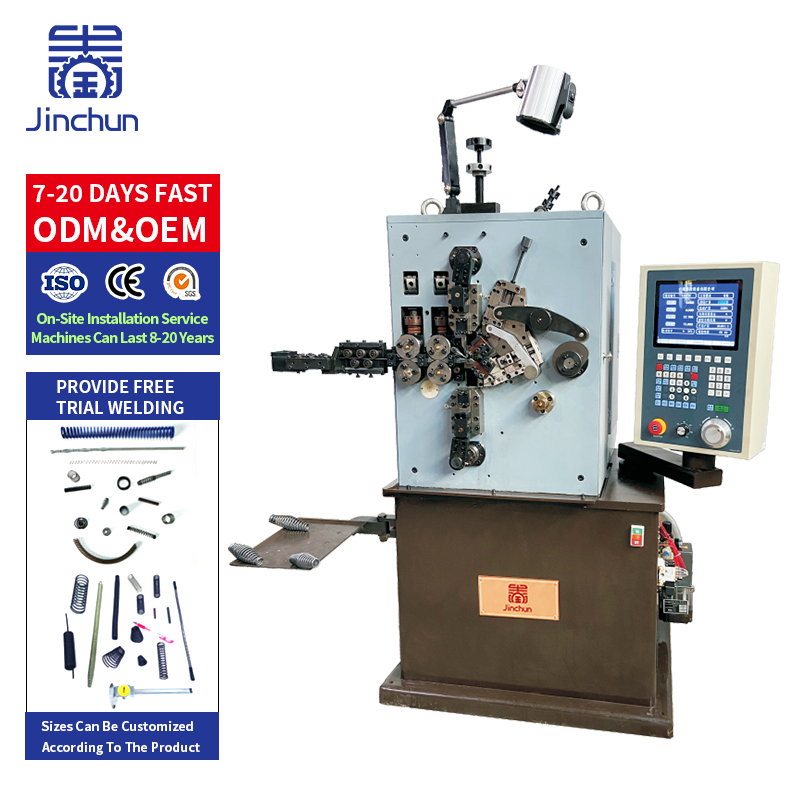
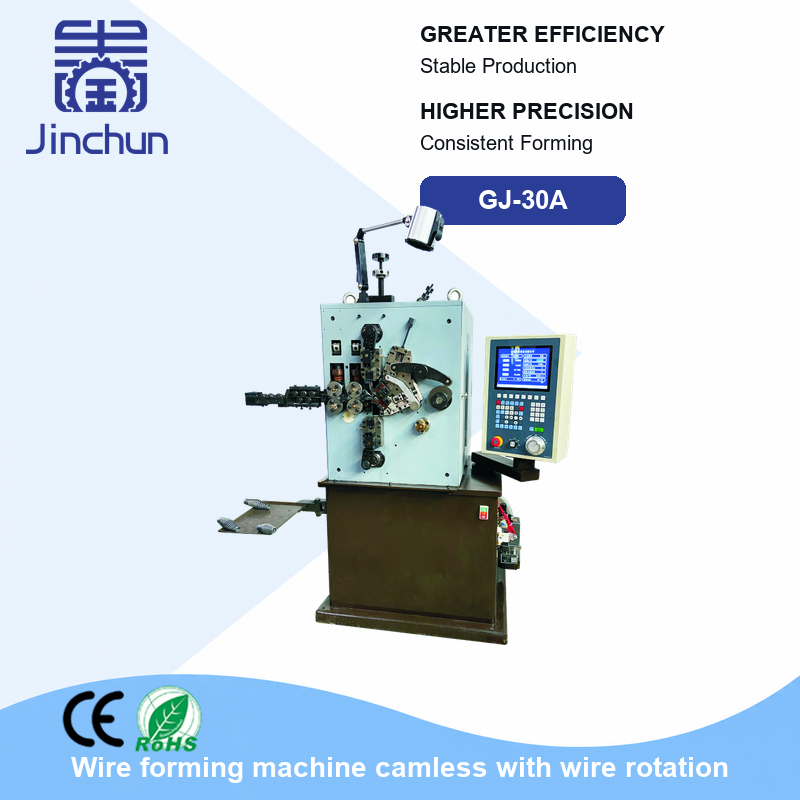
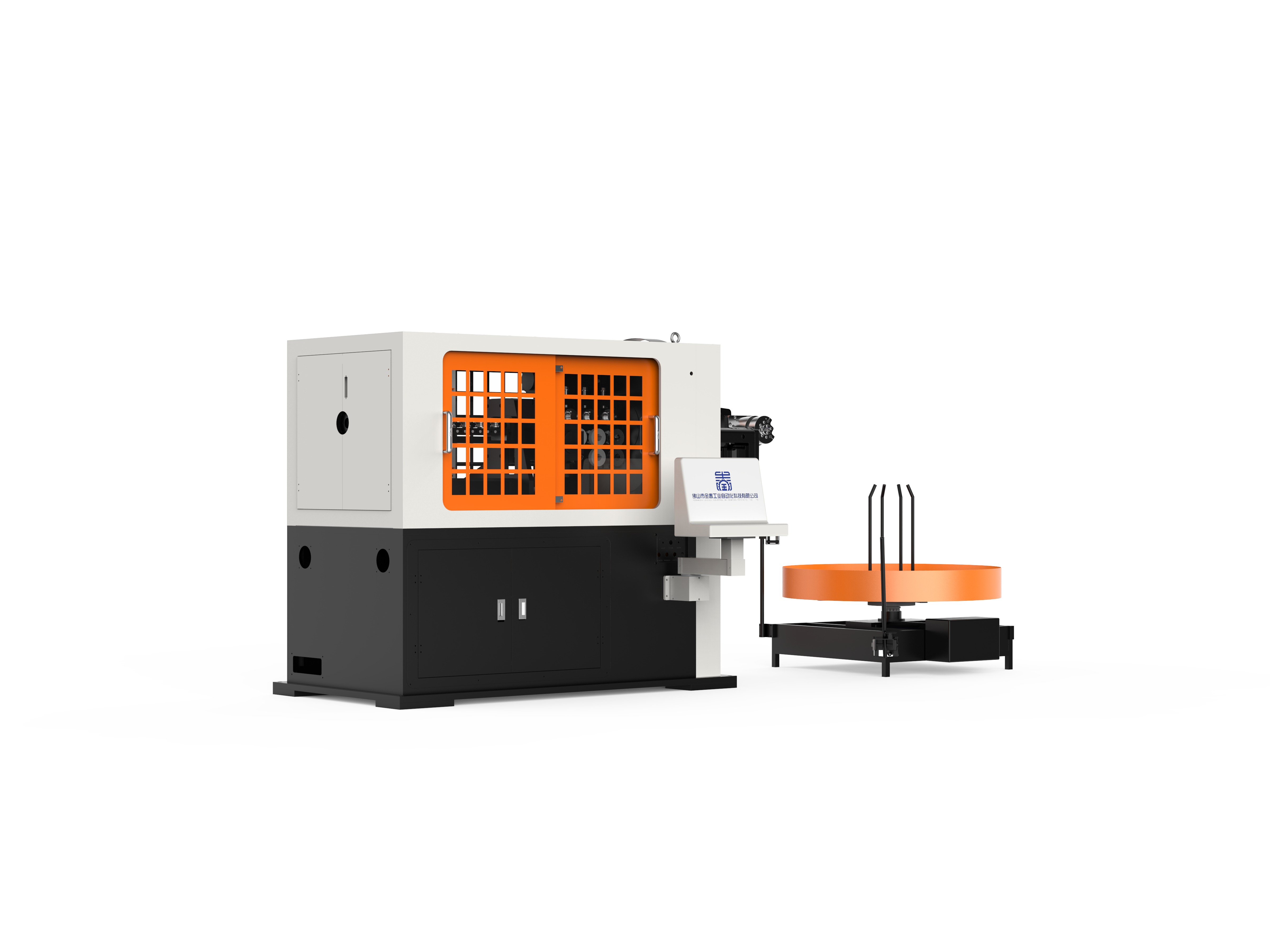
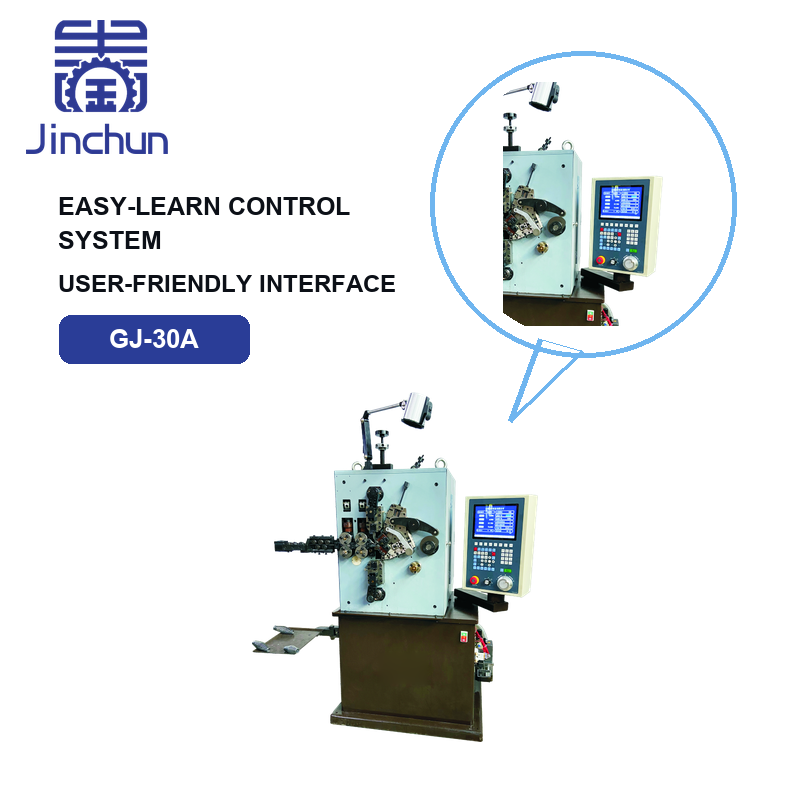
The 4 Axis High Speed CNC Compression Spring Machine is designed for manufacturing helical compression springs used in mechanical assemblies. Its four-axis CNC architecture coordinates the machine’s processing movements, supporting repeatable forming sequences and controlled adjustments during production setup.
Designed for high-speed coiling applications, the machine offers a programmable approach to compression spring manufacturing. Actual output depends on wire properties, spring dimensions, forming complexity, cutting requirements, and the required tolerances.
Core Features
The functions assigned to each axis and the available control features should be confirmed for the selected model.
Spring Production Scope
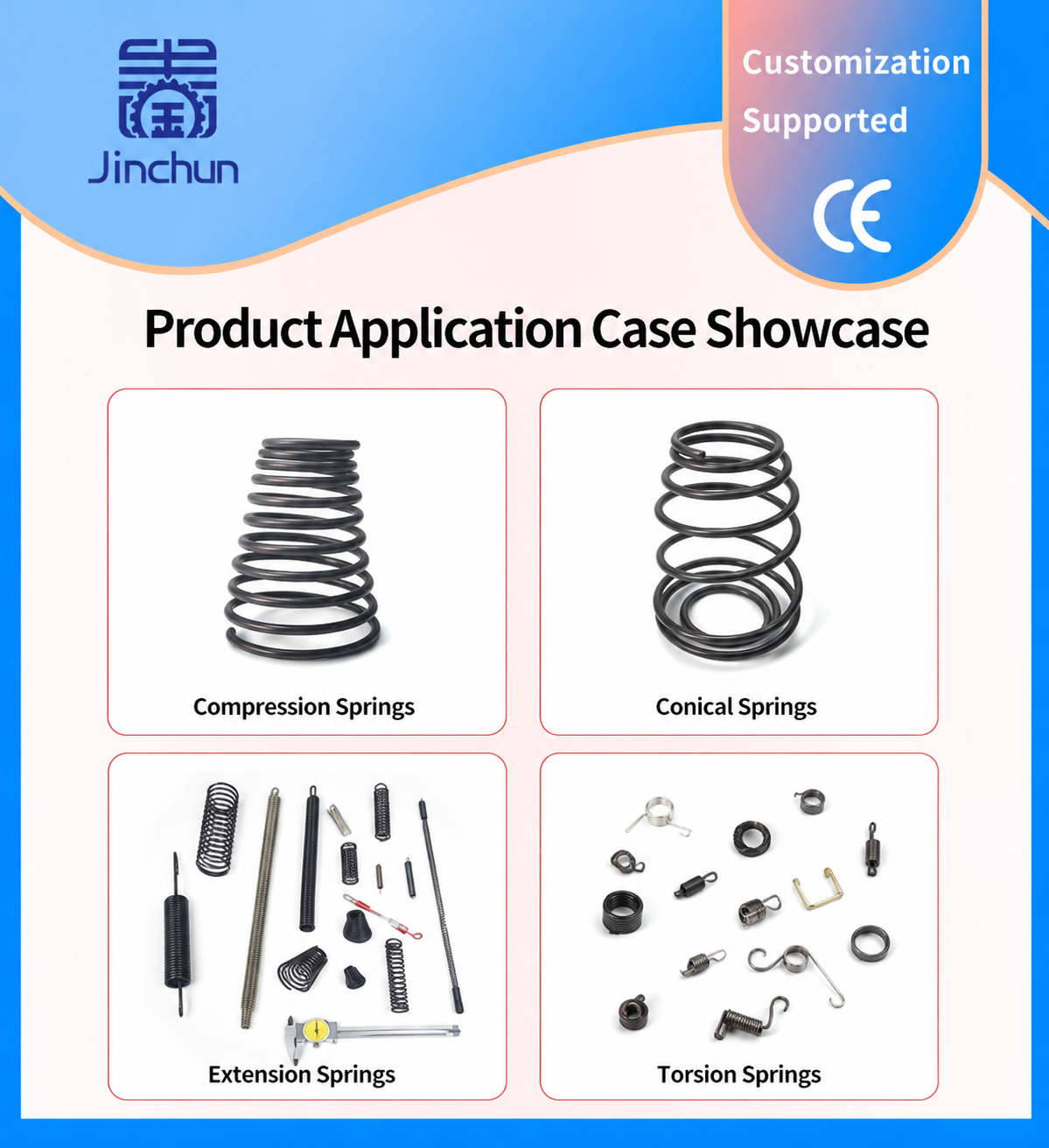
The machine is intended for compression spring coiling. Compatibility with cylindrical, conical, barrel-shaped, or variable-pitch designs should be confirmed against the spring drawing and tooling configuration.
Open or closed end coils, winding direction, and any subsequent end-grinding requirements should also be specified before machine selection.
Typical Applications of Finished Springs
Material and Processing Requirements
Wire compatibility depends on material grade, diameter, tensile strength, and surface condition. Please provide the exact wire specification for evaluation rather than selecting a machine by wire diameter alone.
Any required heat treatment, end grinding, coating, or load testing should be considered separately when planning the complete production process.
Information Required for an Inquiry
Contact us to confirm the processing range, tooling, machine configuration, and achievable production rate.
Coordinated CNC motion allows the processing sequence to be set around the required spring geometry. During setup, the relevant programmed movements are adjusted and checked against sample parts. This provides a structured basis for establishing repeatable production conditions.
 EN
EN